

Build An Epic Succulent Garden Entirely From Concrete Blocks
We may receive a commission on purchases made from links.
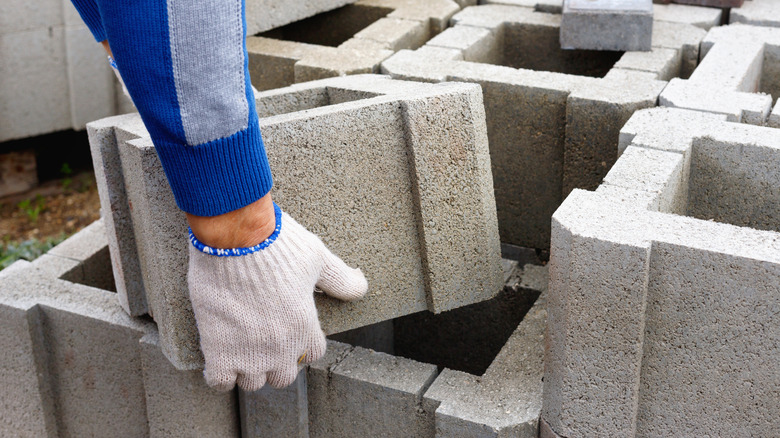
As far as construction materials go, concrete blocks have a bit of a bad rap. They're industrial, utilitarian, and frankly, a bit boring. Before you overlook them for flashier landscaping supplies, it's worth exploring their perks. Concrete blocks are inexpensive, typically coming in at less than $2 each, virtually indestructible, and have a broad range of uses if you're willing to get creative. You can, for example, use them to create patio furniture or transform an entryway with stairs made entirely from concrete blocks. Arguably, however, one of the best uses for plain cinder block is transforming it into a colorful vertical garden.
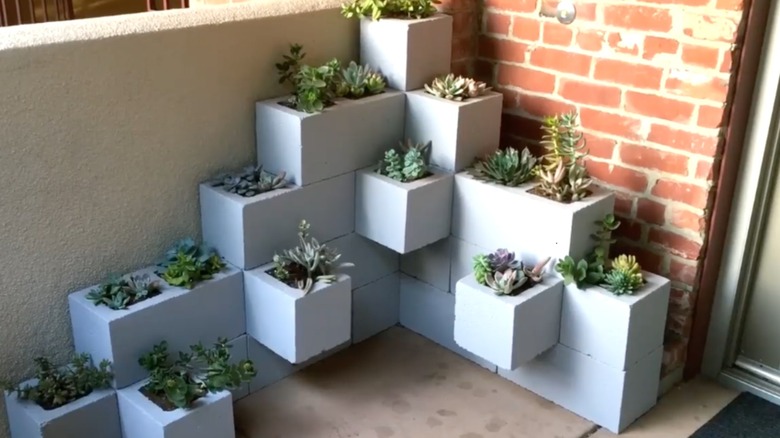
Essentially, you stack concrete blocks Tetris-style to create a layered succulent planter wall. It's an incredibly versatile project. These blocks can be arranged in any number of ways, depending on what your patio looks like. Plus, there are endless possibilities for painting and decorating the planter to reflect aesthetic preferences. No two succulent displays will look the same, even if they're built with the same materials. The trick is to see past the plain blocks and recognize their potential.
All you need to replicate this idea in your own backyard are concrete blocks, primer, paint, landscape fabric, construction glue like Gorilla Max Strength Construction Adhesive. Tools-wise, grab a paintbrush or paint roller. You'll also need some cactus soil and your choice of succulent species. If you're working with used concrete blocks, you'll probably need to clean them before getting started. They'll look nicer, the primer and paint will adhere better, and they won't pass any diseases onto your plants. You might simply have to brush or scrape off some dirt, or you may need to scrub the blocks with water and detergent. If they're in really bad shape, pressure wash them.
Putting together a patio succulent display using concrete blocks
Coat the clean, dry blocks with a primer suitable for masonry — like Zinsser Bulls Eye 1-2-3 All-Surface Primer in gray. Because concrete blocks are porous, it's important to use a primer that effectively seals the holes. Follow the manufacturer's suggestions for curing, and then coat the blocks in a durable exterior paint, like Evolve Light Gray Porch and Floor Paint. This Evolve option matches the color of the concrete blocks and is scratch-resistant. You could also go with black paint for a sleek, modern look, or burnt orange to mimic terra cotta. For more of a statement, paint multicolored geometric shapes onto the blocks.
Next, decide how you'll line the concrete blocks. One option is to use construction glue to attach landscape fabric to the bottom of each block. Alternatively, you could layer landscape fabric over chicken wire to create a bowl that sits inside the hollow block. The latter option gives you lots of flexibility to swap out succulent species as you see fit. Arrange the blocks however you like, as long as they conform to the wall of your patio. Some blocks should stick outward at random, sitting perpendicular to the blocks that are flush with the wall. If you don't have a suitable wall, create a divider between your patio and lawn or garden. You could also create a step pyramid-style arrangement.
Finally, pack each hole in the concrete blocks with LGM Premium Cactus and Succulent Soil Mix and add all the plants. Some fast-growing succulent plants to consider growing in your new planter include red dragon flower, sedums, echeverias, silver ruffles, and elephant bush. The best way to group and display succulents for an eye-catching garden is to choose a mix of trailing and upright greenery.