

Drywall Vs Plaster: What's The Difference?
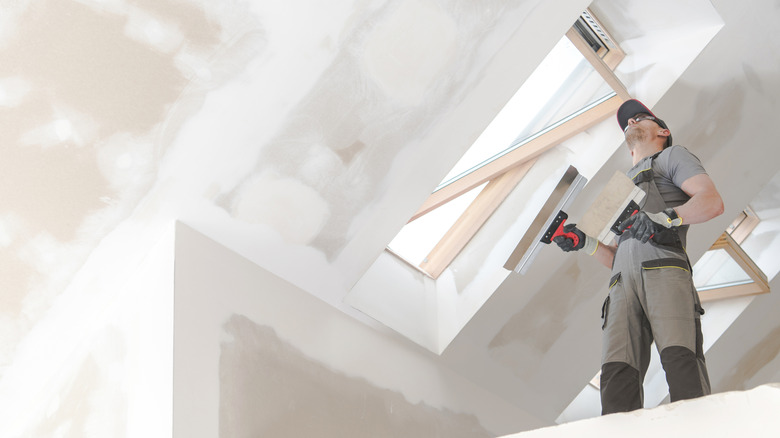
When it comes to finishing a wall, homeowners have a ton of options to choose from. Wood paneling, exposed brick, tile, wainscoting — the list goes on. However, two materials often dominate the conversation: drywall and plaster. Many people use these terms interchangeably, but they're not the same. They vary not only in composition but also in uses and cost. If you want to get the right material for your project, it's important to understand where each one works best.
Let's start with their history. Plaster has been around for thousands of years – literally. Even the ancient Egyptians used plaster to smooth the walls of their tombs. For centuries, it was what people used to finish an interior wall. Drywall, by comparison, is the new kid on the block. It was developed in the early 1900s and only became widely popular after World War II. Today, it has taken over modern construction and is pretty much everywhere.
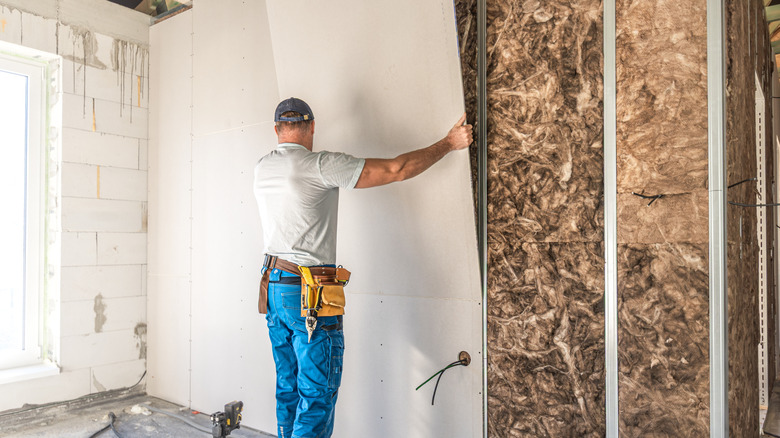
Plaster and drywall have different compositions, too. Plaster is typically a wet mix of gypsum or lime, sand, and water. It is often troweled by hand over a supporting lath where it solidifies. Drywall, by comparison, commonly consists of a gypsum board with paper chemically and mechanically bonded to it, though its base materials can vary depending on the type of drywall and intended application. It is often manufactured into large, rigid panels at a factory and then screwed directly to wall studs.
Drywall and plaster each have unique roles in construction
Drywall is the standard choice for many new projects since it's easier to install and repair. Plus, you can easily customize drywall with paint or wallpaper. Certain types of drywall also come with extra benefits, like moisture, fire, or mold resistance Some drywall panels can even have a soundproofing effect, though plaster has the leg up in terms of blocking noise.Because of these perks and flexibility, drywall panels are often the preferred choice for many modern interior projects.
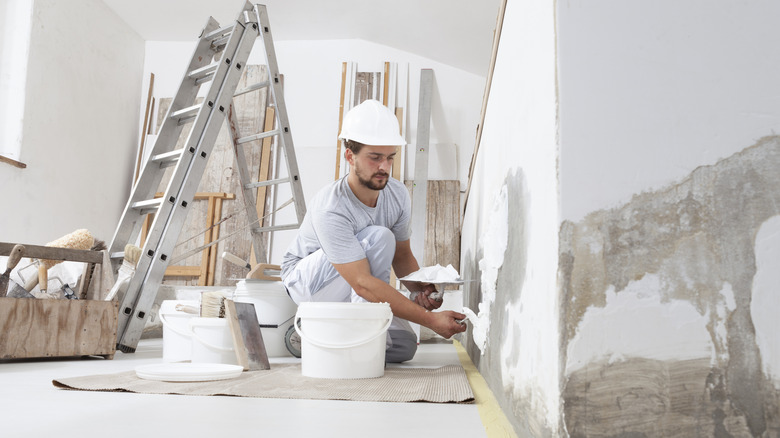
Plaster, on the other hand, tends to appear in old homes and historic buildings. It is often chosen when homeowners want a smooth, dense, almost stone-like finish and don't mind a longer installation process. It is also well-suited for curved walls or projects where durability or historical accuracy is important. Despite the availability of fire- and mold-resistant drywall options, plaster is naturally more resistant to both.
Just keep in mind that both materials have their pros and cons. For instance, drywall can easily dent, crack, and absorb moisture more easily than plaster. It also has a more hollow feel. Unless you get types resistant to these issues, drywall can even grow mold if water gets behind it. Meanwhile, plaster is strong, elegant, and long-lasting, but it is also heavier and slower to install. Most homeowners will need a skilled professional to apply it. Installing drywall is manageable for experienced DIYers, provided you avoid drywall mistakes that could ruin your home renovation. Plaster installation, however, is not one of those renovation projects you can DIY in a weekend.
Comparing costs and choosing plaster or drywall for the home
Drywall materials are relatively inexpensive and widely available. Installation is also much faster, reducing labor costs and making drywall the more budget-friendly choice. Plaster, by comparison, costs more as it takes skill, labor, and time. It also requires a base along with multiple coats, drying time, smoothing, and finishing, all of which drive up the cost. For instance, professional drywall installation costs only around $1.50 to $3 per square foot, while plaster installation ranges from roughly $2 to $10 per square foot.
That doesn't mean plaster is a bad investment. In the right home, it can be well worth the added expense. Plaster is generally harder than drywall and better able to withstand everyday impact. So, if you are building a wall, replacing plaster with drywall may save money at first, but the wall may also be weaker and require repairs more often. However, if you are just building a rental unit or merely patching some damage, drywall makes more sense.
Ultimately, the decision comes down to your project. It is not just about the material and cost. Choose drywall if affordability, speed, and easy repairs are your priorities. If you value durability, character, or a hand-finished look, go with plaster. Also consider your home's age, local labor rates, and long-term plans before deciding. And if neither material seems like the right fit, there are many plaster and drywall alternatives that will look just as good in your home.