

Skip The Coffee Grounds: Use This Overlooked Scrap To Trap Snails
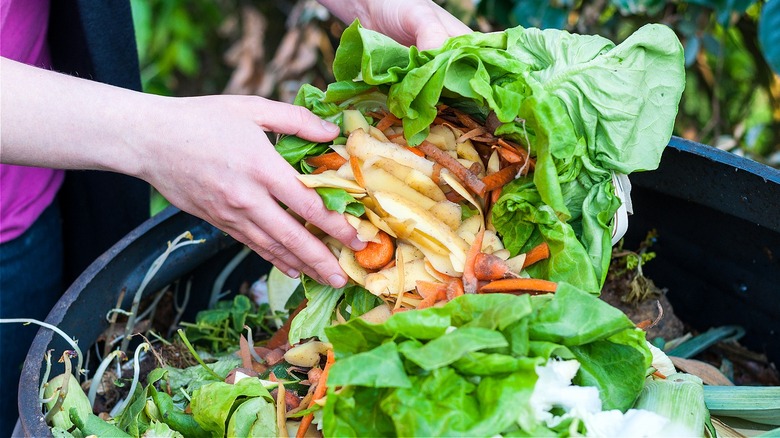
Before you toss the tougher outer leaves of a cabbage head into the compost heap, think twice! There's another eco-friendly, garden-helping use for those large scraps. An overturned cabbage leaf can also be used to attract and trap the snails that have been chomping on your veggies and flowers lately. As with using coffee grounds to deter the pests, it's yet another great way to get rid of snails and slugs with the help of a common kitchen ingredient.
Large cabbage leaves are effective control measures because they represent both bait and trap. The snails are drawn to the leaf as a food source, as well as a place to hide from the drying sun.
Cabbage is also relatively inexpensive. That means that even if you're not growing it in your own garden, it's a readily available source of several "traps" on a single head. The outer "wrapper" leaves, of course, are preferable to use as snail bait. Not only are they larger, but these tough leaves are less useful for cooking.
Evening is the best time to set out the cabbage leaf traps. Water the ground to establish the damp conditions snails love, then place the inverted large leaf over it. Check them every morning, disposing of the snails as you go. You should begin to see the numbers of snails clinging to the leaves gradually diminishing. When that happens, you can set and check the traps less frequently. Weekly traps can maintain your anti-snail campaign once the pest populations diminish.
Remove the trapped snails carefully to reduce populations
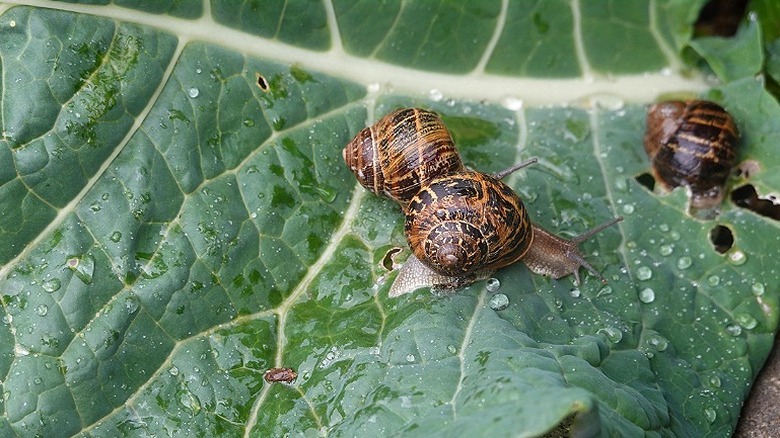
Without a doubt, snails rank high among the worst garden pests that you'll want to banish from your garden immediately. But that doesn't make the task of picking the slimy creatures off various snail traps any easier. When using cabbage leaves (as opposed to lumber or flower pots) you can simply dispose of the leaf and the trapped snails without ever having to directly touch the pests. Yet how you dispose of them is important.
As tempting as it might be, stomping on the snail-infested cabbage leaf traps isn't necessarily the smartest action — at least, not without strategically disposing of them afterward! Snails may be carrying eggs in their bodies, which emerge even after the adult pests have died. To get rid of the eggs as well, don't leave the "gruesome remains" in the garden. In addition, be on the lookout for already laid snail eggs. Clear eggs are a warning sign in the garden of new snail populations.
If you have chickens or other small livestock, bring the infested cabbage leaf traps to their feeding area and allow them to eat both snails and greens. Otherwise, drop the leaves in some soapy water to ensure the snails and any potential eggs have died. Either throw these carcasses away, or add the watery remains to the compost pile. If you prefer, you can also seal the dead snails in a plastic bag, then place the bag in the garbage.