

Not Rubbing Alcohol: Use This Bathroom Staple To Trap Aphids
We may receive a commission on purchases made from links.
When their plants are thriving, gardeners may feel like they have an invincible green thumb. Leaves are glossy, new growth is consistent, and stems are firm — that is, until they're not. If you start seeing yellowing foliage or wilting, the problem could be nutritional deficiencies, inconsistent watering, or pests. An infestation of herbivorous insects on a plant is likely to induce mild panic in even the most experienced gardener. Next comes the frantic Google search to figure out who these unwelcome guests are and how to evict them.
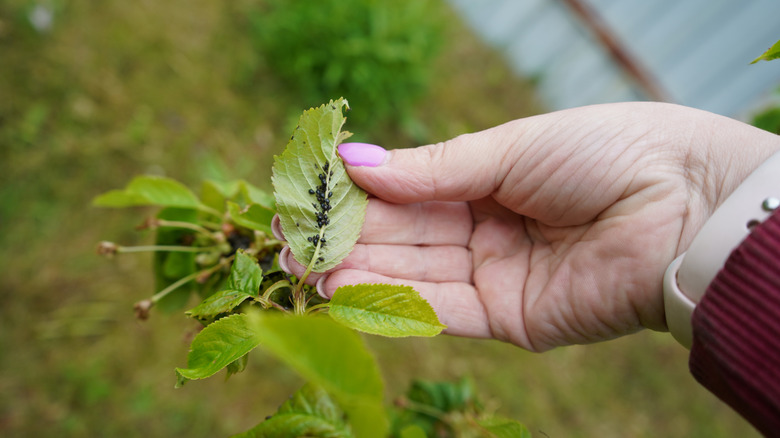
If your research turns up aphids, you can tackle them with something that's probably in your bathroom right now — petroleum jelly. Aphids are tiny, soft, oval-shaped insects that form clusters on a plant, especially on the underside of leaves or young growth, in the spring. These pesky critters, which are in the same order as whiteflies, mealybugs, and scale bugs, grow up to ⅛ inch long. There are about 1,350 species of aphids in North America, and they come in a host of colors, including green, yellow, pink, and brown. Depending where they are in their lifecycle, some aphids have wings and others don't.
As interesting as all of this information may be, you don't want aphids taking up residence on your plants. They feed on the phloem of a plant, and the leaves of their unwilling host eventually turn yellow, become splotchy, or curl. The bugs also secrete honeydew, which breeds harmless but unattractive black mold. Thankfully, it's pretty easy to get rid of aphids. You can buy sticky traps from gardening stores or online — this 20-pack of Gideal Dual-Sided Yellow Sticky Traps costs about $8. But why spend money when you can DIY something using common household items?
How to make an aphid trap using petroleum jelly
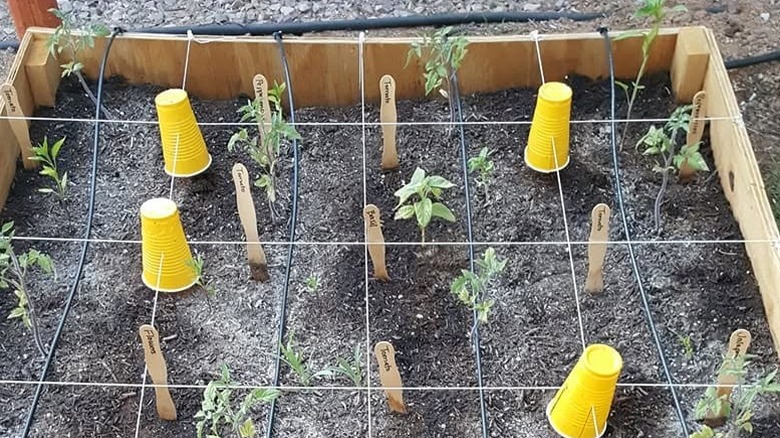
All you need to make a sticky trap for aphids is a tub of petroleum jelly and some disposable tableware or items rescued from the trash or recycling bin. Since aphids have a preference for yellow, though the reasons why are still under research, check your home for cardboard, large bottle caps, paper cups, and disposable plates in the hue. You could also add a few light coats of Krylon COLORmaxx Gloss Sun Yellow Spray Paint and Primer to white or brown items. Smear petroleum jelly on both sides of the yellow item and place it near the affected plant, which should be isolated from healthy ones. Once the trap is full of aphids, toss it out and put up a new one. If you used a plastic item, you may be able to wipe off the insect-covered jelly and apply a fresh layer.
Outdoor gardeners who apply petroleum jelly to their dry, cracked hands may be surprised to learn that petroleum oil — what petroleum jelly is made of — is one of the oldest insecticides. It's one of the main ingredients in horticultural oil, which works by suffocating insect pests. You can also use this bathroom staple to help deter snails and slugs from attacking plants. Sticky traps are most effective when combined with other eco-friendly pest control methods, like spraying off aphids with a strong jet of water, brushing them off with your hand, or pruning infected leaves. Just make sure you're not displacing the aphids onto surrounding plants. You should also learn how often you should be checking your plants for pests, including aphids. Hint: there's no set timeframe. You simply need to stick to a regular schedule.