

Not Copper Nor Coffee Grounds: The Bright Fresh-Smelling Flower To Help Deter Slugs
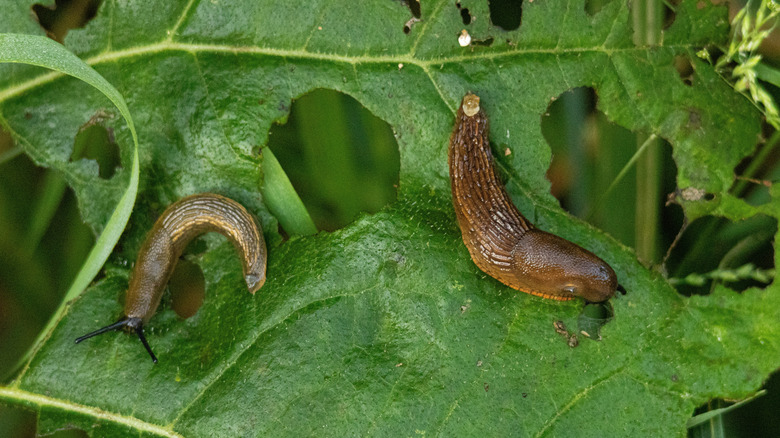
Keeping slugs off your seedlings and all the tender young plants in your veggie patch can almost become a full-time job. Especially when you consider all the different methods you've been told or read about to get rid of slugs in the garden. Well, here's just another method that you can try, and it doesn't involve copper or coffee grounds. It's actually planting a bright, fresh-smelling flower known as dianthus.
Dianthus, often referred to as pinks or carnations, have a lovely fragrance and are said to keep slugs away. Although there's no real scientific evidence that suggests that these pretty plants will actually deter slugs, they are one of a number of species that the pests will generally leave alone, so there must be a reason for that. Perhaps it's the fact that the leaves contain a compound known as Triterpenoid saponins, which is mildly toxic to humans and animals. Interestingly, there's a report in the National Library of Medicine, which refers to a study that looks into the possibility of using saponin-rich plant extracts to control Spanish slugs in agriculture. Primarily, the study used extracts from the bark of the soap tree (Quillaja saponaria) and found that the slugs were sensitive to them. The other thing to consider is that dianthus flowers have a slight clove-like scent, which may also have a deterrent effect on slugs. As a bonus, rabbits and deer tend to avoid these plants as well.
How to use dianthus to help deter slugs
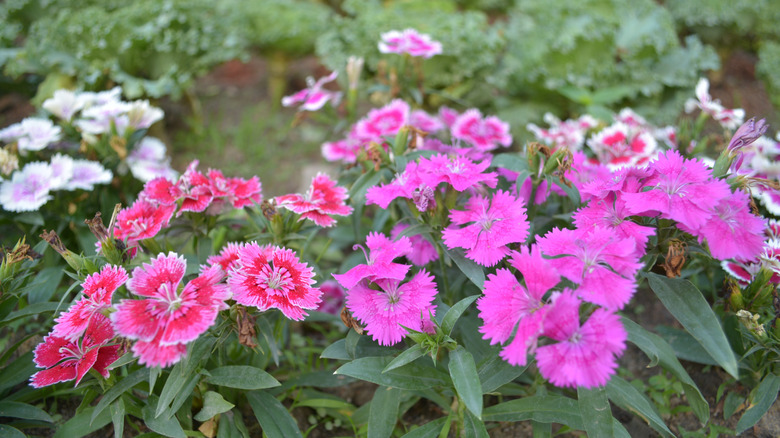
If you've never tried growing dianthus before, don't worry, because these are flowers even the worst gardeners can handle. So, if you want to try to use them to help deter slugs from your precious seedlings, the best idea would be to plant a border of them around your vegetable garden as a defense against a slug invasion. Ideally, you'll want to plant them in masses close together to form a barrier around the plants you want to protect. The dianthus plants themselves are actually quite pretty, so they would look really nice around your veggie patch. They come in a range of floral colors, including pink, purple, red, white, and variegated. So, you could either choose plants in your favorite color or mix them up for a brighter display.
Dianthus do prefer to grow in full sun and appreciate well-drained soil, but are not that fussy about soil type. Depending on the variety you're planning to grow, they can be annuals, biennials, or even perennials in warmer zones. If you can grow them as perennials (USDA hardiness zones 4 through 9), they can be divided every three or four years. It's also a good idea to deadhead spent blooms, as this will promote further flowering. Apart from possibly providing a barrier to a slug invasion, dianthus are also good at attracting pollinators to your garden, especially butterflies, which obsess over this clove-scented flower.