

Not Coffee Grounds, Not Banana Peels: Fertilize Tomatoes With A Tea You Can DIY
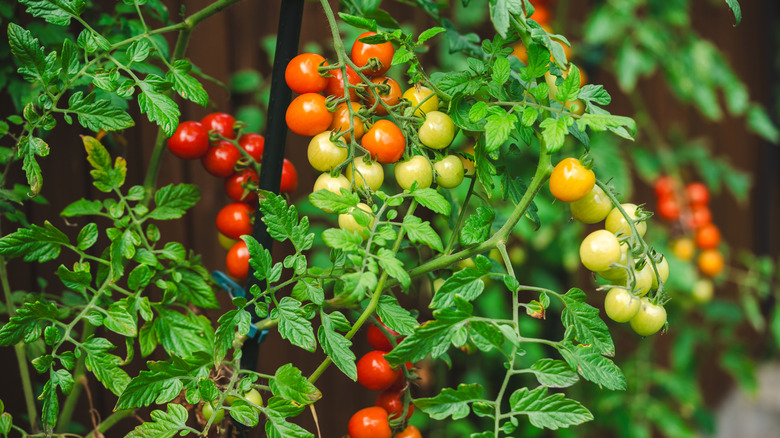
If you've ever grown tomatoes you're likely already privy to how ravenous these plants can be. It's safe to say these garden favorites are heavy feeders. That being said, gardeners have come up with a host of clever solutions to keep these plants well-fed. Banana peel fertilizer and coffee grounds are popular homemade amendments that gardeners often use to give tomato plants a little boost. Coffee grounds supply low levels of supplemental nitrogen while banana peels can release small amounts of potassium. However, both provide relatively small amounts of nutrients compared with a balanced fertilizer. There is another more effective organic solution to explore — alfalfa tea.
Alfalfa (Medicago sativa) is a flowering plant cultivated around the world for livestock feed, food, and fertilizer. Alfalfa is naturally rich in nitrogen compared with many organic plant materials. It also contains calcium and magnesium as well as triacontanol, a naturally occurring plant growth stimulant associated with vigorous plant growth. Tomatoes need a balanced supply of nutrients, including nitrogen, phosphorus, potassium, and calcium, to thrive. If you prefer to go the organic route, you'll need an option that packs a punch. Luckily, alfalfa tea is quite effective for hungry plants such as tomatoes. To unlock this DIY fertilizer's full potential, you'll need to turn it into a tea. You'll find that this nutrient-dense brew is the perfect asset in growing healthy tomatoes.
How to create and use alfalfa tea for tomato plants
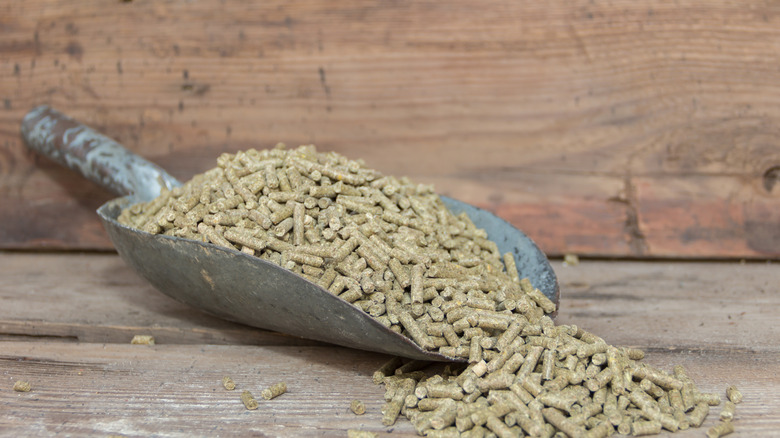
To set your tomato plant up for success, create your alfalfa tea at the beginning of the growing season. Start by dividing 50 pounds of 100% dehydrated alfalfa pellets evenly between two large containers. Place these containers inside two larger containers to create a layer of insulation. Add in a handful of compost or rich soil in each container. In a separate container, combine a half cup of sugar with 9 gallons of warm water. Pour half of the sugar-water solution into each container of alfalfa pellets and mix thoroughly.
The tea mixture is now ready to brew. But before you leave it to do its thing, you'll need to insulate it as much as possible. Cut two pieces of cardboard to fit directly over the surface of the liquid. Put the lids on the containers, then cover them with something thick, like a blanket, followed by a tarp to keep out moisture. This tea will begin breaking down rapidly. Check on it after about 4 to 6 hours and stir if it looks clumpy. Do so again in about 24 hours. Your alfalfa tea should be ready to go in about 36 to 40 hours. Use it right away. Alfalfa tea can start to smell if you leave it to stew for too long.
To use your tea, mix it up and use a scoop to deposit about a gallon of the liquid around each tomato plant. This recipe makes enough to cover a large area, so feel free to use any extra on other heavy-feeding plants in your garden. Since this tea is relatively diluted, you can brew a new batch and use it every week. However, it's a good idea to start by applying it occasionally and monitoring your plants to see how they respond.