

They Were Big In The 1920s — Now It's The Thrift Store Find You'd Be Happy To Add To Your Bookshelf
We may receive a commission on purchases made from links.
In the 1920s, the lavish Art Deco movement captured the era's industrialist, sophisticated modernity. Celebrating the combination of technological advancement and artistic craftsmanship, Art Deco prioritized metallic finishes and luxurious materials. These trademarks can be found in even the small home decor staples of the time, such as brass bookends.
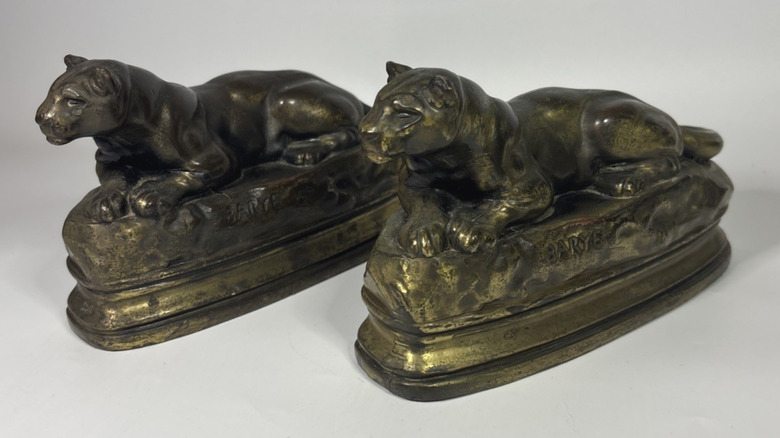
Art Deco bookends often feature sculptural animal designs. Inspired by 19th century French sculptors known as animaliers creating bronze animal figures, as well as the animal amulets of Ancient Egypt, Art Deco animals are often rendered with a geometric precision and stylized anatomy befitting the design era. Other brass bookends of the time are modeled after Art Deco architecture, with its arches and ornate detailing.
As other interior design styles like mid-century modern came into fashion, Art Deco's popularity receded, and many bookends in this style have ended up in thrift stores. Unlike professional resellers and antique websites, which may charge hundreds or even thousands of dollars for authentic antique brass bookends, scouring your local secondhand store can help you add Art Deco flair to your home for a fraction of the cost, making them one Art Deco piece you should definitely snag from the thrift store if you spot them.
How to style and clean Art Deco brass bookends
In the tradition of Art Deco, brass adds a glamorous warmth to any home. Brass pops when contrasted against organic materials, such as wood or linen. It can also complement neutral colors, one of the best color palettes for an Art Deco home decor style, by adding extra depth and vintage charm to rooms that use them.
Caring for your Art Deco brass bookends is fairly simple. Many antique brass pieces have already been lacquered, a clear coat that prevents it from tarnishing. If your bookends don't show signs of tarnishing, they are most likely lacquered. These can be gently wiped down with a cotton cloth, water, and mild soap.
If your brass bookends do look tarnished and non-lacquered, you'll first want to verify whether they're solid brass or just brass-plated. The easiest way to check is with a magnet — brass is not magnetic, so if a magnet sticks, it's reacting to a different metal underneath the brass. If it's not solid brass, the same cleaning method still applies, but you'll need to work extra gently to avoid scratching off the brass on the surface. If your piece is solid and unlacquered brass, you may want to opt for a specialized brass cleaning product to remove tarnish, or let a bit of tomato paste sit on the brass for an hour before using a cloth to wipe it off with soapy water. No matter your bookends' construction, do not use abrasive cleaning products on brass.