

How To Repel Mosquitos With An Overlooked Summer-Blooming Herb

You might think that mosquitoes are all the same. While it's true that they're all annoying, according to the Centers for Disease Control and Prevention, there are around 200 different types of mosquitoes in the United States. Twelve of these can spread rare but serious diseases like West Nile virus, Cache Valley virus, and eastern equine encephalitis. Protecting yourself is especially important if you spend a lot of time outdoors. Using plants to repel mosquitos can allow gardeners to manage pesky insects with a homegrown solution instead of reaching for the DEET. If you've tried other fragrant plants for this purpose without success, take a chance on this summer-blooming herb you may have overlooked: lemon balm. There's compelling evidence showing that lemon balm (Melissa officinalis) is one of the mosquito repellent plants that actually work.
You might wonder about the scientific reason that permits lemon balm to successfully repel mosquitos. The secret to this overlooked herb's effectiveness lies in the essential oils held within its leaves. In particular, one of the compounds in this plant's leaves that repels mosquitos is called citronellol. That's the same compound in sprays containing citronella oil. Of course, ensuring that this fragrant herb will succeed in repelling mosquitos starts with growing it in the right conditions, and employing some other tips will also help you send the message to "buzz off."
Grow lemon balm to repel mosquitos in your yard all summer
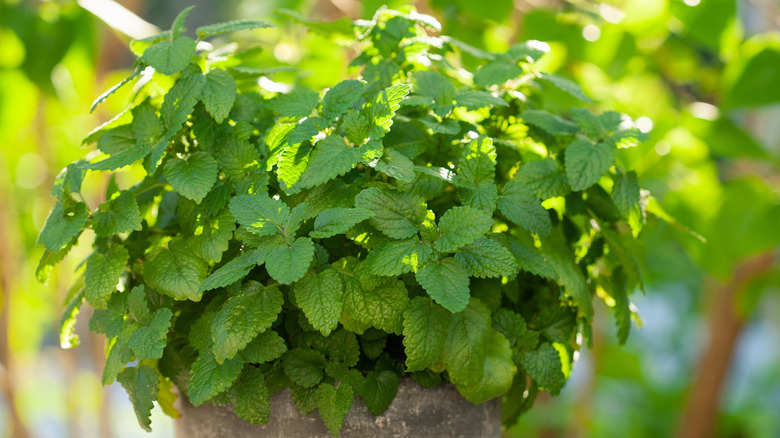
For starters, lemon balm only grows as a hardy perennial in USDA Hardiness Zones 3 to 7. In those zones, you'll only need to plant this fresh, citrusy herb once and it'll return to your garden on its own each year. You can grow this member of the mint family directly in the ground for its repellent properties or place it in a pot on your patio. Just keep in mind that the plant must have at least two hours of direct sun daily. Well-draining soil is needed to thrive; this herb prefers dry soil over soil that's too wet. Small, white blooms will emerge in summer and fall. When all of its favorite conditions are met, some gardeners may have issues with it spreading rather aggressively through both seeds and rhizomes, so take care where you plant it.
If you've tried this summer blooming herb as an insect deterrent before without success, you'll need to follow one of our tips that will make your outdoor mosquito-repelling plants more effective. In particular, you'll need to release the essential oils from the plant's leaves by rubbing them between your fingers to make this repellent work. Then rub the oils onto your skin. To encourage plants to produce even more of their repellent citronellol oil, prune the plant regularly — there will be a higher concentration of essential oils in the new leaves that form. You can also try growing lemon balm alongside other repellent herbs, such as peppermint, catmint, and rosemary.