

Not Weatherstripping: Use This Home Improvement Staple To Deter Crickets From The Garage
We may receive a commission on purchases made from links.
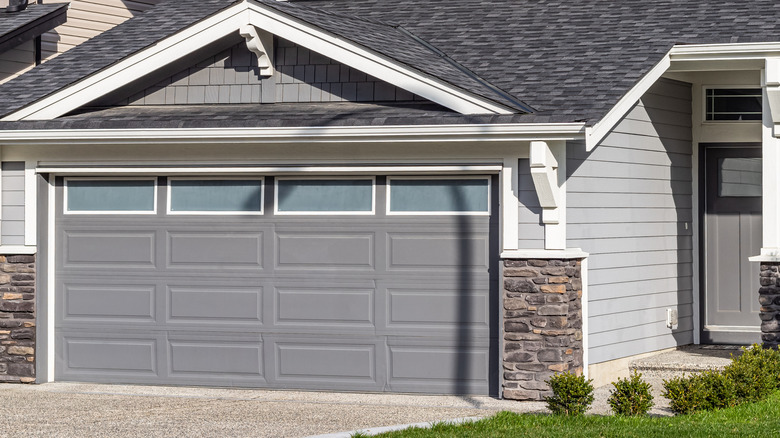
If your garage is fairly warm and there's plenty of humidity around, no doubt you're going to be faced with crickets making their way inside. Once in, they can lay hundreds of eggs, so you want to make sure that you can work out ways to keep them out to start with. You definitely don't want these types of pests living in your home or garage, as they can feed on fabrics and paper products. You might have tried using lavender to deter these unwanted pests, but actually figuring out how they're getting in and sealing up the gaps may well be a better solution. While using weatherstripping will work around windows and doors, there's a home improvement staple that you can easily use to plug up any cracks, holes, or gaps around the perimeter of your garage: caulk.
If you've done any type of home improvement, you've likely got a tube of caulk stored in your garage. Otherwise, this waterproof Flex Seal caulk should work quite well. With this particular product, you don't even need a separate caulk gun, as it has its own trigger. Once you have your caulk, it's just a matter of going right around your garage and using the caulk to seal any gaps to keep crickets out.
Where to look for gaps that the crickets could get in
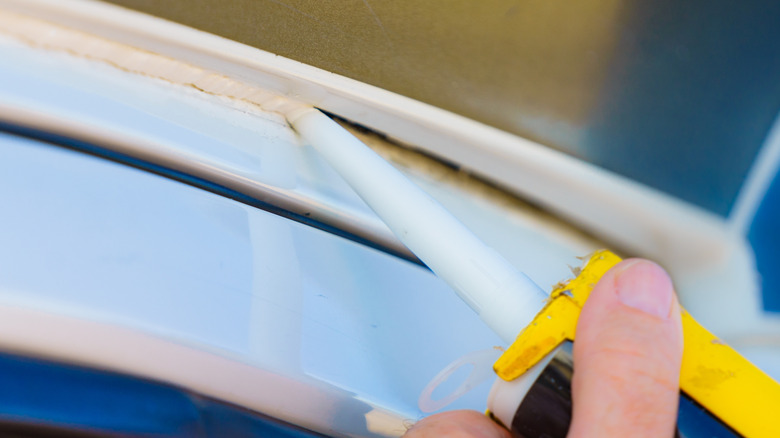
Before you get started, make sure you know how long caulk lasts in the tube after opening if you plan to use up some that you already have. If it's more than a couple of months old, it may well have expired, and you'll have to get a new tube. Once you're armed with the caulk, step inside the garage and look for any areas where you can see light coming through, even if it's just a pinprick. Crickets are quite small and can get through even tiny spaces. You also want to look at areas where pipes come through the wall. There could well be the slightest gap between the wall and the pipe that you want to carefully seal up with the caulk. The same goes for where electrical wires enter the garage.
Also, check around the windows, if your garage has any, and seal around the perimeter. Don't forget to check right around the walls, the ceiling, and even the floor, especially at the base of the walls. If you have an exhaust fan, you can seal around it as well. Close the garage door and see if there is a gap or if you can feel a draft coming through. You can easily put a bead of caulk around the door frame to provide a better seal when it's closed. Make sure that you also have a door sweep on the bottom of your garage door. Finally, take a walk right around the outside of your garage and look for any gaps that you might have missed while inside. Seal those up with the caulk, and you should have no more problems with crickets getting in.