

Ditch Traditional Retaining Walls: The DIY Upgrade That Looks Good & Adds Function
We may receive a commission on purchases made from links.
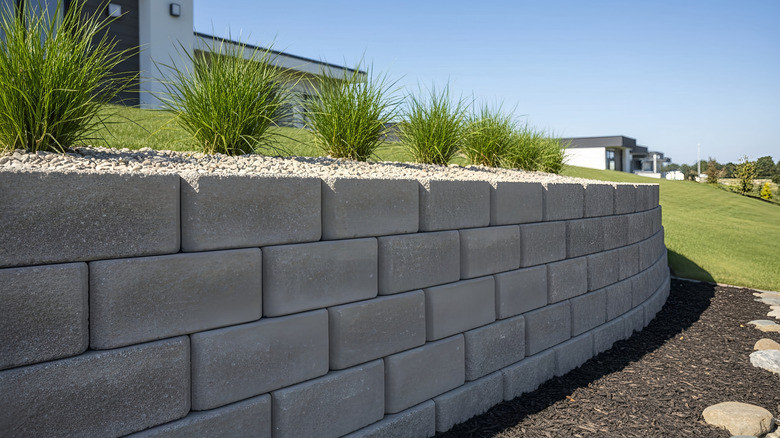
Retaining walls don't have to be boring. In fact, having them in your yard could be a blessing in disguise — and not just because they protect against mudslides and soil erosion. When paired with a stunning waterfall feature, retaining walls go from purely functional to show stopping design focal points. Waterfalls and retaining structures go so well together because the walls are built into a slope and may have multiple levels. Therefore, a lot of the building blocks you need for a cascading stream of water are already in place. Instead of piling up mounds of dirt and rock to create height, you can work with what you have and fill in the rest as you go.
The price you can expect to pay to install a water feature on a retaining wall varies depending on whether you DIY it or go through a landscaping company. If you're going to try it on your own, you may be able to save some money by selecting more budget-friendly pumps, fountain kits, or pond liners. The real cost might come from the amount of large rocks and pebbles or gravel you need to cover the waterfall area. For context, even resin boulders designed for outdoor decorating can be hundreds of dollars, so you just need to choose your statement pieces carefully and with intention. Altogether, you might pay up to $1,000 or more to do it yourself. For professional installation, you may be expected to pay up to $10,000 depending on the materials and design complexity. If you're considering this route, get quotes from local landscape designers to find the best deal.
Choosing a waterfall feature for a retaining wall
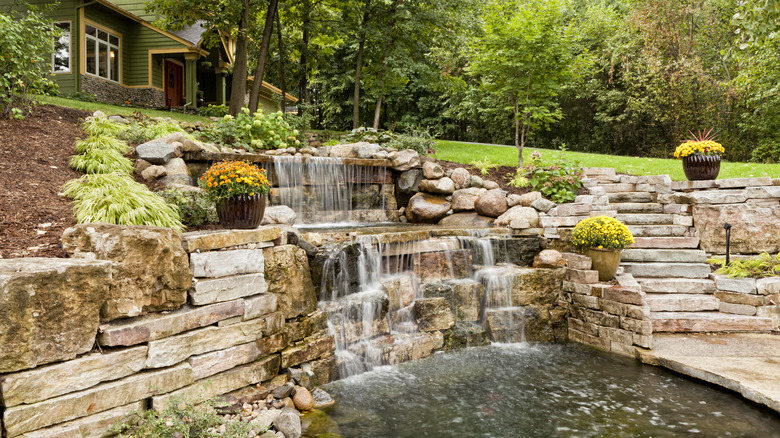
First, you need to pick out a water fountain design that suits your outdoor space. If you want to create a natural-looking cascade where water appears magically from between rocks, opt for a small spillway kit you can cover with slabs of stone, like this stainless steel model. You'll also need a basin, such as the waterfall basin reservoir by the Custom Pro Store. This is a good option if you're unsure whether you want to create a disappearing waterfall or an open pond since you can remove its grid framework to be either one. A basin is an essential component to any fountain, but especially to those built into or along a retaining wall because it collects water to be pumped back to the top instead of water-logging the soil and putting pressure on the wall over time.
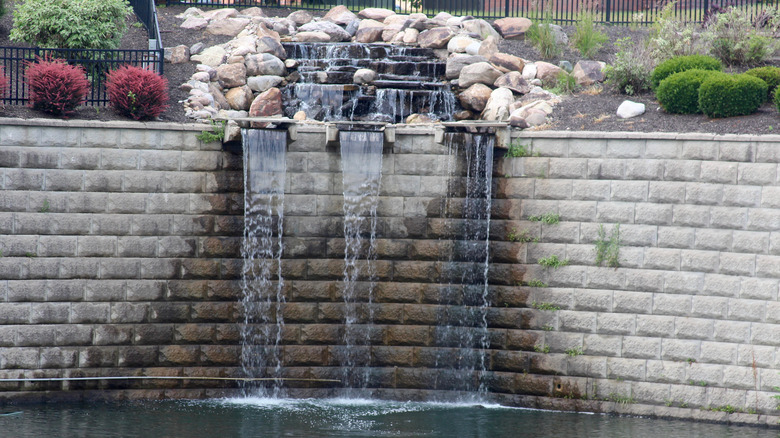
If you prefer a modern look, this wider outdoor pond spillway waterfall or a similar style may be perfect. It's designed to be installed into existing walls and produces a clean column of water. You could incorporate multiple of this type of fountain along the lowest level of a retaining structure and have them empty into a ground-level pond. However, for those who want a simpler solution, there are completely intact waterfall fountains that only require a power source and a level surface to operate. This Amazon garden outdoor water fountain even comes with built-in lights to illuminate the water at night. These alternatives can cost up to $1,000, but they're the definition of "work smarter, not harder," considering how quickly and easily they can be installed. The only labor-intensive part would be ensuring it rests flat and blends cohesively.
Tips for installing waterfalls on existing retaining walls
With the right tools and know-how, you can DIY a backyard waterfall-slash-retaining-wall in no time. For this project, gather garden hoes, spades, and shovels to cover everything from digging basin holes to clearing stubborn plant roots. You'll likely need a wheelbarrow for moving dirt, rocks, and pebbles. Make sure you have a level or a laser level tool. These items help verify that you're digging flat spots for the waterfall fountain and the basin to go, ultimately preventing water loss and pump issues in the future. You can also benefit from marking out the waterfall's path, proposed basin location, and the ideal pump pathway with white spray paint before you start digging. Whether your retaining wall is made up of one or multiple levels, you can still create a natural-looking waterfall by carving out earthen steps from the slope.
Regardless of what type of fountain you choose, a pond liner is essential. Get a larger size than you think you'll need to cover the waterfall's path and the basin area. This will prevent water loss and ensure a consistent water flow. You can get a 10 ft. x 13 ft. pond liner from Home Depot for under $50. For a cohesive design, use stones and boulders of the same material or color as those used for your retaining wall. If you're worried about a basin filled with water putting pressure on the structure, position it on the ground underneath the wall instead of trying to incorporate it into the slope above. If you do want it to be contained within the retaining wall, consider consulting a professional to verify that you won't weaken it by digging a hole and filling it with water, as this could put extra weight on the wall.