

Not Bone Meal — Another Natural Material That's A Fantastic Tomato Fertilizer
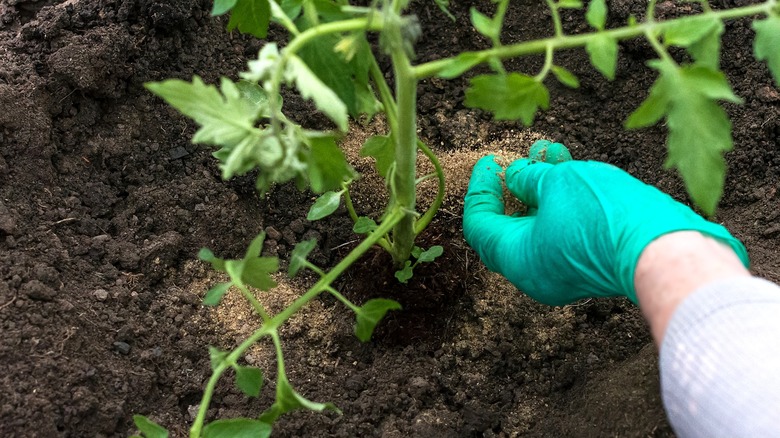
Tomatoes are tasty, nutritious, and versatile. The catch to growing them in your garden, though, is that tomatoes are heavy feeders, and although many synthetic fertilizers exist, gardeners often prefer natural options like bone meal for feeding tomatoes. Bone meal is rich in phosphorus, and it helps the tomatoes grow healthy roots and blooms. However, phosphorus is not the only nutrient that tomatoes need. They also need nitrogen, and that's where fish emulsion, another natural material, can help.
If you've never heard of a fish emulsion fertilizer before, it's basically a liquid that's made from fish carcasses, bones, and scales, and it has a nitrogen, phosphorus, and potassium (NPK) ratio of 5-1-1 or 4-1-1. The nitrogen in fish emulsion releases quickly, and the proper amount can help tomato plants grow big, green, and produce more leaves. This makes it very useful when tomato plants are looking pale or showing signs of stunted and slow growth. As for where you can get it, there are many store-bought options, although if you want, you can make fish emulsion at home, too.
Just keep in mind that fish emulsion is not an alternative to bone meal. They both have very different NPK ratios, and their application should be based on the results of a soil test. You can easily test the soil of your home garden using a home-based soil testing kit; then, if the results show your soil is deficient in phosphorus, use bone meal, but if the test shows nitrogen is low, use fish emulsion.
Using fish emulsion fertilizer to feed tomato plants
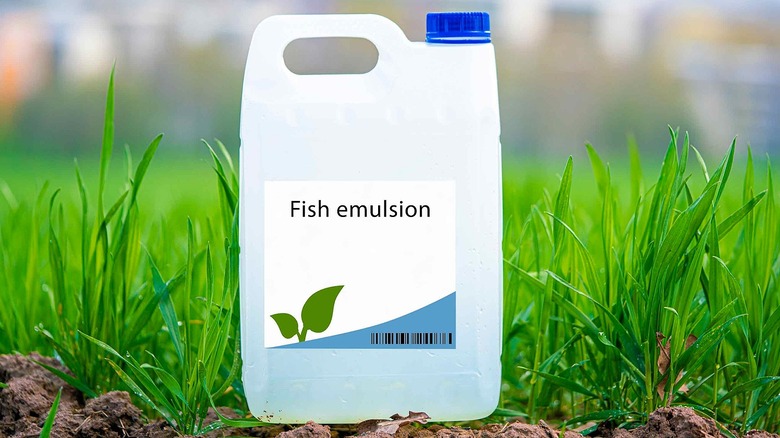
Using store-bought fish emulsion is simple; however, it's not very convenient. Fish emulsion smells terrible, and you, along with your neighbors and pets, are definitely going to notice it. The smell goes away in a day or two, though. If you use store-bought fish fertilizer, read the label before use. The concentration can vary from brand to brand, and you must dilute the emulsion accordingly before using the product in your garden.
Also, don't use fish emulsion fertilizer on dry soil, as it can stress tomato plants; water the tomatoes first before using it. Similarly, make sure that you apply the fish emulsion at the right growth stage. It shouldn't be used when tomatoes are setting flowers or fruit, as its high nitrogen content can push the plant into leafy growth, which can decrease both the quality and quantity of your tomato plants. In other words, using it all yearlong might give you big and lush plants, but they won't be very productive.
Lastly, understand what fish emulsion cannot do. Sure, it can help fix nitrogen deficiency in soil, but it won't fix other problems like inadequate moisture and sunlight. Similarly, it won't fix bad soil pH, which could also sometimes be the reason why your tomato plants can't absorb nutrients. So, before you use fish emulsion, make sure to measure the pH of your soil and adjust it between 6.2 and 6.8 to give your tomatoes the best chance of success. (Learn about more tomato fertilizers that will help your plants thrive.)