

The Cement Upgrade That Makes Your Garden DIYs Look Chic
We may receive a commission on purchases made from links.
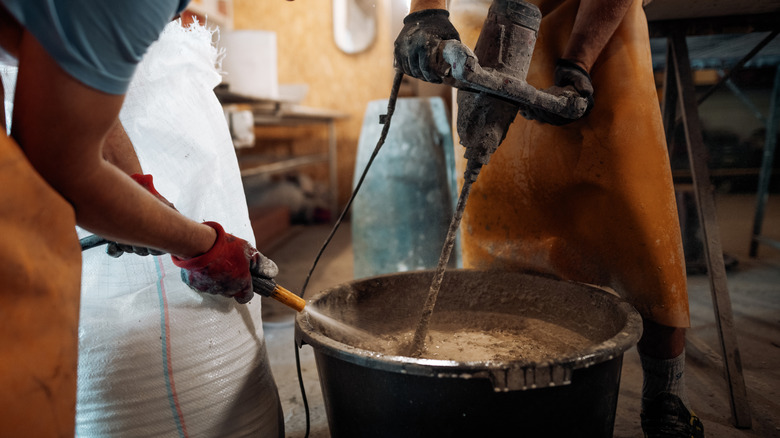
A free afternoon, a bag of cement, and some creativity, leads to ample garden DIYs. You can create everything from planters to stepping stones, turning a boring yard into a brutalist garden. While adding seashells or glass pebbles to the drying mixture is a simple way to soften the industrial look, changing up the actual cement itself also makes a major difference that increases style points. Opt for white cement instead of the usual gray for a brighter, cleaner design that complements any open space.
The beauty of white cement lies in its raw materials that influence the final color. For this chicer shade, there are less oxides in the mix like iron, nickel, and chrome, allowing the resulting cement to be white instead of the traditional gray. The manufacturing process also produces a finer powder, which can contribute to a smoother finish. This gives your DIY creation a modern look similar to plaster or clay. Plus, white is the best base for adding pigment to make any colorful concrete DIY — think the perfect blank canvas.
White cement offers more than aesthetic benefits. It's also highly reflective, which can help keep surfaces cooler. That means the soil inside your homemade planter won't get as hot nor the water inside your DIY birdbath. White cement is also just as strong as traditional options, and won't fade in the harsh sunlight or heavy rain. This color does come at a premium, often costing three times as much as its gray counterpart, which also makes it harder to come by. However, the extra costs are worth it as you'll have life-long stylish pieces for your garden.
Best ways to use white cement for stylish garden decor
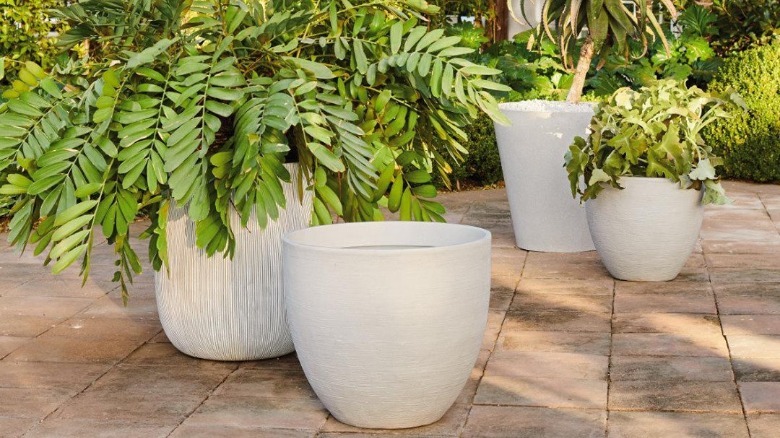
Concrete draping is one method to turn white cement, like Grout 360 White Portland Cement, into garden decor. You'll need absorbent fabric such as cotton or polyester and a mold for your design. For example, mix the cement according to the manufacturer instructions, saturate an old towel in the mixture, and drape it over a bucket. Once dry, remove the towel from the bucket, and you have a high-end planter. This method uses less of the mix than pouring the cement into a mold, making it a budget-friendly option. The finished pieces will also be lighter than solid poured concrete, though they may not be quite as durable. It's best for small, decorative pieces.
Pouring the concrete mix into molds can be simpler. Plus, you can make stunning concrete garden sculptures, fixtures, and accents in all shapes and sizes. DIY molds can also work well. Nestle a small bucket into a larger one to shape a planter or turn gardening edging into molding rings to create budget-friendly garden stepping stones.
When working with white cement, do know it sets more quickly than traditional gray cement, so you want to work with intention. Plus, if you're going to add pigment, ensure your white cement is lump-free first. Finally, once the finish is smooth, leave it to dry. Overdoing it with the trowel can leave your creation susceptible to cracks or tint the white hue. With these tips, your white cement DIYs will be the perfect pieces for a chic garden.