

Use A Rubber Mat To Create Budget-Friendly Pavers With A Rustic Looking DIY
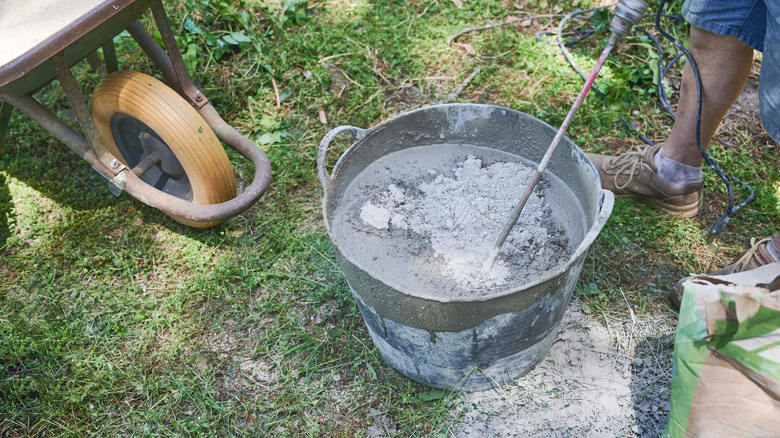
Among the many creative garden path options, pavers stand out as a particularly versatile, budget-friendly option. They are a more DIY-friendly option than permanently installed pathways, like concrete slabs, and you just have to replace a single one if it cracks. Plus, by making your own concrete pavers, you can customize your yard with any style, including a rustic-looking tree stump path.
These DIY stepping stones add a personal touch to your yard, and the result is a whimsical tree stump path that won't decay. Start by pouring concrete into rounded shapes, then apply a woodgrain stamp to the surface to create the texture. Alternatively, you can pour concrete into tree stump-shaped molds. The best part is that the stamp or molds and the paint are the most expensive parts of the project. For the pavers themselves, you can get 60 lbs of Quikrete Concrete Mix at Home Depot for around $5. This material is ideal for creating DIY garden stepping stones because it is affordable and readily available.
Creating your rustic tree stump pathway pavers
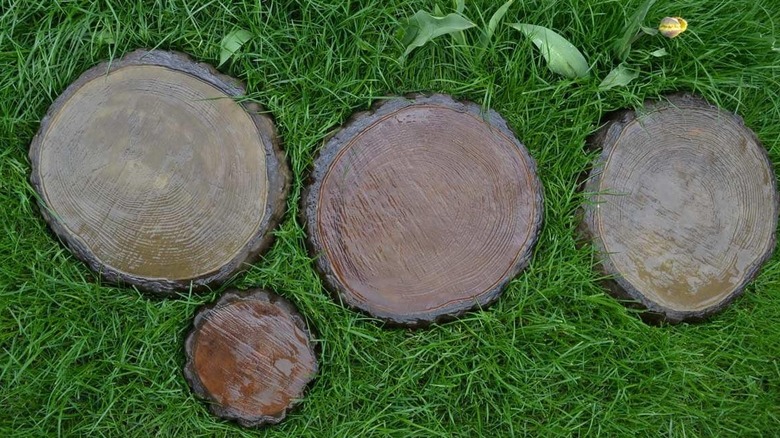
You don't actually need any fancy molds or trays to get started with this DIY. All you really need is something to create the base shape and a rubber mat with a wood grain to stamp the cement. A five-gallon bucket or an old planter can work as circular molds. You could even use milk jugs to DIY low-cost pavers with smaller trunk shapes. Mix the concrete according to the instructions on the bag and pour your initial forms. After an hour or two, use a Log End Concrete Stamp to create the grain. Carefully press the stamp evenly into the concrete for a few seconds. If you mess up, you can simply use a trowel to smooth out the concrete and try again. Allow the pavers to cure fully before removing them from the mold. If you want a simpler but similar DIY, use Tree Stump Molds. For this method, all you need to do is mix the concrete, pour it, and wait for it to fully cure.
Either way, once the concrete is dry, use concrete stain or paint to add wood-colored details. If you choose stain, start by cleaning the concrete and applying an etching solution. Then apply the stain and allow it to dry before applying sealer. For a natural look, use a darker stain for crevices and a lighter stain for the main surface.