

Not Copper Nor Egg Shells: Distract Slugs From Veggies With This Summer-Blooming Herb
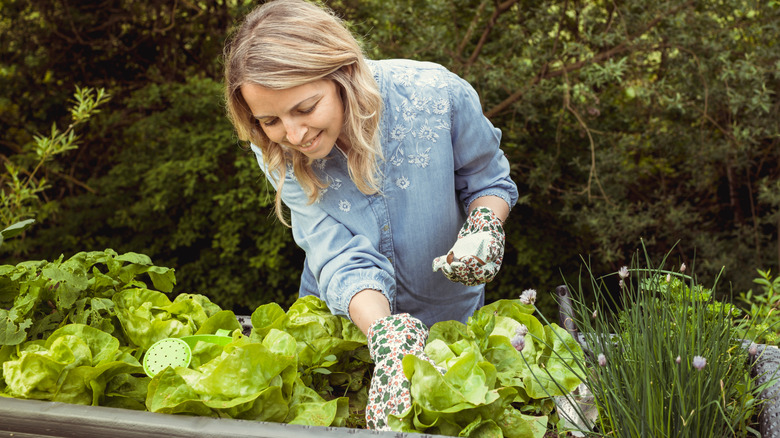
If you're an avid gardener, then you may have had your fair share of trouble with slugs. Because of the damage they're capable of causing plants, especially more fragile seedlings, slugs are often a common garden challenge, leading gardeners to try everything from eggshells to copper mesh to keep slugs away. However, while they may not be your preferred garden guests, slugs aren't all bad either. They're important decomposers, and since they act as a food source for many animals, they can often bring beneficial predators like frogs and birds to your garden. As a result, if you're struggling to keep slugs off your prized plants, there's another option: use this summer-blooming herb to distract them.
Also known simply as basil, sweet basil (Ocimum basilicum) is a common kitchen herb with fragrant leaves. It blooms throughout late summer with eye-catching flowers ranging from pink to purple to white, flowers which are just as edible as the leaves. Although many herbs tend to do a good job deterring snails from your garden, basil isn't one of them. Instead, these mollusks seem to have quite a preference for basil. Because of this, you can easily incorporate basil as a trap plant in your garden, drawing the attention of any visiting slugs away from your prized plants. Here, you can allow them to feed if desired or hand-remove them from your garden without having to rely on typical garden DIYs like using toilet paper rolls as a slug solution.
How to grow basil as a slug trap plant
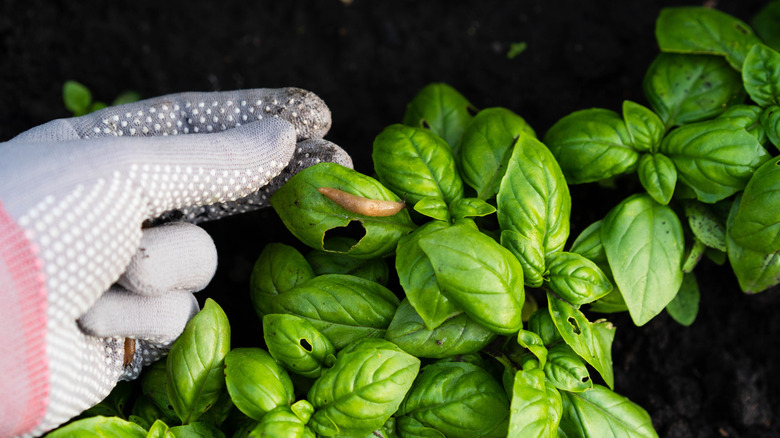
To get the best results when growing basil as a slug trap, you'll want to ensure that you're growing healthy, thriving basil. After all, if your goal is a slug distraction, you'll want to make sure it's an appealing one. Fortunately, basil is easy to grow, which means it's a plant even beginner gardeners can grow for slug control in the garden. You can grow basil as both an annual and a perennial. For the latter, it's hardy in zones 10 to 11.
One of the most important parts of growing basil as a slug trap plant is picking the right spot. Since your goal is to use it as a distraction, you'll want to find the balance in having it close enough to your main garden that slugs are tempted by the detour while not having it so close that any visiting slugs easily migrate over to the crops you're trying to protect. You also want to keep sunlight in mind. Basil requires full sun for the best results, which means that you'll want to avoid growing it in any shaded areas throughout your yard where it may fail to thrive.
On the bright side, basil is fairly low maintenance. For the most optimal growth, maintaining moist soil without waterlogging is often the best solution, but this tough plant can hold up to the occasional drier weather. Just be sure not to overwater, as this could lead to disease or root problems.