

How Long Does It Take To Grow Strawberries From Seed To Harvest?
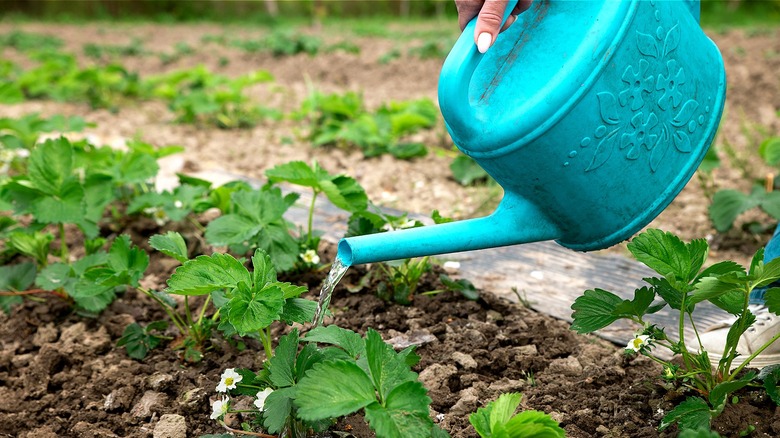
There are a plethora of reasons why strawberries (Fragaria) are one of the most popular fruits. They're sweet, rich in vitamin C, and the first to ripen in the spring, to name a few. When you want first dibs on the freshest strawberries around, you might consider growing a patch in your backyard. But if you're picturing juicy, ripe strawberries popping up a few weeks after sowing your seeds, not so fast. Growing strawberries from seed to harvest is a slow burn that can take from four to six months, up to a year or longer, depending on the variety.
So why bother with seeds at all when garden centers sell strawberry plants, and farmers markets do the hard work? Seeds open the door to varieties you'll never spot in grocery stores, like beach strawberries (Fragaria chiloensis).
With a little planning, lots of TLC, and oodles of patience, you can successfully grow these notoriously stubborn germinators from scratch. You can choose from three types of strawberry seeds: June-bearing, everbearing, and day-neutral.
As the name suggests, June-bearing strawberries produce fruit over several weeks, typically in June. Everbearing seeds give you two chances for harvest, in the spring and late summer, while day-neutral strawberries produce throughout the entire growing season. Regardless of the type you pick, it's important to pay attention to every stage of its life cycle and not skip the crucial steps your strawberry plant needs to thrive.
Timeline for growing juicy strawberries from seeds like a champ
Although strawberries are perennials, growing them isn't for the faint of heart. That's because they need a lot of attention in the beginning to become their best selves. Since timing is everything, it's important to map out a strawberry growth plan. You don't want to start growing your seeds indoors until about 14 to 16 weeks before the last frost. So, a month before that four-month mark, refrigerate your seeds to trick them into thinking it's winter. This process is called stratification.
After a month, you can sprinkle the seeds in shallow indoor containers with plenty of light and damp soil. Germination can take up to six weeks. During this phase, you'll begin to see leafy sprouts and flowers. As soon as you do, it's time to move them to deeper containers. Once the leafy parts reach about 2 to 3 inches tall, you can move them outdoors, as long as there's no risk of frost. Of course, you can always choose to continue growing your strawberries indoors.
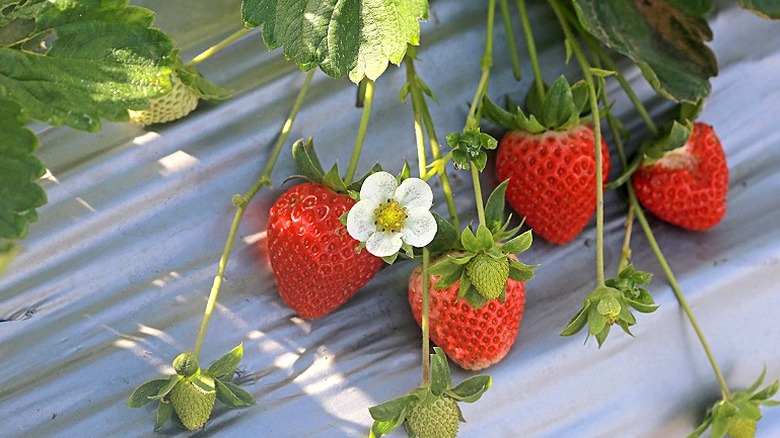
Depending on your area, the vegetative phase for strawberries can last up to six months, and in warm temperatures, waiting up to a year is not uncommon. When your strawberry plants begin to bloom with pretty little white flowers, fruit is right around the corner. Within roughly three to four weeks, green berries will begin to appear that slowly turn red, but don't be mistaken: Those tiny specks on a strawberry aren't seeds.
Also, strawberries might not be ready to harvest the first year. But during the second, get ready to bask in the fruits of all your hard work.