

The Best Kept Secret To Get Scrap Wood For Free
Cast-off wood pallets are consistent sources of free scrap wood, but they come with caveats. One being that slats are often scarred, and become even more so after you've jimmied all of the boards apart. If you've accumulated all the splinters in your hands you can tolerate, there is an alternative to wood pallets to try: construction sites. They may just have you leaving future pallet wood curbside.
Construction sites are a gold mine for unwanted wood. With piles of waste boards and beams from demo to scraps cut from new materials, these work zones could have you rich in wood without spending a dime.
Granted, there's no guarantee against splinters if you go this route, but it'll still be a pleasant break from the crowbar-vs-pallet war. There's also no guarantee of what kind of wood — and how much — you'll find there. The uncertainty of size, quantity, and quality of the wood you source might make this method better for scrap wood DIYs than large-scale projects, but your find might inspire some serious creativity.
Scavenging wood from construction sites should never be a covert operation. Before you make your move, approach someone onsite and ask to speak to the project manager. Once you've tracked them down, get their name and confirmation that you can walk away with some leftovers. The manager may be thrilled to have some of the disposal burden off their shoulders, but they may also not be receptive to your entreaty. Put on your best behavior, and be polite and prepared for whatever their answer will be. In no time, you could be knocking together some of TikTok's best ideas for those pieces of scrap wood.
Tricks for scoring construction scraps
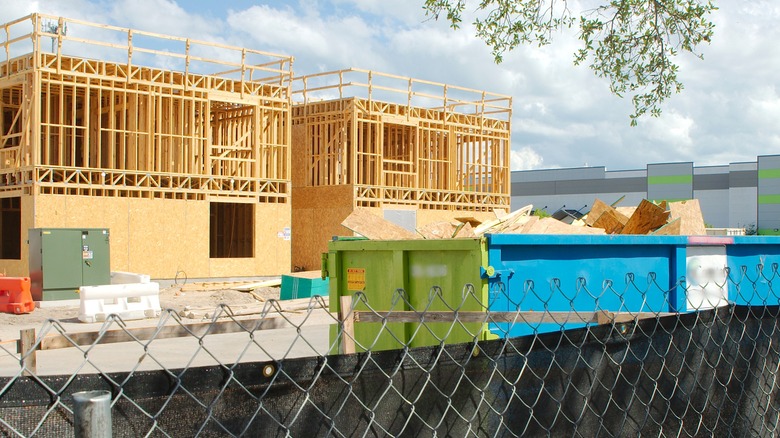
To get in on this unsung means of snagging free wood, there are plenty of considerations for keeping yourself safe, both physically and legally. Keep in mind that you'll probably be on private property. The construction team will likely be liable for any accidents on the site, and there's always the chance that they'd deny responsibility if they found themselves liable for your injuries. There's an additional chance that the site's owner won't allow non-employees or crew on the property for the same reasons.
Scavenging wood from construction sites is not for the delicate. Don long pants and sleeves, closed-toe shoes (or better yet, work boots), and gloves for this task. Most legit construction scraps are going to be demolition salvage. Be prepared for errant screws and nails protruding from the wood and boards with jagged, broken edges. The task may even have you climbing into a dumpster — as much a way to build character as a way to get hurt.
The end of the workday is a logical time to sift through the day's leftovers. So are the earlier days of a project when the team may be clearing out lots of waste from demolition. (In this case, you might find this way to clean reclaimed wood helpful.) Some waste-conscious builders may also post their leftovers on sites like Craigslist and Facebook Marketplace rather than tossing them in a dumpster. Just keep your eyes out, arrive with a smile — and maybe freshly baked goods — and you may come home with a windfall of wood.