

Goodbye Concrete Blocks: Build Your Garden Beds Quickly With This Unique And Durable Material
We may receive a commission on purchases made from links.
If you've been researching DIY raised garden beds, you've probably come across lots of tutorials that use concrete blocks. They're certainly cost effective, and the method works well for many gardeners. However, building a garden bed from concrete blocks is time-consuming. Some blocks may even contain toxins that make growing edible plants in these beds a bad idea. If you're in the market for a durable garden bed that's super easy to install, consider Corten steel.
Corten steel is a sturdy weathering steel. The chromium-copper alloy develops a beautiful, corrosion-resistant patina — essentially a layer of protective rust — when used outdoors. This layer starts out burnt orange in color, changing to deep purple over time. Unlike some other metals, the rust isn't a sign of deterioration; it gives Corten steel an enviable resistance to the elements. Some gardeners may be concerned about the effects of the rusting process on their plants. However, nothing harmful leaches into the soil. In fact, the process may support plant health through the release of micronutrients like iron, manganese, copper, zinc, and tiny amounts of nickel.
The walls of Corten steel garden beds are thinner than those made from common materials you can use for DIY raised garden beds, like bricks, masonry blocks, or wood. This gives you more planting space. Plus, the soil may heat up faster in spring, meaning you might be able to get seedlings in the ground sooner. You can even say goodbye to concrete blocks and build a retaining wall quickly with this unique and durable material. The downside? Corten steel is pricey — roughly $75 to $150 per square foot. However, its durability may save you money in the long term; you won't need to replace your garden beds for decades.
Setting up your Corten steel garden bed
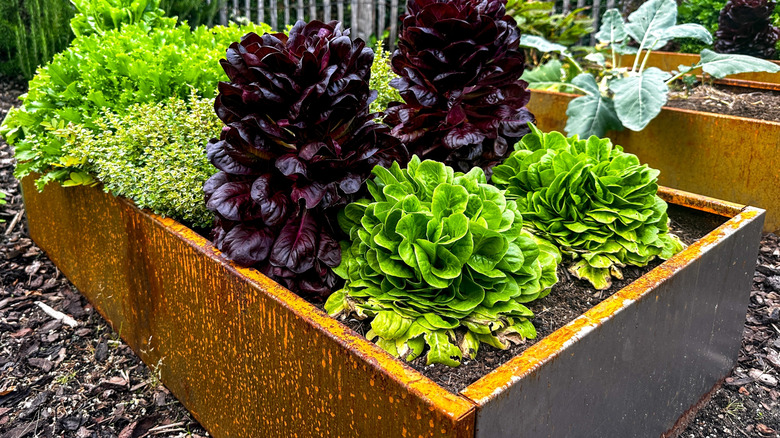
If you're eager to install a Corten steel planter in your garden, first consider your ideal size for your raised garden bed. You can either order a pre-assembled bed or buy separate panels to build one to your specific needs. Once your materials arrive or your pre-assembled garden bed is delivered, select the perfect spot for it. Choose a location with good accessibility, excellent drainage, and adequate sunshine for the types of plants you want to grow. Keep in mind that a rust-colored residue will accumulate below the Corten steel garden bed. While this residue isn't harmful to the environment, it will stain anything porous, including concrete and natural stone. It's best to install your garden bed directly on soil or gravel. Once the bed is in place, all that's left to do is fill it with garden soil and add your plants.
Corten steel will start to rust in about two months and be fully covered in rust within about two years. If you want to speed up the development of the patina, fill a spray bottle with 2 ounces of vinegar, ½ teaspoon of salt, and 16 ounces of hydrogen peroxide. Coat the sides of your garden bed with the solution and allow it to dry completely. Do this regularly until you get your desired look, then seal it using Everbrite Clear Protective Coating for Metal or a similar Corten steel sealer. The only thing that compromises the durability of Corten steel is high humidity and sea salt exposure. If you live in a region with consistently moist air or high levels of salt spray, Corten may not be the right choice for your raised garden beds. Consider an alternative, such as Aluzinc-coated galvanized steel.