

Goodbye Concrete Blocks: Build Your Retaining Wall Quickly With This Unique And Durable Material
We may receive a commission on purchases made from links.
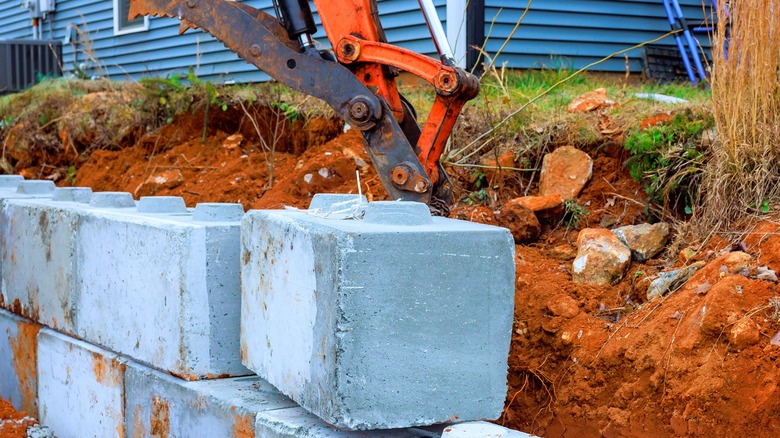
When trying to prevent soil erosion on steep sections of your property, you might decide on using concrete block. Using concrete for this purpose is extremely common for homes; but because it's so prevalent, it can make it difficult to create a retaining wall that'll look amazing in your yard while also letting you stand out from the neighborhood crowd.
An alternative to concrete is Corten steel, also known as weathering steel. It's an alloy consisting primarily of iron (~98%), with varying amounts of carbon, manganese, copper, chromium, phosphorus, and nickel. It's specifically made for outdoor use and exposure to the elements, and it is instantly recognizable by its rusted appearance.
In addition to the final look, though, another difference between using Corten steel and concrete block is that a Corten steel retaining wall won't require a trench to be dug first. It also weighs less than concrete — where blocks can weigh as little as 15 pounds to as much as 60 pounds per. By contrast, a full prefabricated Corten steel panel might weight around 60 pounds in total. They also sometimes ship in kits with pre-drilled holes, so you won't have to cut the metal, or weld either. (Check out the 10 do's and don'ts of building a retaining wall).
How Corten steel works for retaining walls
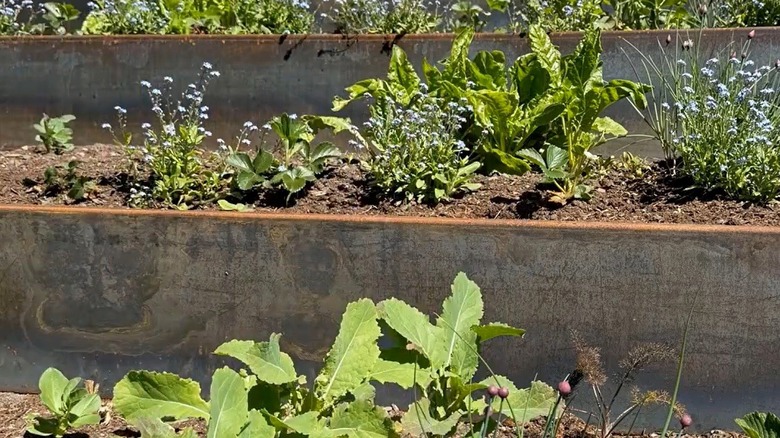
The signature of Corten steel is its reddish-brown color. As the material undergoes oxidation, the metal takes on a rust-colored patina that naturally complements landscapes and home gardens. The rusting process can take up to two years to complete, but it begins soon after installation, within the first two months. Note that the patina requires moisture to develop, so if you live in an area with dry conditions, the rusting process will take longer.
However, beyond its look, a retaining wall needs to be functional, too. With proper installation, a Corten steel wall should not bend or buckle from soil and/or rock pressure. As a "weathering steel," it also doesn't break down or lose its integrity during freeze-thaw cycles or when exposed to other types of harsh weather. (By contrast, depending on the quality of your concrete blocks, they might suffer damage during freeze-thaw cycles.) As for construction, Corten steel can be bent into curves and angles, allowing for unique wall designs or in handling tricky boundary lines.
One way to use Corten steel is in a tiered design, which makes it easier to create flower beds or garden terracing while ensuring the soil stays in place. Corten steel is also used for DIY edging, and planter construction. For example, the Home Depot carries bendable Corten edging from makers like VEVOR, Vigoro, and Oyezvary.
Is Corten steel right for your new wall?
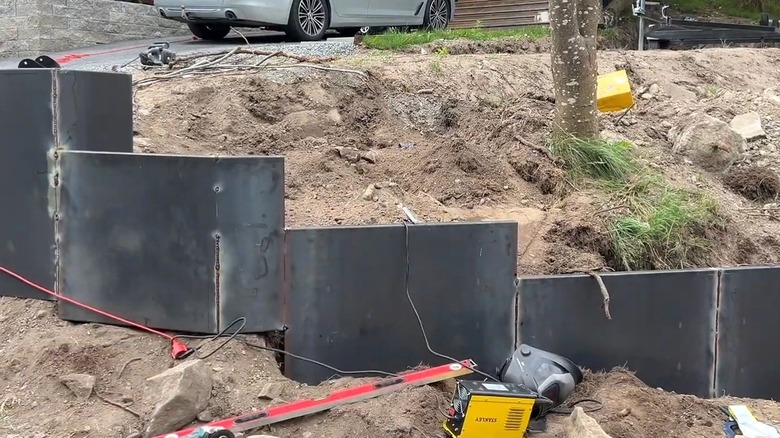
If you were planning to protect your landscape with a concrete retaining wall, but are now thinking about using Corten steel, it's also important to weigh some considerations for the latter. For one, as the material begins to rust, you'll notice runoff from the metal, which can discolor nearby sidewalks and other materials. You may need a gravel buffer section between the retaining Corten steel wall and your concrete to catch the rust color and avoid staining.
If you need to bury a large section of the Corten steel retaining wall, you'll need to add coating to protect it. Without protection, the buried material will never have a chance to develop its patina and thus, its natural protective layer. As the buried material loses its thickness over time, the structure will lose some of its rigidity. That said, adding a bituminous coating to the buried section should prevent this corrosion.
Finally, there's the cost. Corten steel has an average cost of $75 to $150 per square foot for the materials alone. This is significantly more expensive than interlocking concrete blocks, where the cost usually tops out at about $35 per square foot. What's more, if you plan on installing a taller, structural wall that'll support a lot of weight, you'll need much thicker Corten steel, which will further drive up the upfront cost.