

Bee Balm Isn't The Only Choice: The Red Flower That Hummingbirds Can't Resist
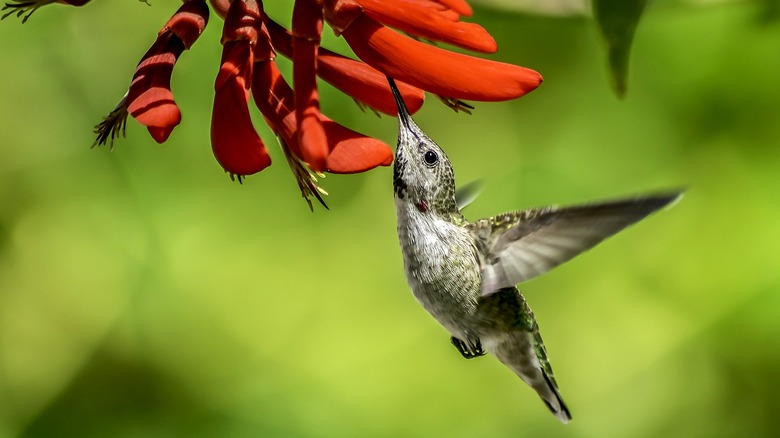
If there's one thing that veteran hummingbird lovers know, it's the fact that the tiny, endearing birds are drawn to bright red flowers — especially if they're trumpet-shaped. If you're in a region in which the California fuchsia (Epilobium canum) thrives, this is the flowering perennial to add to your hummingbird garden. According to the California Native Plant Society, "There's probably no better California native plant for attracting hummingbirds." In fact, in addition to being called California fuchsia, the shrubby plant is also known as the hummingbird trumpet!
Their flowers make welcome splashes of orange-red in the late summer and through fall, when other blooming plants, including hummingbird favorite bee balm, are starting to fade. When in flower, California fuchsias can reach up to 4 feet tall and 3 feet wide. Those tubular flowers provide nectar not just for hummingbirds, but for bee species such as the carpenter bee. And even before the flowers appear, the plant's foliage is a striking silvery green that adds fuzzy interest to a variety of landscapes, from arid to Mediterranean.
One of the beautiful varieties of fuchsia to grow in your garden to attract hummingbirds, California fuchsia requires a warm climate. Mostly found in western states, California fuchsia is rated as perennial in USDA plant hardiness zones 6 to 11. Several cultivars of the native plant exist, allowing gardeners with different growing conditions to successfully grow the plant. While the common California fuchsia prefers sandy soil, for example, cultivars that grow in clay are available.
The native California fuchsia thrives in sunny and dry conditions
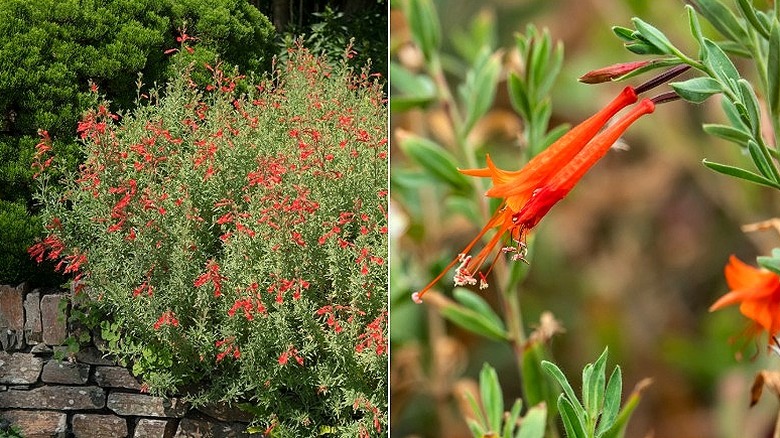
Learning how to successfully care for fuchsia plants starts by siting them correctly. Except in the hottest climates, California fuchsias prefer to be in full sun, with no need of supplemental watering. At the hottest end of their growing area, however, the shrubby plants appreciate a bit of shade and extra water. Cultivars include a few that tolerate partial shade, such as 'Summer Snow,' 'Alba,' and 'Hurricane Point.'
Most gardeners in the California fuchsia's growing zone plant the perennial in fall. On the cooler end of their growing zone, however, establishing seedings in the spring rather than the traditional fall planting may also help northern gardeners get these flowering plants through winter unscathed. Additionally, setting California fuchsias on slopes can help them from getting cold, wet feet during the winter. Avoid over-fertilizing the flowering perennials before cooler weather, because new growth makes them vulnerable to cold snaps.
Prune the plants once the flowering period is over, usually in late fall. They can be trimmed back to a few inches above the soil line. This extreme "haircut" will allow next spring's growth to be all the more robust. In fact, the plant is more likely to die the following year if this pruning measure isn't taken. Common fuchsia plant diseases include fungal issues like rust, which are associated with dampness. Making sure the soil is well-drained and that you don't over-water can mitigate these problems.