

Radio Babies Will Remember It Well — The Kitchen Gadget That's A Valuable Thrift Store Find

For anyone who grew up with a 1950s kitchen, the Mary Proctor Starflite toaster may bring back memories of shiny countertops, chrome appliances, and a time when even everyday gadgets were designed to make a statement. Produced by Proctor Silex, the Starflite became one of the most recognizable toasters of the postwar era, combining sleek space-age styling with the convenience modern families wanted in their kitchens.
The Mary Proctor name was a product line created by Proctor Silex that embraced the colorful, futuristic style of the mid-century modern decor era. With its sleek curves, chrome accents, and eye-catching design, the Starflite toaster became a popular kitchen appliance during the 1950s, making it a familiar sight for the Silent Generation, sometimes nicknamed "Radio Babies," individuals born between 1928 and 1945 during the golden age of radio. Some vintage enthusiasts may remember these toasters from their grandparents' or aunts' kitchens. And today, that nostalgia has helped transform vintage Starflite toasters from forgotten countertop appliances into a valuable vintage appliance you should always look for at thrift stores.
Color and condition can have a major impact on collectibility. Examples with bright original finishes, working mechanisms, and fewer scratches or dents tend to attract the most interest from vintage appliance collectors. Starflite toasters can sell for $60 to over $100, with rarer colors, excellent condition, and complete examples potentially commanding higher prices on the secondary market. Although collectible, these toasters don't appear on eBay as frequently as many other vintage toaster brands.
What to look for when hunting for a Starflite toaster
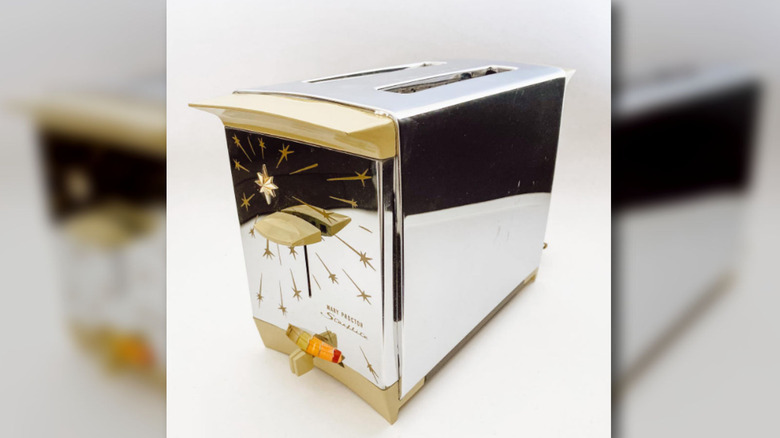
The Starflite toaster is an icon of 1950s atomic-age design. At a time when many kitchen appliances were still defined by simple, boxy shapes, the Starflite features a dazzling, mirrored chrome finish patterned with starbursts. Unlike many modern appliances designed to be tucked away into a cabinet, the Starflite was meant to be displayed. It's now finding a whole new audience, thanks to the increasing popularity of retro kitchen styles that defined 1950s homes.
The easiest way to identify if you have an authentic Starflite toaster is by looking for the Proctor Silex name and the distinctive streamlined design associated with the model. Authentic vintage units will usually have a stamped model number (such as "MODEL P 20354") and the manufacturing location clearly marked on a label at the bottom.
There are several versions of the Starflite that are attractive to collectors, including the Starflite Toaster Oven. Collectors often look for examples with their original chrome finish, colorful enamel body, intact knobs, and clean mechanical components. Because these toasters were everyday appliances, finding one in excellent condition with minimal wear has become increasingly difficult.