

What To Do If You Spot A Swarm Of Carpenter Ants Around Your Home Or Yard
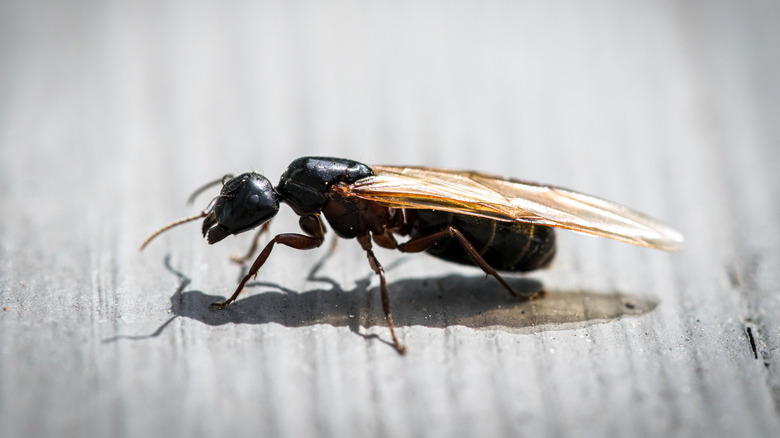
The sight of a sudden swarm of flying insects around your house is enough to make any homeowner's stomach drop. Whether they are swirling over your lawn or hovering above the kitchen floor, the discovery can easily trigger panic. However, spotting flying carpenter ants is rarely a "spray-and-forget" situation. It is a major red flag that an established, reproducing colony is nearby. To protect your home's structural integrity, you must look past the individual insects and address the colony at its source.
Before taking action, you must confirm you are actually dealing with carpenter ants and not termites. While they look similar at a glance, their treatment methods are completely different. Since the remediation strategies vary wildly, learning the surefire way to wipe out termites in a pinch won't help you if you are actually facing an ant invasion. First, examine the waist — carpenter ants have a pinched, narrow waist, whereas termites have a straight, broad body with no distinct waistline. Then look at the wings. Ant wings are unequal in length, with the front pair longer, and termite wings are all the same size and shape. Lastly, inspect the antennae. Termite antennae are straight, but ant antennae are bent.
Once you've determined that the swarm is indeed flying carpenter ants rather than termites, you can move on to eradication. Successfully eliminating the threat requires a tactical approach rather than a standard can of pesticide. Your next steps should be to determine whether the swarm came from inside or outside, follow foraging worker ants back to the primary nest, remove any sources of moisture nearby, and treat with a focused treatment, like specialized baits or insecticidal dust.
How to treat a swarm of carpenter ants
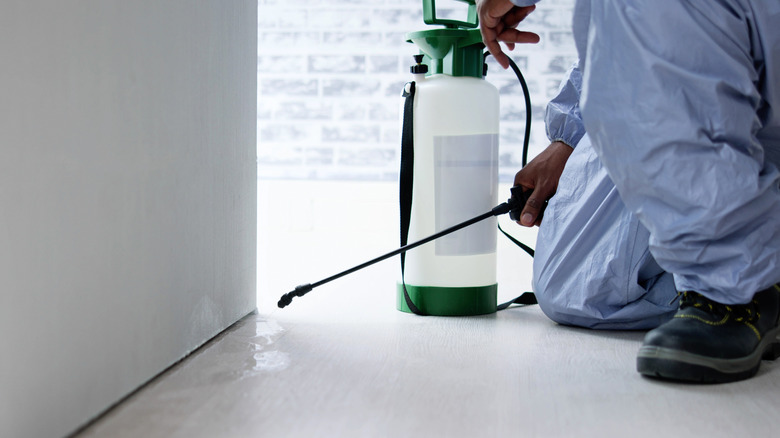
To effectively treat a carpenter ant swarm, you must look past the flying insects themselves. Winged swarmers don't damage wood — their only job is to reproduce. Knocking them down with contact spray won't solve the problem, as the primary, egg-laying colony will remain safely hidden nearby.
Before applying chemicals, pinpoint the nest's location. Indoor swarms emerging from baseboards or window casings mean the colony is already inside your walls. Outdoor swarms around woodpiles or porch steps indicate a nearby colony looking to expand inward. To find the exact nesting site, track wingless worker ants at dusk or look for frass — the sawdust-like waste product these insects produce. Once you locate the general area, skip standard bug bombs or repellent sprays, which can cause the colony to split and worsen the infestation. Instead, use non-repellent liquid sprays to establish an outdoor perimeter barrier. Other treatments, like insecticidal dust and specialized gel baits, are ideal for indoor wall voids and active trails, allowing ants to carry the lethal dose directly back to the hidden queen.
If you're having trouble locating the parent nest (or if the thought of dealing with these flying pests makes you queasy), you can always call a pest control professional. They can locate and eradicate the colony for you, making the process entirely stress-free. It can also help to understand what attracts flying ants in the house and how to get rid of them before you map out your defensive strategy.
How to help prevent carpenter ant swarms
Preventing carpenter ant swarms comes down to one core strategy: habitat modification. Because a colony must mature for three to five years before it can produce winged swarmers, consistent preventative maintenance is your best defense. To protect your property, focus on three main areas — eliminating moisture zones, cutting off access points, and clearing outdoor areas.
Carpenter ants don't eat wood — they hollow it out for nesting areas. Because they struggle to chew through dry hardwood, they target water-damaged wood. To prevent moisture accumulation, regularly inspect your roof valleys, flashing, window casings, and plumbing fixtures. A slow, hidden pipe leak can create the perfect damp environment for a hidden nest.
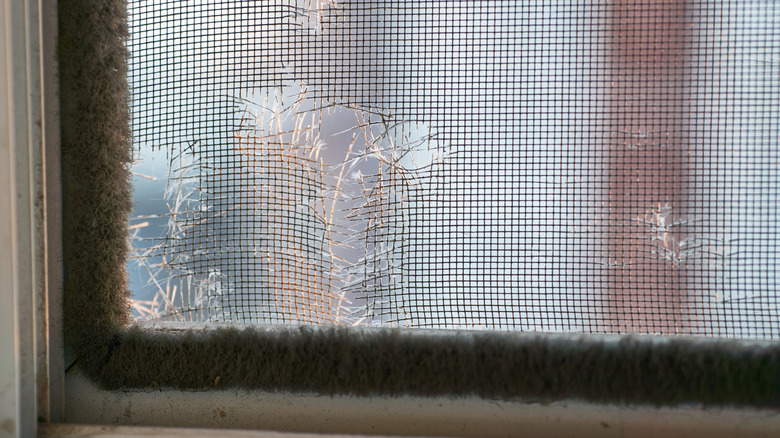
Next, cut off easy access points. Foraging workers are constantly scouting for new nesting sites, and eliminating their pathways prevents them from establishing satellite colonies indoors. Cut back vegetation so branches sit at least two feet away from your siding and gutters. You should also ensure that crawlspace and attic vents are covered with fine-mesh insect screening. Repair any rips in window or door screens immediately, since swarmers can easily slip through small tears during mating season. Finally, clear outdoor harborages to keep parent colonies at a distance. When it comes to outdoor wood, try to minimize mistakes you might be making when storing your firewood, like stacking logs right against the exterior of your siding. Keep it at least 20 feet away from the house, elevated on a rack to prevent moisture absorption.