

The Hawaiian Home Decor To Keep An Eye Out For At The Thrift Store

We may receive a commission on purchases made from links.
If you're looking for a way to turn your home into a tropical paradise, the solution could be a secondhand purchase away. Next time you're thrifting for home decor, keep an eye out for koa wood, a richly-colored wood made from the tree of the same name. Koa trees only grow in Hawaii, and their name comes from the Hawaiian word for "warrior" — a fitting name given its cultural significance, since it was often used for ceremonial items for chiefs and high-ranking warriors among the early Hawaiians. If you can't make it to the islands yourself to get your hands on koa wood, your best bet is to source pieces made of this wood — such as bowls, wall decor, furniture, and more — from a secondhand store or online reseller.
Knowing koa wood's unique features will help you identify it while thrifting. The trees' cells are uniquely arranged in ribbon patterns, which creates a mirror-like effect in this medium-density wood that reflects light differently depending on how you view it. This effect is called "chatoyancy," also known as the "cat's eye" effect. This hardwood is also known for its wide spectrum of colors, ranging from a light-golden hue to a reddish-brown. Whatever your home decor style, there's bound to be a hue of koa wood that will fit in seamlessly.
How to find and care for koa wood decor
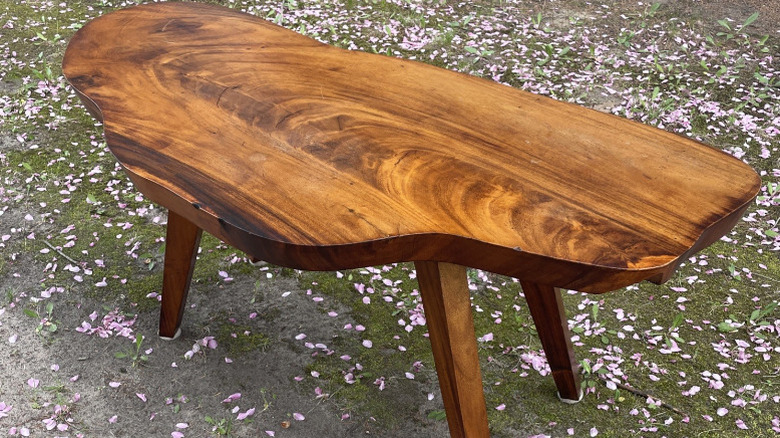
If you're interested in finding koa wood decor to subtly incorporate a tropical theme into your home, you have plenty of secondhand shopping options. You can find many of these pieces online on platforms such as Craigslist, eBay, and Facebook Marketplace. You might also get lucky and spot koa at your local thrift or antique store. Keep an eye out for quarter-sawn koa — in this style, the wood's growth rings are cut to meet the board's face at a 60- to 90-degree angle, preserving koa's "cat's eye" effect.
Once you bring your koa piece home, it will require care to maintain its unique beauty, especially if it seems grimy, or if it ended up at the thrift store because it's not in ideal condition. Because excess sunlight can fade the koa, keep it away from direct sunlight. Moisture and humidity can also damage the wood. Citrus-based cleaners and silicone sprays can dull the wood's surface, so don't use them to clean your wood furniture. Once a month, gently polish the koa, using a few drops of Milsek oil on a cotton cloth. If you decide to place decor or other objects on the piece, rotate them and change their positions regularly to ensure that they don't dent the wood or otherwise affect its appearance.