

AC Auto Or On — Which Mode Will Save You More?

Summer months across the U.S. can be brutally hot, especially in states like Florida and Texas. While it might feel nice to set your air conditioner to a chilly temperature, your wallet may disagree. Blasting your AC all the time can drive up your utility bills and put a strain on your monthly budget. Many air conditioners have both an "auto" and an "on" setting, leaving many homeowners to ask: Can leaving your AC on all day save you money? Which mode actually costs less to run, and why does it make such a big difference?
If your main goal is to lower your electricity bill and reduce wear and tear on your system, auto mode is usually the better choice because it stops the fan from running when the system isn't actively cooling. When you set the fan to "on", the indoor blower runs continuously, using electricity even when the compressor isn't operating. Depending on your local electricity rates, that can easily add an extra $40 or so to your monthly utility bill just to keep air circulating.
Another way using auto mode can save you money is by reducing long-term equipment wear. Because the fan runs only when the system is actively cooling, your AC unit experiences normal wear and tear, particularly on the indoor blower motor. When you run the system in "on" mode, you can expect accelerated component degradation. Continuous operation can cause your air filter to collect dust more quickly and shorten the lifespan of the blower motor, dropping hints of trouble that align with common warning signs from your HVAC system you shouldn't ignore. This means you can expect more frequent and expensive maintenance. Since a blower motor replacement can cost $300 to $900 on average, that's an unnecessary expense you can avoid just by flipping a switch.
Auto versus on explained
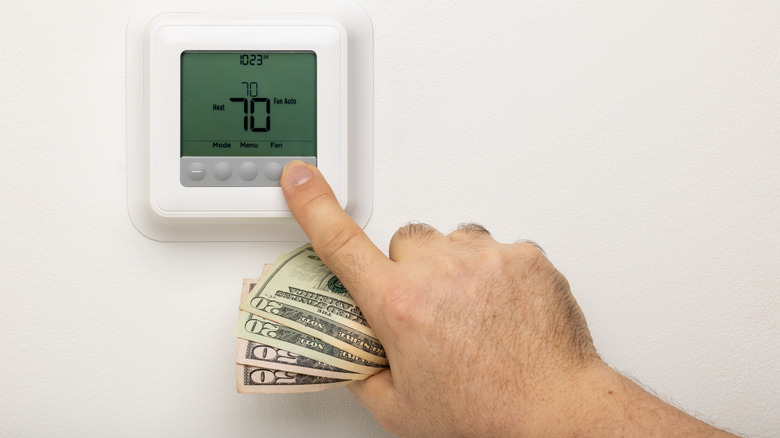
It makes sense that running the blower fan nonstop in "on" mode costs more because the fan continues running even after your home reaches the set temperature. In auto mode, the fan runs only during cooling cycles before shutting off. Overall, this selective runtime uses much less energy, which keeps your monthly electric bill in check.
Auto mode is also a critical safeguard against rehumidification, an unseen expense that often surprises homeowners. Air conditioners naturally remove humidity by condensing water onto cold indoor coils. If you've ever found yourself wondering whether you really need a dehumidifier if you already have an AC unit, understanding this moisture control cycle is essential. When the fan is left in the "on" position, it blows continuously over these wet coils after the cooling cycle ends, allowing some of that trapped moisture to evaporate back into your home. This sudden spike in humidity can make your living space feel sticky and warm, often driving you to lower the thermostat even further and forcing the outdoor compressor to work overtime. Switching to "auto" breaks this cycle — the fan stops immediately, allowing the collected moisture to drain away so you can enjoy crisper, more comfortable air at a higher, more affordable baseline temperature.
For homeowners who still want occasional air movement without the heavy energy penalty, many modern thermostats offer a smart middle ground called a "circulate" or "eco-fan" mode. This feature keeps the system primarily in auto mode to maximize your savings, but automatically runs the fan for just 15 to 20 minutes every hour if the AC hasn't kicked on. This keeps the air from becoming stagnant and balances temperatures evenly across the house, all while protecting your wallet from the steep costs of continuous operation.