

When To Apply Fertilizer To Grow Thriving Leafy Greens
We may receive a commission on purchases made from links.
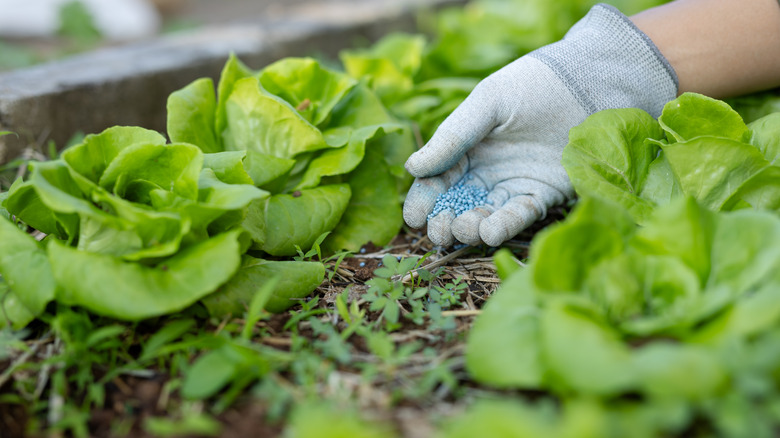
When you're trying to grow more of your own food, leafy greens are the fastest way to get from seed to the dinner plate. Although leafy greens are included in a broad category of garden vegetables with a wide range of species, it doesn't matter whether they're annuals or biennials — they all produce mature leaves you can eat in as little as 40 to 80 days, and baby leaves even sooner than that. But for your leafy greens to thrive, most need to be fertilized twice: first when you plant them, and then again a few weeks later when they're about a third of their mature size.
Determining the best time to fertilize your leafy greens is important — even more so than the product you're using. That's because the window for fertilizing leafy greens is pretty narrow, simply due to the fact that they grow so fast. But just like any rule, there are exceptions, and since these plants come from a few different families, they have different growth requirements and lifespans. This rule works for leafy greens like spinach and members of the brassica family, but when it comes to lettuce, your garden soil may be fine. Too much nitrogen leaves plants vulnerable to pests and diseases, and a soil test is the only way to be certain about what your soil needs. Often, if your soil is high in organic matter, you won't need any fertilizer at all for leafy plants like lettuce and beet greens.
When to give leafy greens your fertilizer of choice
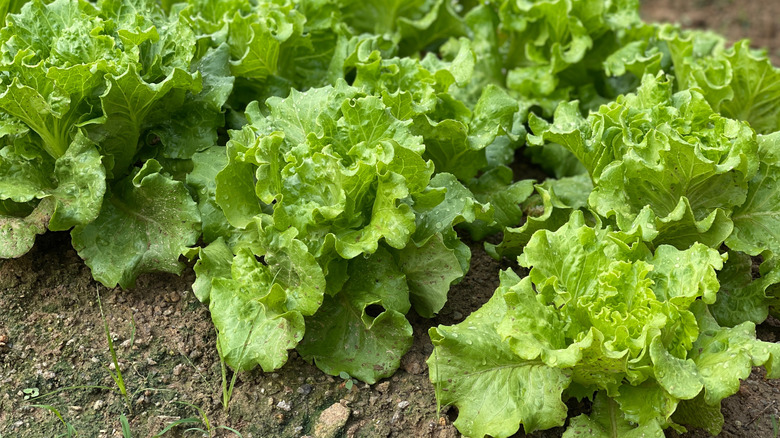
Like the dandelion, lettuce is in the sunflower family, and it rarely needs extra fertilizer. However, if you have poor soil and want to feed it, the best time to do that is when you plant, just like with all leafy greens. For this first feeding, whether you're growing plants from seed or starting with transplants, mix a starter fertilizer into the soil before you plant. This puts the nutrients they need in the root zone where they can absorb it as they grow. If you use organic manure or compost mixed directly into the soil, keep in mind that different types have various nutrient and nitrogen levels.
Leafy greens aren't picky, but if you like to know exactly what you're applying, you can use a granular fertilizer like Espoma Organic Garden-Tone 3-4-4, which is about $15 for an 8-pound bag at Walmart. For transplants, you should avoid applying liquid fertilizers when setting them out because they can burn the tiny root hairs of small plants that aren't established yet.
For the second feeding, which needs to be done a few weeks later, you can switch to a liquid fertilizer. Whether you choose to add a drink to DIY fertilizer, try a fish emulsion blend, or stick with the granular formula, this extra boost comes just in time to give your greens that last bit of growth before harvest. Just remember, this two feedings rule applies to all types of fertilizers, no matter which ones you choose.
More ways to help leafy greens thrive
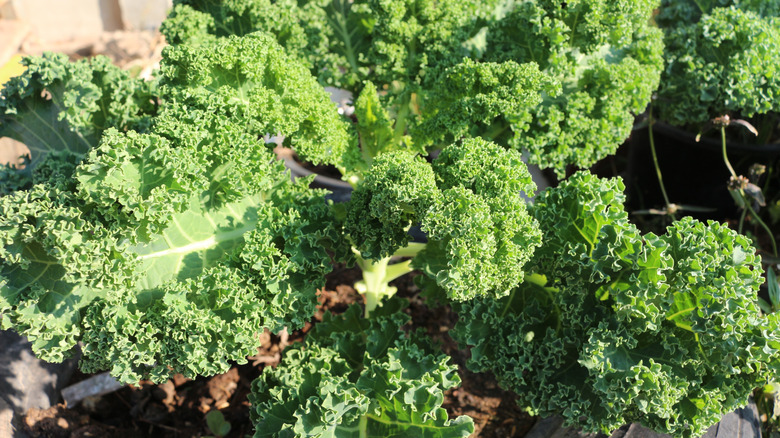
Beyond the variety and selection, one of the great things about growing leafy greens is that you can grow these even if you're short on garden space. In fact, growing leafy vegetable plants in hanging pots is one of the easiest ways to extend your harvest season at both ends. From spring through fall plantings, you can get a steady supply of greens by using succession planting and starting a new pot every few weeks. Even in a container, you'll want to follow the same fertilizer schedule. You won't need to add more unless you're using an extended cut-and-come-again approach or planning to keep a kale plant into the following year.
Beyond fertilizing, leafy greens have a few other requirements to take them beyond survival mode and into thriving territory. Thinning is a critical step that alleviates competition. You can plant thickly and thin tender edible baby greens as you go, but once they are mature size (about 10 inches) most leafy greens do better when they have about 8 inches of space between them. Weeds are also competition that needs to be eliminated if you want your leafy greens to be the best they can be. And finally, water may be one of the most important elements of all for successfully growing tender, delicious leafy greens. Keep your shallow-rooted, fast-growing plants watered, ideally before they show signs of dehydration or stress.