

What To Do If You Find Cracks In Your Retaining Wall
We may receive a commission on purchases made from links.
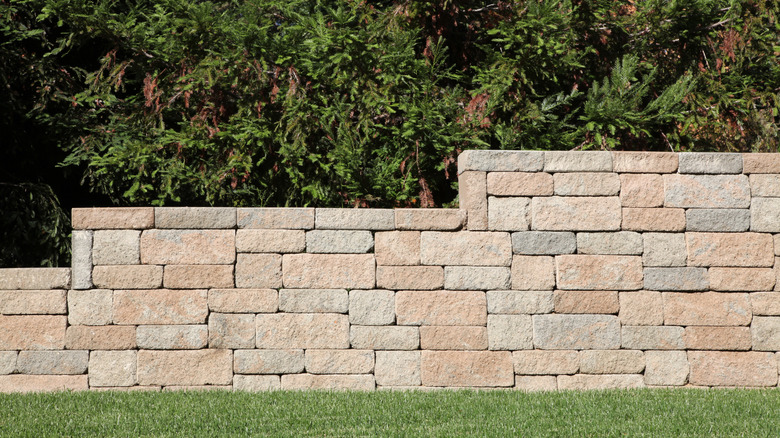
Retaining walls are an important component in maintaining the stability and aesthetic appeal of properties with steep slopes and hills. These walls hold back massive quantities of soil, preventing potential landslides and facilitating water drainage in the process. Typically made from some sort of stone, retaining walls can also benefit flatter landscapes by supporting flower beds or sidewalks. As with any structure, it's not uncommon for retaining walls to be subject to wear and tear over time, resulting in issues such as loose blocks, crooked surfaces, or cracks in the stone. Any damage to your retaining wall is worth looking into, but larger cracks are particularly troublesome. Depending on the severity, it's an issue you should attempt to repair immediately.
While surface level chips and scratches aren't too concerning, any crack that leaves a gap longer than a few millimeters across should be taken seriously. A crack in a retaining wall can indicate a range of underlying issues, but the position and angle of the damage can give you more insight to make repair a bit easier. For example, a large crack running along the base of the wall could be a sign that the retained soil is too heavy, and has started to topple the wall over. Alternatively, if a crack has moisture around it, it could indicate that an insufficient drainage system is causing water to build pressure behind the wall. Rogue tree roots, poor construction, and an improperly compacted foundation can also lead to retaining walls cracking over time. To avoid dealing with the maintenance, some folks have decided to ditch the retaining wall in favor of a living solution that prevents erosion.
A cracked retaining wall is a serious issue
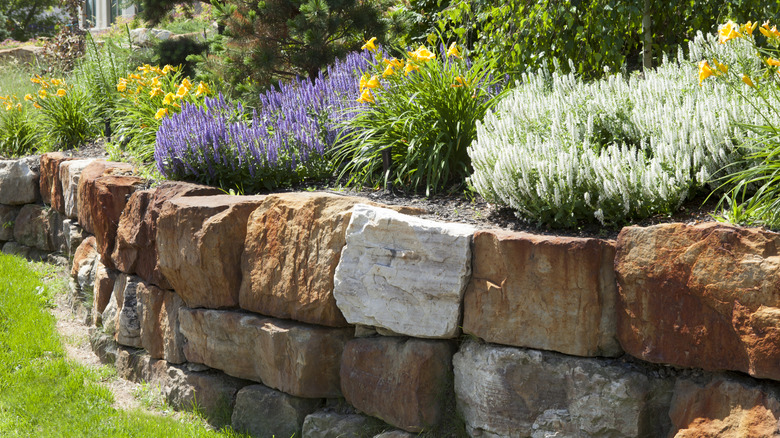
The location of the retaining wall will also affect how quickly you should act once you've identified the damage. A cracked wall holding up a foot-tall flowerbed is much less pressing than one supporting a large sloped yard. If you're certain that a crack in your retaining wall is minor and not a sign of a bigger structural problem, you may be able to fix things yourself by brushing away any loose chunks of brick or stone before using something like this PC masonry epoxy adhesive paste to fill in the gap and seal the wall's surface. For a concrete wall, you could also try an affordable way to fix small cracks in concrete such as polyurethane grout.
Unfortunately, when dealing with more intense cracks, or sections that are starting to crumble apart, you will probably need to replace the damaged section of the wall, or the entire thing. If you're working with a large wall, you will likely need to hire some professionals to help. The good news is that when the wall is replaced, it will likely be done so with improved foundation and supports to prevent future issues. Just as with identifying and repairing cracks in a concrete foundation, damage to a retaining wall is not necessarily always an immediate emergency. However, the potential for major issues such as total structural collapse means that it's worth taking any crack you see on a retaining wall seriously.