

Skip Pyrex: The Unique And Durable Antique Dishware Brand You'd Be Thrilled To Find Thrifting
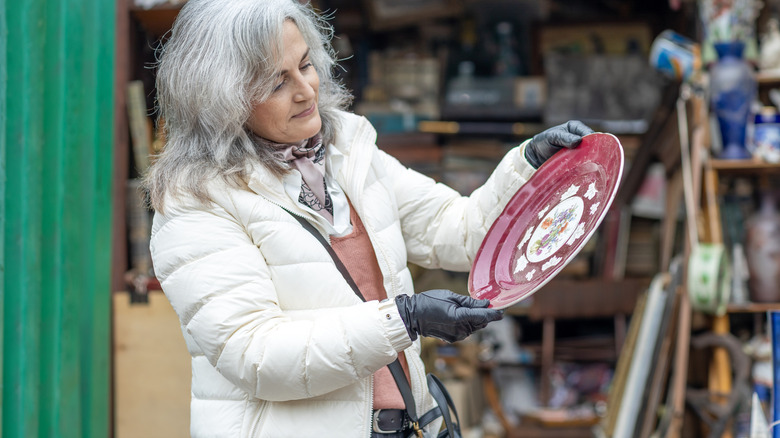
Vintage Pyrex may be one of the first things collectors search for at thrift stores, but Syracuse China is another overlooked dishware brand with a loyal following. Founded in New York in 1871 as the Onondaga Pottery Company, Syracuse became one of America's leading manufacturers of vitreous china. The brand produced exceptionally durable dinnerware for restaurants, hotels, and trains worldwide.
Syracuse China's durability comes from the process known as bisque firing, where pieces are fired at temperatures as high as 1,945 degrees Fahrenheit. Firing at the higher temperature closes the clay's pores and increases strength, making it near impossible for moisture or bacteria to seep in. Designed for years of heavy repeat use, many Syracuse pieces remain in excellent condition decades later, making them a practical addition to modern kitchens.
Syracuse China is often associated with classic diner plates and heavy commercial tableware. During the 1950s and 1960s, however, Syracuse introduced several modern lines for home use that reflected the clean, optimistic aesthetic of the Mid-Century Modern era. Complete sets and serving pieces are often more desirable than individual plates, although rare patterns such as the employee-exclusive Blue Plum may command up to $300 to $500 for a single plate. The atomic Jubilee pattern typically sells for around $50 for a set of plates, but gold-colored Old Ivory has sold for nearly $300 on eBay. Whether you're drawn to Syracuse China's nearly indestructible dishware or its colorful mid-century designs, it's one antique dishware brand that's a total thrift store gem for collectors.
What to look for when shopping for Syracuse China
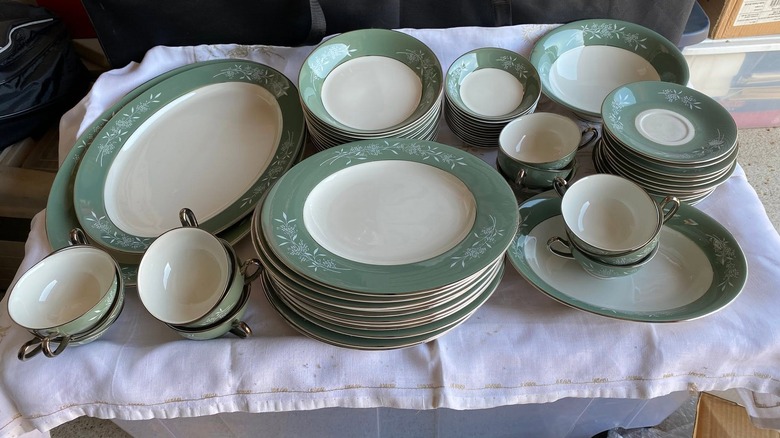
Syracuse China is an antique kitchen dishware item you should always look out for at thrift stores. Like most china, backstamps offer valuable clues about a piece's history and whether it's authentic vintage pottery. If you find dishes stamped with "O.P.Co. China," they generally date to sometime after 1895. As Restaurant Ware Collectors Network notes, they featured a date code without any decoration, unlike later releases. Pieces marked with "O.P.Co." without "China" were likely manufactured before 1966. If you have Syracuse China items marked with a backstamp that includes "Corporation" or "Corp," this is a good indication your piece was made after the 1970s.
Irom the 1930s through the 1960s, Syracuse China produced several labeled lines, including Adobe Ware, Old Ivory, and Econo Rim. Adobe Ware referred to off-white, tan-colored pieces that often featured Southwestern-inspired motifs. Old Ivory was used for ivory-colored dishware sets, while Econo Rim described plates with a larger open space than other plates and a smaller rim. Items marked with these words can be traced to a specific manufacturing period.
Older pieces before 1920 feature dates pressed into clay. Later releases use inked stamps, like on Adobe Ware or Old Ivory. Date codes first appeared within circles for pieces made before 1911, then starting in 1912, pieces would feature the date code inside a diamond. Such marks are sometimes faint, so look carefully. Check for chipped rims, cracks, excessive utensil marks, or staining, particularly on restaurant pieces.