

Why Your Brand New Lawn Mower Blades Don't Feel Sharp Enough

You've finally unboxed your brand-new lawn mower blades, ready to give your yard that crisp, golf-course finish, but as you run a cautious thumb along the cutting edge, you're met with a frustrating surprise: They feel entirely dull. Before you assume you bought a defective batch or reach for your sharpening stone, take a breath. It turns out that butter-knife edge is completely intentional and grinding them down to a razor-sharp finish before your first mow is actually one of the worst things you can do for your lawn.
Manufacturers purposefully ship brand new blades with a dull edge for a few very specific and strategic reasons. The most practical reason is pure safety. Sharp blades pose a massive liability during the manufacturing, packaging, and shipping processes. If they were razor-sharp, they could easily cut through packaging, injure the factory workers boxing them, or slice your hands open when you try to install them.
A lawn mower blade doesn't cut grass the way a razor blade cuts hair; it cuts grass using impact velocity. The blade spins at incredible speeds — typically around 3,000 RPM (revolutions per minute). At that speed, the blade acts more like an axe than a razor. The second a razor-thin edge hits a small pebble, a thick twig, or even tough dirt, it will immediately chip, dent, and dull. On top of that, most new blades are completely covered in a thick layer of paint or powder coating. This prevents the raw steel from rusting while sitting in a damp warehouse or on a store shelf. This coating covers the wedge of the blade, which makes the edge feel thick and completely dull to the touch. During your first few minutes of mowing, that paint will quickly wear off the cutting edge, exposing the steel beneath.
How to tell when your blades actually do need sharpening
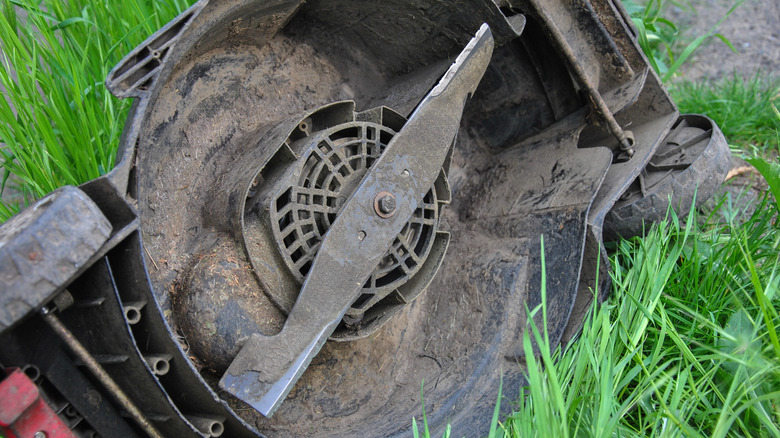
You do not need to sharpen brand-new mower blades — you can take them straight out of the box and install them on your mower. The factory angle is precisely engineered for the optimal balance between a clean cut and blade longevity. However, knowing when your blades have crossed the line from a durable, blunt factory edge to a genuinely dull one comes down to checking both the grass and the machine. You should familiarize yourself with the signs it's time to sharpen lawn mower blades before your next yard day to ensure you aren't doing unintentional damage to your lawn. As a general rule of thumb, blades should be sharpened after every 20 or so hours of mowing time, but every homeowner should also know the telltale signs it's time to replace lawn mower blades entirely for when restoring that factory bevel is no longer enough to save them. For most people, standard maintenance means honing them twice a season — once in the spring before the first big push, and once mid-summer.
However, there might be some problems in the yard where you find you need to sharpen more often. A properly functioning blade slices the grass cleanly. A dull blade rips it apart by sheer force. If the tips of your grass appear torn or split, your blades are tearing the lawn instead of cutting it. This will ultimately cause your entire lawn to take on a tan or whitish hue. Likewise, if you look across your yard after a fresh mow and notice patches of taller grass, or if it looks like you missed entire spots despite walking a perfect grid, your blades are dull. Rather than cutting the grass standing tall, a dull blade will push the grass over, letting it pop right back up after the deck passes by.
Even more signs that it's time to sharpen the blades
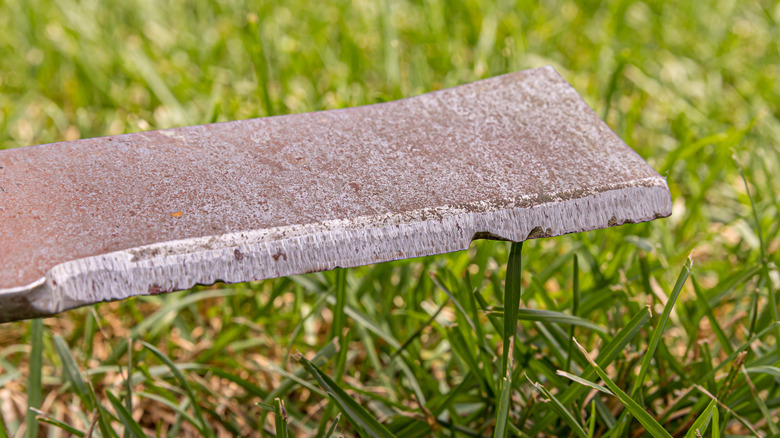
When blades hit rocks, roots, or hard soil over time, they lose their balance and develop deep nicks. If you feel an unusual vibration through the handlebars or the floorboards of a riding mower, your blades are likely dented and unbalanced. You might also notice a heavier, bogged-down thudding noise instead of a smooth, clean whirring sound when the deck is engaged. Since a dull blade relies on blunt force rather than a clean shearing action, it takes significantly more energy to spin through the grass. If your mower starts stalling out in patches of grass it used to cut easily, or if you find yourself burning through gas much faster than usual, the engine might be working overtime to compensate for a blunt edge.
Finally, you may just want to give your lawn mower blades a physical inspection. If you tilt the mower up — first ensuring the fuel tank is empty, the spark plug wire is disconnected, and the carburetor is facing upward — a quick look will tell you everything you need to know. If you notice visible dents and rounding, then your blades need to be sharpened. Fortunately, you can easily sharpen lawn mower blades with a budget-friendly solution to fix up those minor nicks and restore a clean cutting edge right in your garage. It's important to know, though, that if the sail (the curved back part of the blade that creates lift) is worn thin like paper, the blade cannot be saved by sharpening and must be replaced.