

Goodbye Concrete: Creative Way To Upgrade A Boring Driveway Without Tearing It Up
We may receive a commission on purchases made from links.
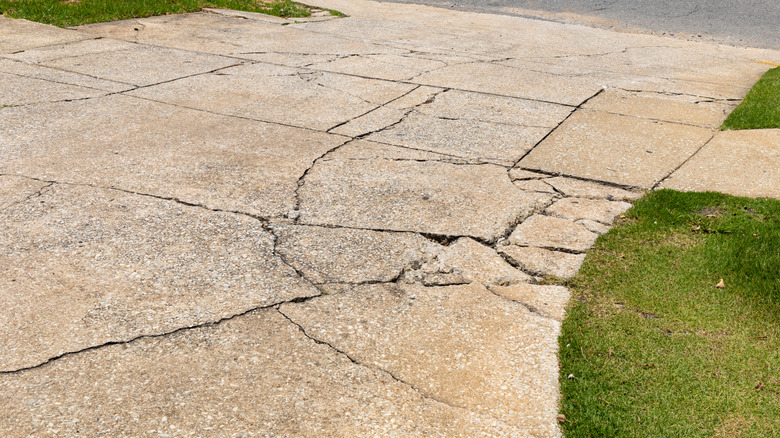
Most of you are familiar with concrete driveways or even own one. The material is popular because, with the right care, a concrete driveway can last up to 50 years, which is a pretty decent return on your investment. But what if your concrete driveway no longer looks attractive and you are considering replacing it? You could of course tear up the driveway and install a new one, though this might be too much of a hassle and pretty expensive. For a creative way to upgrade your lackluster driveway that doesn't involve removing the concrete, consider using travertine.
Though lesser known than concrete, travertine has been used for centuries in interior decor, most notably in the Roman Colosseum and Ancient Egypt. A natural stone that is derived from limestone, it has an innate beauty, warmth, and texture, and appears in varying shades of color. But more than that, travertine is extremely resilient and can withstand extreme changes in weather, probably as a result of how it was formed – water rich in minerals soaking through sedimentary rocks, thereafter creating deposits that harden with time.
Travertine makes an excellent material for driveways thanks to its strength, durability, unique coloring, and rustic charm. Also, it resists cracking, chipping, and heavy foot traffic. Compared to concrete, travertine is better-draining, stronger, easier to repair, more versatile, longer-lasting, and more visually appealing. In case you're wondering when to choose travertine tiles over pavers, travertine tiles are thinner and used indoors as flooring and on walls, and outdoors on patios or driveways. However, a concrete driveway provides a sturdy, even base surface, which is one of the requirements for travertine tile installation.
Installing travertine on your driveway: prepare the concrete surface first
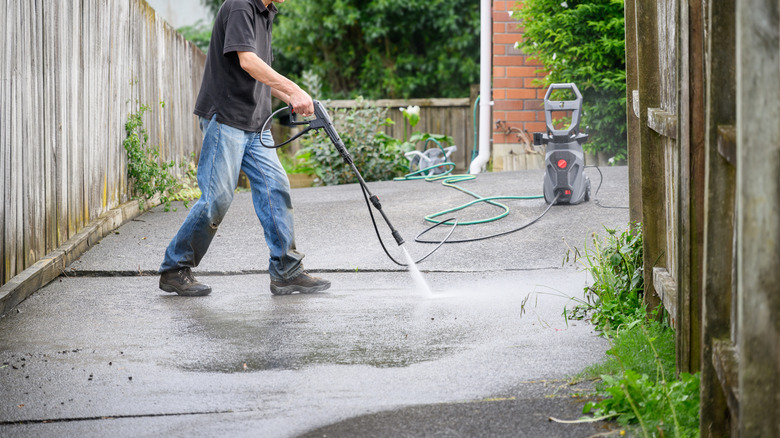
No proper home improvement project starts without preparation, and upgrading a driveway is no exception. Before installing travertine tiles, you need to ensure the surface to be covered is ready. If you were working with a dirt surface, you'd need to create a strong foundation comprising rock or gravel topped with sand first, but with a concrete driveway, your base layer is already sorted, so you'll simply prepare the concrete by cleaning it and filling in cracks.
If dirt, rocks, and debris find their way below the travertine tiles, they could create an uneven surface or cause the tiles to crack under pressure. To avoid this, start by sweeping the concrete to remove surface debris. Once you are done, use a pressure washer and soapy water to hose down the concrete for a more thorough clean. If there are cracks, it's best to fix them, for example, using a concrete crack seal like Quikrete Gray Concrete Crack Seal available on Amazon.
After cleaning, get ready for the next step by keeping the supplies you'll need close by, which in this case are the tiles, a flexible thin-set mortar, and a trowel. Also, when buying the tiles, make sure to order more than you need in order to make up for any breakages and later replacements. Costs vary per retailer and tile grade, but you can expect to spend anywhere between $7 and $30 per square foot.
Lay the mortar then the travertine tiles (or pavers)
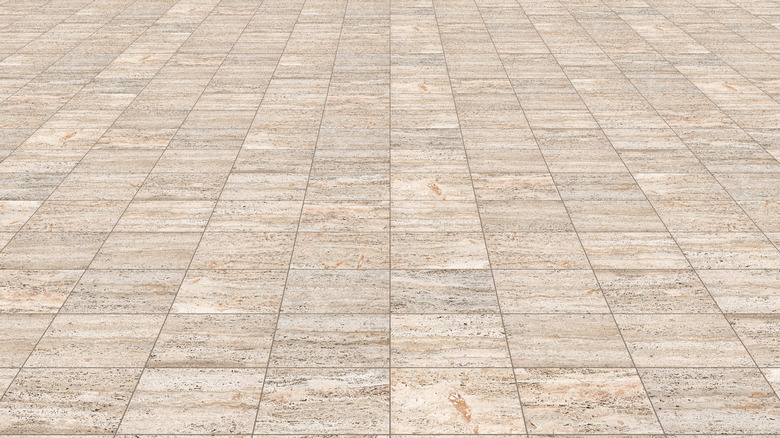
Mortar is what anchors the tiles, so apply it generously on the concrete driveway. Use the trowel to spread it smoothly. Immediately after this, you'll lay the tiles one by one. Start from the corners, moving inwards, pressing them down firmly. To keep the tiles in a straight line, you can use a string attached to stakes on opposite ends to guide you. Fill any existing gaps with more mortar, then leave the tiles undisturbed for the mortar to dry completely before walking on it or driving over it. One to two days should do it.
You could also install travertine pavers over your concrete driveway. These are slightly thicker and heavier than travertine tiles (1 ¼ to 2 inches compared to ½ inch), hence sturdier and able to withstand heavier traffic. Nonetheless, it's better to go for the 6-by-12 size because, unlike large pavers, smaller pavers distribute vehicular weight more evenly, which helps to prevent cracking.
As you can see, the task of installing travertine over your concrete driveway is rather straightforward and doesn't take much time. It's actually one of those renovation projects you can DIY in a weekend, so go ahead and try it. Just ensure you have your supplies ready, so you move seamlessly from one step to the next.