

Put Down The Essential Oils: Keep Carpenter Bees Away With An Amazon Find
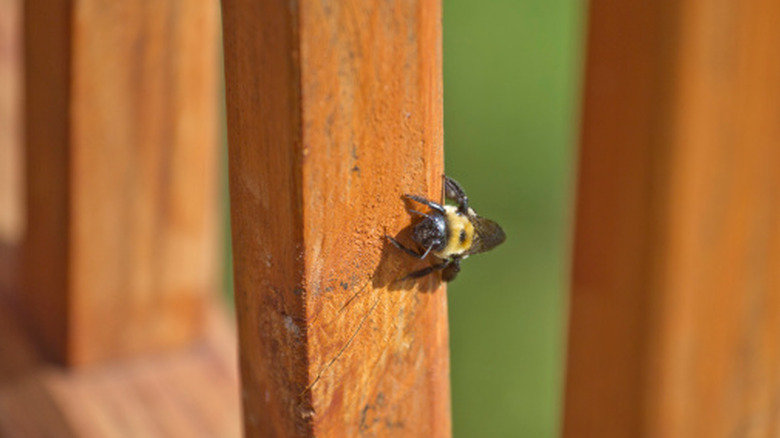
Small piles of sawdust. Nearly perfect round holes in wood. Large, shiny bees hovering around your home. These are all potential signs that carpenter bees have started excavating nesting tunnels in exposed wood. Now, carpenter bees don't eat wood, but the holes they dig still look unsightly. Plus, carpenter bees are one of those pests that will do by far the most damage to your household, as their holes can lead to structural damage eventually. If you want to get rid of them without pesticides, there is no need to spray the whole place with essential oils. There is an Amazon find worth trying instead: the Stingmon fake wasp nest decoys.
These fake wasp nest decoys are exactly what they sound like. Designed to resemble established hornet nests, these decoys are made of weather-resistant fabric, and they measure 7.9 inches wide and 11.4 inches high. You can even fold them when they're not in use. The idea behind them is that you hang them outside to show carpenter bees, wasps, and other stinging bugs that the area is already occupied. Many bees and wasps are territorial insects, so if they see competition in the form of a wasp nest, they may choose to nest elsewhere.
Still, keep your expectations realistic. Fake wasp nests have limited scientific evidence to support their effectiveness at deterring real nests. That does not mean, though, that these decoys are totally useless. Customer reviews on Amazon show that many people noticed reduced wasp and bee activity after hanging them near their homes, while others didn't have luck. So, it is best to use these fake wasp nest decoys along with other methods to keep carpenter bees away from your deck, porch, and home.
How to use fake wasp nests to keep carpenter bees out
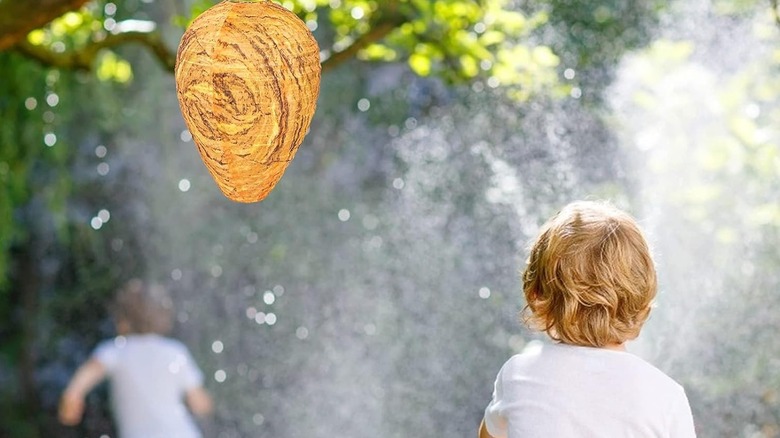
Start with proper placement of the decoys. You need to hang them in spots that carpenter bees are most likely to target, such as on wooden porches, decks, pergolas, or on any exposed, unpainted wood. You also want to make sure that you hang these decoys where they are easily visible to scouting carpenter bees. Just make sure to keep them away from spots where pets or people could bump into them. Furthermore, don't use all the fake wasp nest decoys in one place. Instead, spread them across your property.
Timing is also important. In many regions, adults emerge from old tunnels in the spring, and female carpenter bees begin searching for nesting locations in April or May. So, you must make sure that you install these decoys before then. As for how you can tell if the decoys are working, don't just rely on the number of carpenter bees that you see around the spots where these are installed. Instead, note where carpenter bees have made their nests and gently brush away old sawdust.
Monitor the area every week or two. If you see any fresh sawdust, new holes, or further damage, it means that the carpenter bees have tunneled new nests, and you need to up your game. Don't worry, though! There are many ways to repel carpenter bees from your home. For instance, you can replace the wood that the bees have been damaging with painted wood. Carpenter bees rarely attack painted wood. Similarly, in the fall, you can fill any holes that you see in the wood with wooden putty or dowels, so they are not accessible to future nesting bees.