

Keep Carpenter Bees Away From Your Deck Or Porch With Clever Nesting Alternatives
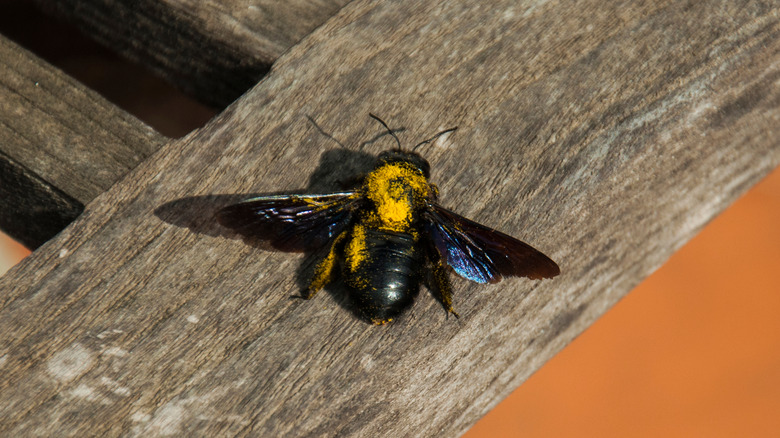
When they're drilling holes in the eaves of your home or elsewhere, it's understandable that carpenter bees might be considered a nuisance to homeowners. Some people might find carpenter bees in their sheds, while others notice them building tunnels in the wood railings of their porches or decks. If you assumed your only option was to kill them and are feeling uncomfortable with that solution, you'll be relieved to know there are alternatives. One of the creative steps you can take to help protect the structures of your home without harming these pollinators is using fallen wood or DIY nesting boxes to divert them away from your deck or porch.
Many people know them only as pests, but there's another side to these insects that's worth learning about. Carpenter bees are U.S. native pollinators that are solitary, nest in cavities, and aren't aggressive. Normally these bees would start their nurseries in dead trees, but when those aren't available, they look for the next best thing. The reason they are considered pests is that they chew tunnels in wood as nesting sites for their young, which may lead you to find carpenter bee holes in your deck or porch. The tunnels they create can potentially damage the integrity of the railings, plus there may also be defecation at the entryway to the holes which can turn moldy or look unsightly. Thankfully there are more ethical alternatives to treating the holes with insecticides.
How to use blocks or logs for carpenter bee nesting sites
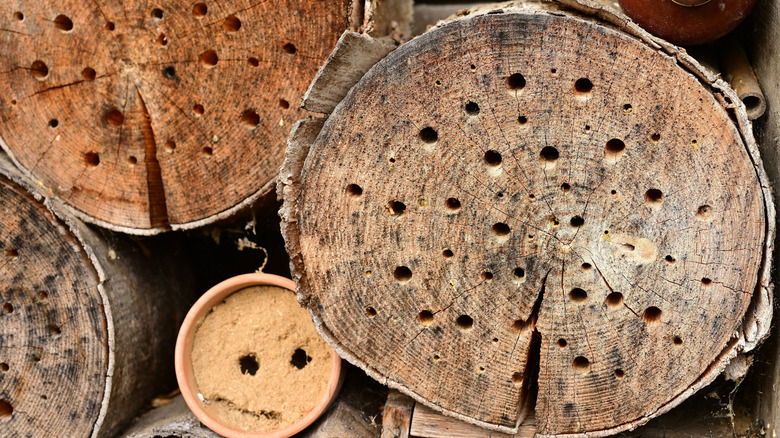
While small carpenter bees can build nests in plant stems, the ones that target our built structures, large carpenter bees, prefer wood. To house their developing young, they prefer wood that is dead but not decayed, and if given the choice between hardwood and softwood, would pick the latter. The wooden structures used to build your home may be the best options they can find due to habitat loss. To encourage them to set up their nurseries somewhere other than your deck or porch railings, you can make brush piles with fallen branches or logs that they can use instead. Carpenter bees create tunnels up 10 inches deep, so make sure to pick branches or logs that are large enough. They also like making their nests in the stems of agave and yucca plants, so pick one that will grow in your USDA Hardiness Zone.
If you don't have any fallen branches or old logs to use as a carpenter bee nesting alternative in your yard, you can make a DIY option instead out of a block of wood. Choose an untreated, softwood 4-by-4 for this purpose, cut it to 10 inches long or so, and drill a few 5-inch-deep holes into it. Add a roof out of thinner wood pieces to cover the block, and place it near your porch or deck. In addition to this clever solution, some homeowners like to take one more protective measure: painting their home's exposed wood. It's a simple solution that can help stop a carpenter bee infestation before it starts.