

Sick Of Fighting Snails In The Garden? Grow These Summer-Blooming Herbs They Won't Touch
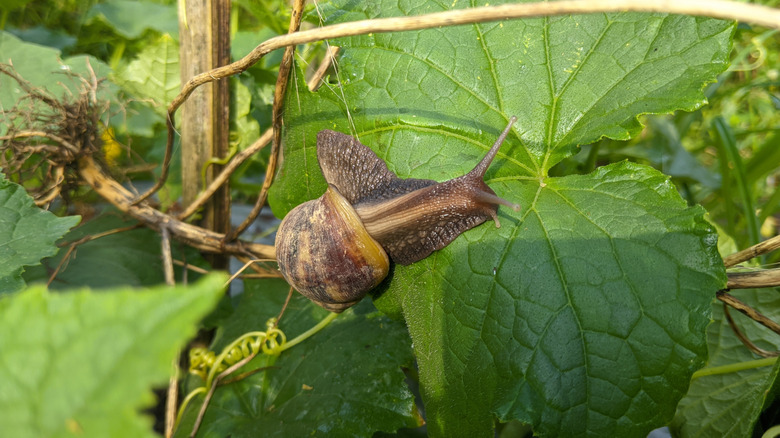
You head out into the garden one morning only to find your parsley patch nibbled to the ground and your once-thriving basil decimated. What happened? You look around carefully and spot trails of slick, transparent slime running across the soil in your garden beds. It appears that the snails — and probably also their shellless cousins, the slugs — are active again. You've got a tough fight on your hands if you want to get rid of them permanently.
If you feel icky about trapping or killing these gooey critters and would rather use humane ways to keep snails out of the yard, you have a pretty appealing option — you can grow a border of herbs they hate. It turns out snails will avoid a border of aromatic plants like rosemary, lavender, thyme, chives, and oregano. Plus, these herbs bloom during summer, ensuring that your fortress of greenery is boosted by a plethora of gorgeous flowers. You'll draw in pollinators, too. All these benefits are bright spots in your battle against these slimy garden invaders.
While it may feel like snails chew through every bit of foliage in your garden, this isn't actually the case. Snails usually opt for new, soft, and succulent plant growth, which is why newly transplanted seedlings tend to take the brunt of the attack. However, snails are typically discouraged by the strongly scented, often stiff leaves and woody stems of many summer-blooming herbs; they often leave them well alone. Of course, a border of herbs these land mollusks generally dislike can only go so far. It's not going to eliminate the snail population sheltering in yard debris and weeds.
Snail-resistant rosemary works well in most gardens
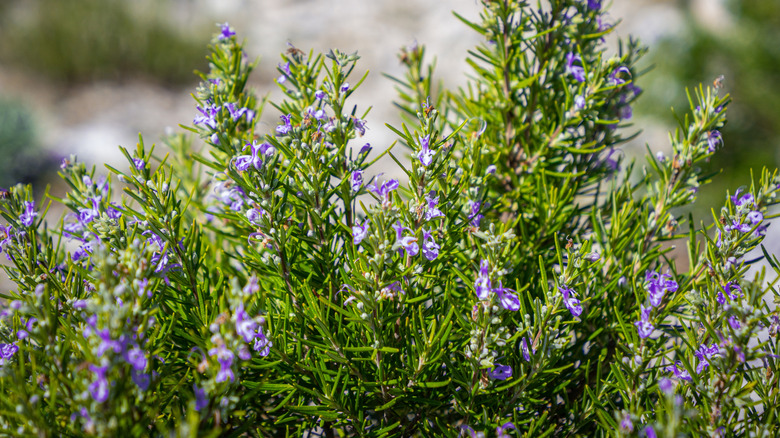
When you examine rosemary's scientific name, Salvia rosmarinus, a poetic picture emerges. Salvia means to heal while rosmarinus loosely translates to dew of the sea — a nod to rosemary's ability to thrive in coastal environments. Indeed, this hardy herb can withstand lots of challenging growing conditions, including drought, extreme heat, infertile soils, arid weather, salt, and pests. Rosemary resists deer, snails, slugs, and more.
Rosemary is perennial in USDA Plant Hardiness Zones 8 to 10, where it retains its needle-shaped, slightly hairy, dark green leaves year-round. This is a highly aromatic herb that will infuse the garden air, your cooking, or a potpourri sachet with a pine-like smell that snails are not attracted to. Other than the foliage, rosemary is worth planting in the garden for its abundance of two-lipped, tubular flowers, which come in shades of white, pink, purple, or blue. The blooms appear in spring and summer and attract bees, butterflies, and hummingbirds. Later, songbirds like goldfinches will eat the seeds.
Although rosemary can tolerate some shade, it's best to plant this key to preventing snails from invading your garden in a sunny location. Keep the soil in your garden bed on the drier side, too. This will help prevent root rot and powdery mildew in your rosemary and deter snails, which prefer damp environments.
Deter snails in soils with low fertility by growing lavender
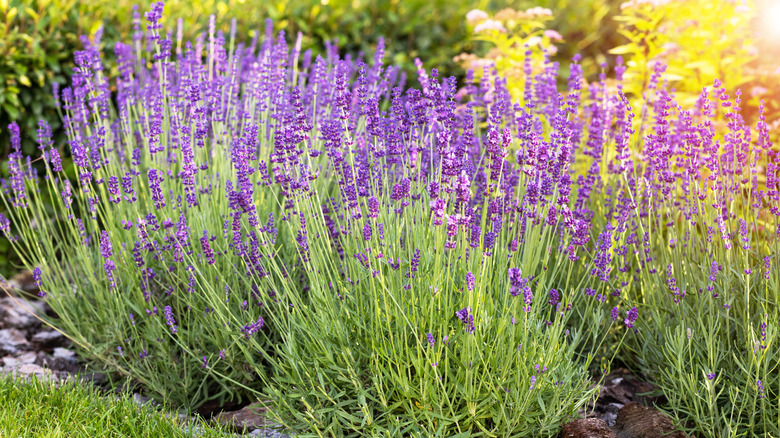
Anyone who loves fragrances knows the chokehold lavender (Lavandula spp.) has on perfumers. Fortunately, snails don't share this love for lavender; they find the leaves particularly unappetizing. It also helps that lavender gets woody as it ages, further diminishing its palatability to these slimy pests.
Spanish lavender (Lavandula stoechas) and French lavender (Lavandula dentata) are arguably the most aromatic lavenders, boasting a scent that's akin to camphor. These species are rarely used as culinary herbs, but would make a great snail-repelling border. Lavandin (Lavandula x intermedia) is most commonly distilled into an essential oil, and the dried flowers are used in arrangements and potpourri. 'Riverina Thomas' is a good Lavandin hybrid to consider. If you're looking for a snail-resistant lavender you can use in cooking, stick to English lavender (Lavandula angustifolia). It has large, fragrant flowers that will rebloom when pruned.
Although flowering times vary among lavender varieties, with some blooming in early spring, you'll find that most lavender plants are covered in lilac or white blooms during summer, when they draw the attention of butterflies and bees. Lavender grows best in gravelly or rocky garden beds and in soil with high pH levels or a high lime content. These plants require excellent drainage. Avoid growing lavender in areas rich in nitrogen; the herb's stems and foliage will soften and droop. Lavender grows perennially in Zones 5 through 9.
Use chives as a snail deterrent in small gardens
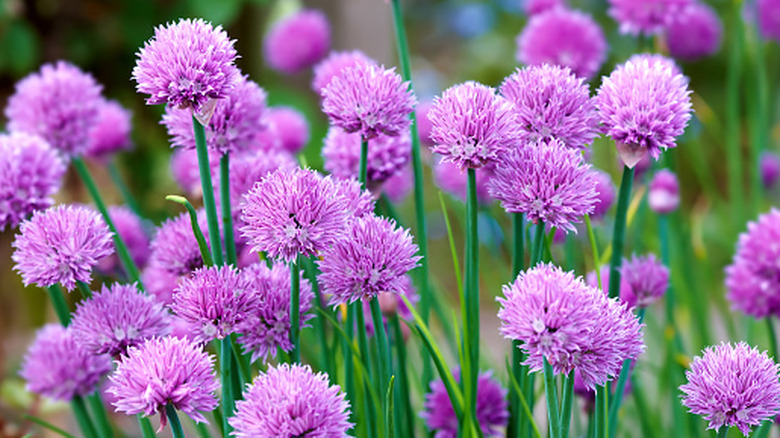
Anecdotally, several gardeners have had success resisting snails — including the widely reviled invasive giant African snails — by surrounding their flower beds and veggie patches with chives (Allium schoenoprasum). Unlike other herbs on this list, which smell pleasant, chive leaves and flowers release pungent sulfur compounds into the air when crushed. As such, this is a sun-loving herb with flowers that help keep slugs away — and snails, too. Since a single plant will max out at a bit over 1 foot tall and wide, chives can be tucked into the tiniest spaces. Note that mature chive plants are most effective at deterring snails.
Chives are native to Europe, Asia, and possibly parts of North America and will overwinter in Zones 4 to 8. Apart from edible leaves, they also produce puffs of purple flowers at the end of May or in June, depending on the weather conditions. Although slightly bitter, the flowers are edible — and they also attract pollinators.
Plant chives in an organically rich, well-draining garden bed that gets at least six hours of direct sunlight a day. Avoid pairing them with plants that need lots of fertilizer. Excess nitrogen will encourage your chives to grow too quickly, compromising their flavor and snail-deterring abilities. Once established, chives don't need much watering and are relatively tolerant of humidity. As a bonus, mass planting them may also deter deer. Take steps to keep your pets away since chives are toxic to dogs, cats, and livestock.
Thyme can dissuade snails from more desirable plants
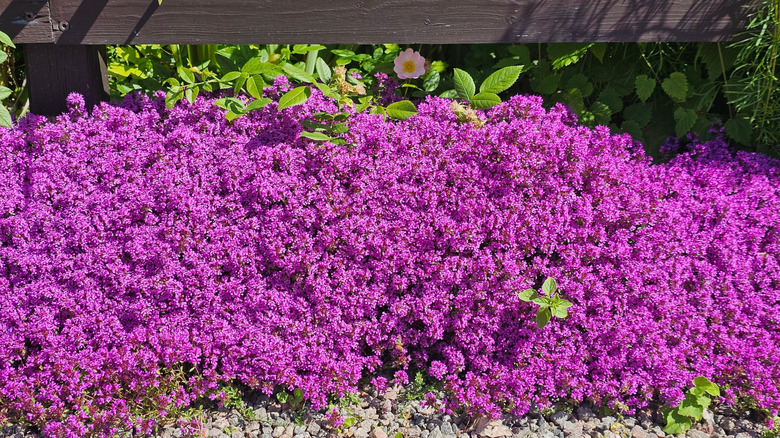
Like lavender, thyme (Thymus spp.) is found in cosmetics, potpourri mixes, floral arrangements, and food — all of which explain its popularity in home gardens. Luckily, this hardy herb also appears to hold its own against pesky snails. These slimy pests typically spare thyme; they'll move on and search for food elsewhere if they encounter it. This is likely due to the plant's highly aromatic leaves and firm, woody stems.
For this reason, it's a good idea to plant a border of thyme around ornamental beds or between stepping stones. Interestingly, research out of Oregon State University found that you can create an effective barrier against snails by mixing thyme essential oil with petroleum jelly. In fact, per reporting by the Capital Press, a 0.25% concentration of thyme oil didn't just repel snails — it could even kill them. This treatment may be as effective as metaldehyde, a slug and snail pesticide. Of course, living thyme, even when planted en masse around your yard, won't be as strong as a distilled oil. Still, the method may work, and a border of herbs is unlikely to do any harm.
Another benefit to growing thyme is that the plants produce dainty pink, purple, or white flowers all through summer. The tiny blooms are edible, attract native bees, and support other beneficial insects like parasitoid wasps that can aid in pest management. Hardy in Zones 5 through 9, thyme grows best with full sun exposure and good drainage. You can plant it in drought-prone gardens.
Use oregano as a snail-repelling ground cover
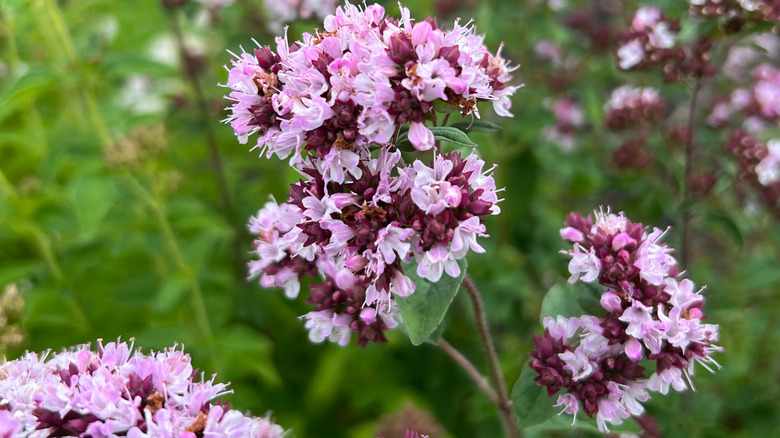
Can't imagine your homemade pizza without a sprinkling of oregano (Origanum vulgare)? Thankfully, snails don't share our affinity for this herb. It turns out that snails — like many other pests, including aphids, spider mites, ants, deer, and rabbits — have a problem with the herb's aromatic foliage. They react poorly to carvacrol and thymol, the compounds present in the plant's tissues.
Carvacrol is most concentrated in mature oregano plants, while tender seedlings may still get munched on by hungry mollusks. Some oregano varieties have thyme-like notes, while others — like 'Profusion' and 'Hot and Spicy' — have a unique piquancy. For both your Mediterranean-inspired cooking and snail deterrence, it's probably best to stick with the tried-and-true Greek oregano (Origanum vulgare subsp. hirtum).
Tolerant of foot traffic, heat, dry soils, and drought, oregano is a gorgeous ground cover for gardens in Zones 4 to 8. If you're growing this herb for its flowers, don't harvest new leaves too often — regular trimming will delay flowering. Let the plant develop buds to enjoy a colorful display of pinkish-purple or white blooms in summer. Your garden will quickly fill with moths, butterflies, bees, and other beneficial insects, boosting the local ecosystem.