

Instead Of Buying Landscape Fabric, Repurpose Your Old Rug
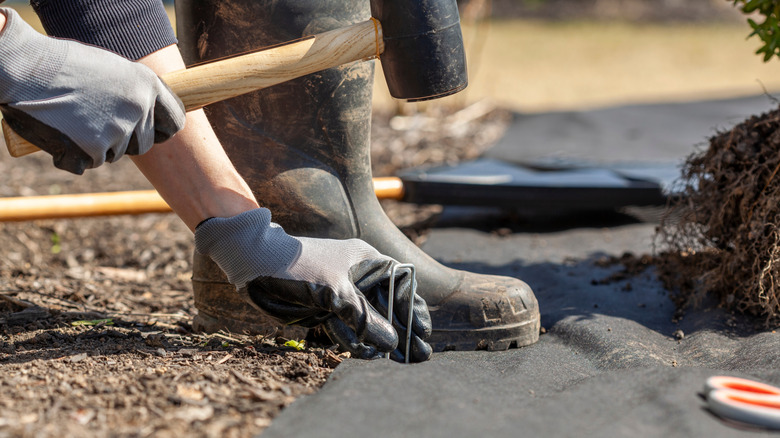
Weeds have taken over your garden. They're raging out of control, and you need a quick fix — preferably one that doesn't decimate the rest of your plants. Typically, this is where you would use landscaping fabric to suppress weeds or try out a cardboard box hack and take back your yard, but instead of heading to the store, consider using something you already have on hand: an old rug or carpet. You were going to throw it out anyway, so why not repurpose it to help your garden?
When it comes to weed prevention, it's easy to make common mistakes when using landscaping fabric, like choking out desirable plants by not giving their roots enough space. Fabric can also cause soil temperatures to rise and impede water absorption, sometimes making it more trouble than it's worth — especially after long periods, once it begins to break down. It's also difficult to remove, and weeds will eventually grow through it. Using carpet instead of landscaping fabric may offer superior benefits. This is because it is thicker, making it harder for weeds to grow through the material.
Planning and landscaping with carpet
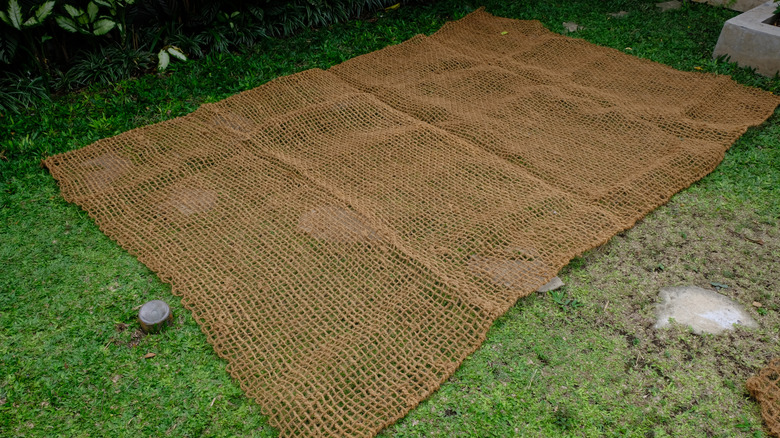
Following developments in carpet floor trends, sustainability has become a priority in recent years. In an effort to reduce waste, repurposing used carpets can be good for your wallet and the environment. If you don't have your own carpet, you can ask your nearest carpet store if you can take some of their rolls of discarded dry carpet. Just make sure to wear gloves and look out for nails and tack left behind.
Consider taking eco-friendliness a step further by using natural-fiber carpets, such as wool, jute, sisal, seagrass, organic cotton, or bamboo, to prevent chemicals and microplastics from leaching into the environment. Natural-colored carpets, or those that use nontoxic dyes, are also worth considering.
When it comes time to plan your garden, carpets are best placed in areas where you don't want anything to grow, such as walking paths or under benches. Clear the area by mowing, trimming, and pulling weeds. Adding a layer of manure can help break down roots and leftover foliage. Lay the carpet or rugs in overlapping sections and secure the edges with metal stakes. Finally, cover the carpet in gravel, wood chips, or mulch, and your pathway is complete.