

Does Spraying Your Yard For Ticks Really Work?
We may receive a commission on purchases made from links.
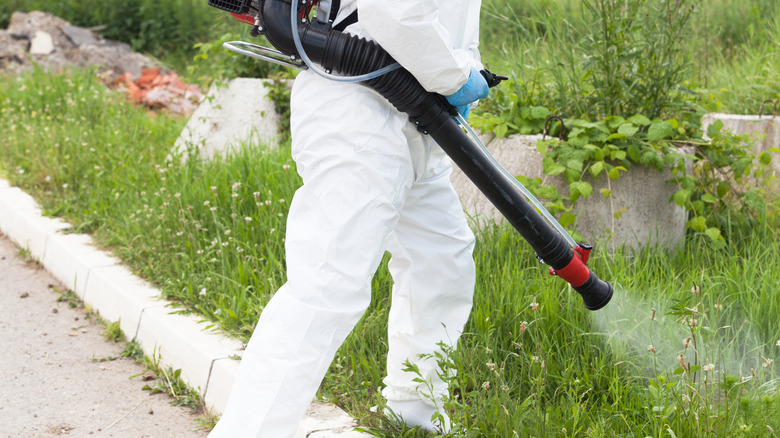
Once the haunt of hiking trails and city parks, ticks have since transgressed into backyards, raising concerns over the spread of several diseases like Lyme, Babesiosis, and Rocky Mountain spotted fever. While you may already be taking precautions by covering yourself in the best tick-repellent sprays before venturing outdoors, you may wonder if you could solve the problem altogether by spraying your yard instead. The short answer is that it may not be as effective as one would like. However, in conjunction with targeted treatments and habitat modification, you may be able to better control and keep ticks out of your yard.
Acaricides, that is, pesticides that specifically target ticks, are the most successful at killing them. A 2016 study published in The Journal of Infectious Diseases found that an acaricide application reduced the number of questing ticks (those looking for a host) by 63%. And yet, this reduction didn't dent tick encounters or the transmission of tick-borne diseases. While one could argue that the people who contracted tick-borne diseases may have encountered ticks in untreated areas, the thing is, exposure to a lone disease-vectoring tick is sufficient to cause trouble. This is why Consumer Reports senior scientist, Michael Hansen, PhD, noted to the publication, "Spraying your yard provides a false sense of security." In short, choosing to spray your yard could reduce your chances of encountering an infected tick, but it's not enough to bring your risk to 0%. However, it's notable that spray treatments do bring down tick-borne infections in pets.
Target host animals and habitat modification
One leading reason that ticks are becoming prominent in residential yards is the changing land use, as people have been developing their homes around woodlands or in suburban areas. This increases human exposure to ticks that thrive in these locations and the animals that host them, such as deer, mice, chipmunks, raccoons, or rabbits. Given that, some believe targeting chemical treatments at these host animals instead may yield better results, or at a minimum, break down the transmission of tick-borne diseases.
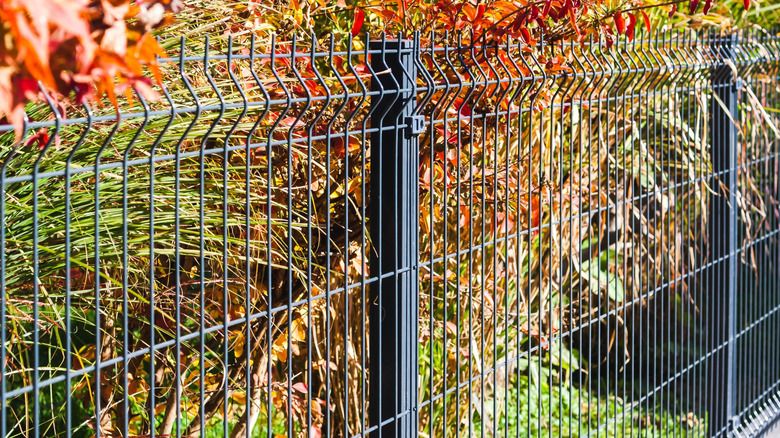
One method to do that is through tick tubes, like Tick Control Tubes from Thermacell. Made of cardboard, they carry cotton balls pre-treated with permethrin. While the mice happily carry away these cotton balls to build their nests, the permethrin gets the chance to decimate ticks sticking to their fur, preventing further exposure. The downside to this approach, however, is that it relies on mice being interested in the first place. An anecdotal survey of studies shows us that the effectiveness of tick tubes is unproven, as results are highly inconsistent. But, the availability of secondary host animals, location, and the time when the tick tubes are placed outside may all play a role. To compensate for that, take steps to modify the area by installing fences that keep deer and small mammals out, removing woodpiles, leaf litter, and debris where rodents hide, and planting deer-resistant plants. Also consider removing barberry shrubs and groundcovers (especially pachysandra), where ticks live.
If you're going to spray, keep it targeted and take precautions
When spending time outdoors becomes impossible because ticks are present in high numbers, a chemical treatment may become imperative. Rather than spraying the whole yard, which is wasteful, stick to a targeted treatment. Ticks are heavily concentrated in wooded areas and ecotones, that is, wooded areas bordering open spaces, including paths. In yards, you may find them within 9 feet of stone walls, lawn edges, and ornamental plantings. So, when spraying your yard for ticks, stick to these hot spots and recreational areas.
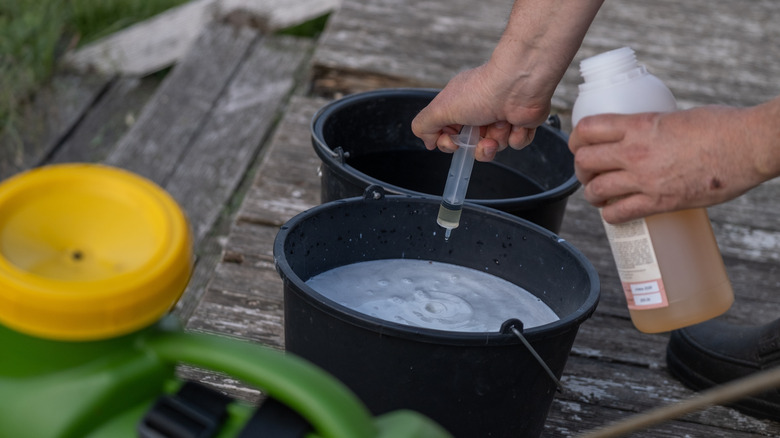
Treat the infested areas with a permethrin or bifenthrin-based product in the spring when ticks are in their nascent stages. If the problem remains unabated, follow up with a second application in the fall to eliminate adult ticks so they won't reproduce. In both cases, closely follow the label.
However, keep in mind that these sprays are non-selective. In other words, they can harm local pollinators. Besides, they aren't food-safe, so you can't use them around edibles. You may also not apply them near streams, drains, wetlands, or coastal areas, lest they run off and pollute water sources. If you hire this job out, make sure the professional has all the necessary licenses, gives you details about the chemical being used, and has notified the state before application, wherever required (like Pennsylvania, New York, and New England). Stay away from the area for 24 hours until the spray dries (or longer if recommended by the manufacturer).