

Side-Mounted Outlets On Kitchen Islands Are Banned — Here's Why
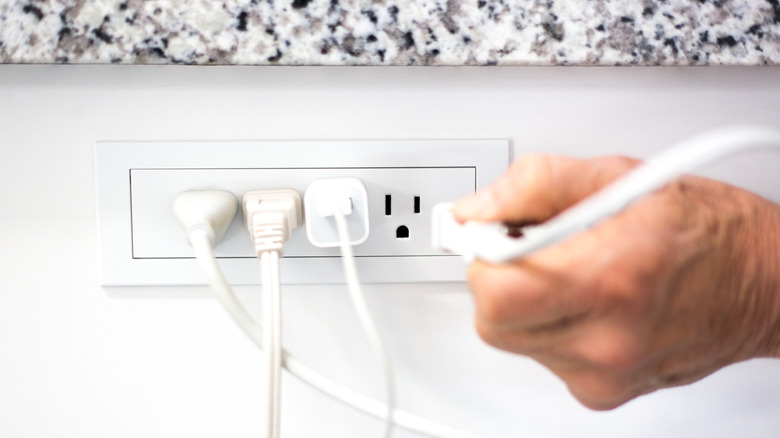
Remember asking a parent why you had to do (or not do) a particular activity and getting the unsatisfying response, "Because I said so"? Hopefully they had logical reasons behind their expectation that they explained to you later. The best rules out there have solid rationales for why they're in place, and the changes the National Electric Code (NEC) made in 2023 that ban adding side-mounted electrical outlets to kitchen islands and peninsulas is such an example. As annoying as constantly changing rules can be, this one is intended to prevent harm to you, your family, and your guests.
The NEC makes changes to their codes every three years, and the organization had plenty of data backing up their conclusion that side-mounted electrical outlets on kitchen islands or peninsulas can lead to danger. Over the last 20 years, thousands of injuries (and even a few deaths) have been linked to countertop kitchen appliances. Eliminating a factor that contributes to these issues will hopefully prevent future avoidable damages.
Kitchens are full of potential hazards like burns, cuts, slips, falls, and fires. Appliances plugged in on side outlets can snag on nearly anything that moves. The slack could cause a fall, or if something like a crock pot or pressure cooker is in use, this could lead to a nasty burn. Any electronics with glass components become a risk for lacerations if the material breaks. Sure, these are child home hazards that parents need to be aware of, but adults are far from immune to these injuries, too. In fact, we might be more prone to injury, since adults sometimes take risks for granted when dealing with everyday tasks.
Moving forward with safer electrical outlets on islands
Although swapping out side-mounted outlets on an island or peninsula can improve your kitchen's safety, if your current kitchen has outlets on the sides of one of these structures, there's no requirement for you to invest in something that's not in your budget. You can make your kitchen safer by simply not using the outlet, or you can remove the outlet yourself by following the steps — especially the safety ones — in a DIY tutorial.
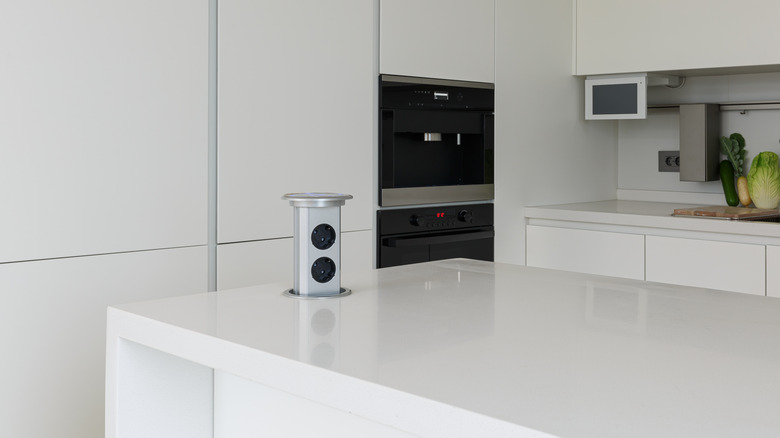
New hidden kitchen outlets on islands and peninsulas — or at least the plans to install them in the near future — must adhere to the latest safety standards. Some of the top alternatives to side outlets are recessed or pop-up outlets. These can be mounted in drawers or on the wall above or behind the work surface, or within the counter itself. If you need your kitchen reno to pass inspection before you can get to these details, your plans can include wiring that's shielded by a cover until the time comes for you to add the outlet.
Once you're ready to tackle kitchen outlet improvements, make sure that they also contain ground fault circuit interrupters (GFCIs). These types of outlets are also used in bathrooms; the "test" and "reset" buttons are a giveaway that you already have a GFCI outlet. This is a kitchen upgrade Mike Holmes always recommends to make your home safer. Since there's water present in kitchens, GFCIs shut off the electrical current if they sense an electrical imbalance to eliminate risks of shock, electrocution, or an electrical fire. With these updated standards, the heart of the home will be safe and secure.