

Not Coffee Grounds, Not Egg Shells: The Kitchen Scrap You Should Avoid Adding To Compost
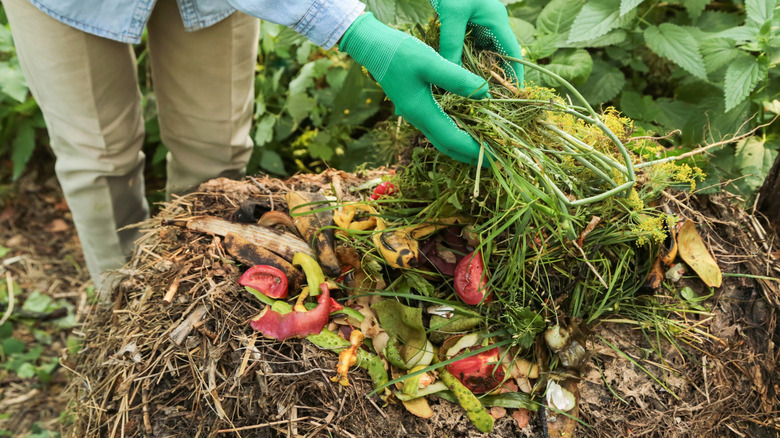
Earlier this year, I had random potato plants pop up in my tomato bed that I've taken great pains to prepare. Turns out some helpful person in my household had taken the veggie scraps out for me for trench composting, but they hadn't chopped up the potato peelings. At least one of those peelings had an active eye on it that, because it wasn't removed or buried deeply enough, decided to give me a very lovely and rather large potato plant right in the middle of the bed. It's looking healthy enough — so this time around, it can stay.
In general, I don't recommend adding potato peelings to your compost bin nor do I think you should add them to your garden beds without proper preparation. Having been gardening professionally as a permaculturist for over 20 years and growing my own food for longer than that, I am a big fan of feeding the soil with whatever organic matter I can, and I encourage everyone to make their own compost. I compost a huge amount of produce, but potato peels are a kitchen scrap I never put straight in my compost bin. They can cause problems with rodents, disease, and unwanted sprouts. They can, however, safely be scrapped in other ways, including when properly prepared, being buried in a composting trench or placed in Bokashi bins and compost tumblers.
Why you shouldn't compost potato peels
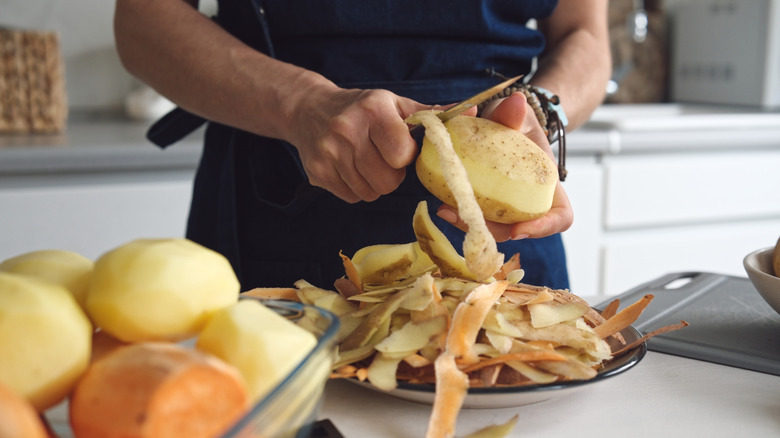
Potato peelings are starchy and moist, so they attract hungry rodents, especially if they're not buried deeply within the pile. While I'm not particularly bothered by rats and mice, I don't want to encourage them to take up residence in or around my compost bin. It's one of the many reasons that I turn my compost piles on a regular basis. Additionally, potato peelings with eyes tend to produce volunteer potatoes, either in the compost bin itself, or when you put the compost on your beds and the potato peels haven't broken down fully.
Then there's the significant risk of disease. Potato blights are a real problem that can linger in even healthy-looking potato flesh, and adding diseased plants to your compost pile is not a good idea. Unfortunately, home compost bins don't get hot enough all the way through to kill this pathogen. You don't want to introduce it into your garden or the wider environment because it can stay in the soil for many years and spread to other members of the nightshade family. Potato blights can also impact tomatoes, bell peppers, and eggplants. This is especially true of store-bought potatoes when you don't know their history. Luckily, my garden "helper" only buried peelings from my own home-grown potatoes, so we knew they were healthy. It's vital that you never compost potatoes when you don't know if they're carrying blight or if they show any signs of disease. Soft spots, brown areas beneath the skin, green patches, large areas of discoloration, or scabby, disfigured skin are indicators that your potato peels are harboring a plant pathogen and should be discarded. It's never worth taking the risk.
Safe ways to compost potatoes
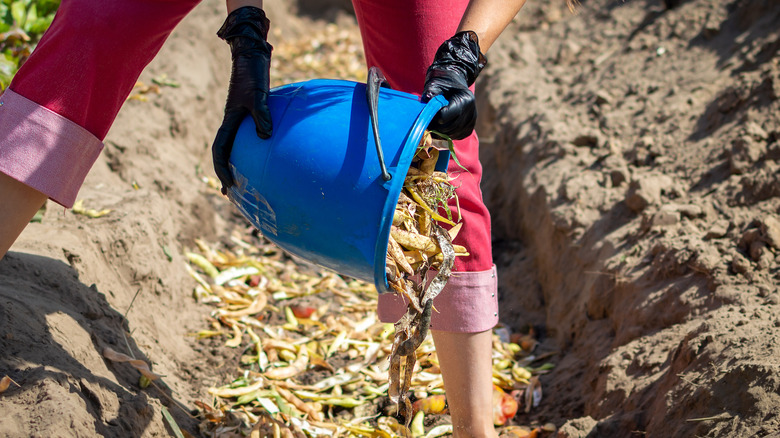
As long as they are showing no signs of disease, potato peelings can be composted in other ways. Trench composting is probably the simplest fix. It's similar to what my unhelpful garden helper did. Basically, you dig a hole or a trench in an unused section of a bed and add your food waste, including potato peelings. Make sure that you chop up the peelings and detach any eyes. Then backfill the hole and pop a little marker in so you know where you've buried them. This works well in raised beds where the soil has a limited supply of nutrients and needs a lot of replenishment. The potato peelings and other material decompose deep underground and help improve soil structure, drainage, and moisture retention and release their nutrients.
You can also recycle your potato peelings in a Bokashi composting system. These are great if you have limited outdoor space. Out of an abundance of caution, I still would not recommend using diseased potato matter, but a Bokashi bin will ferment potato peelings in around two weeks. Compost tumblers are the other option. These are enclosed and elevated so that they help keep rodents out. Plus, these bins tend to get pretty hot, commonly reaching up to 140 degrees Fahrenheit, which can help to limit the risk of disease and overheat any productive eyes that may have considered sprouting in a regular compost bin. You still need to chop the waste up, spin the drum on a regular basis, and maintain a good balance of green and browns, just like a regular compost bin. You should have finished compost in just a couple of weeks.