

How Romans Turned Gardens Into Picture-Perfect Retreats Thousands Of Years Ago
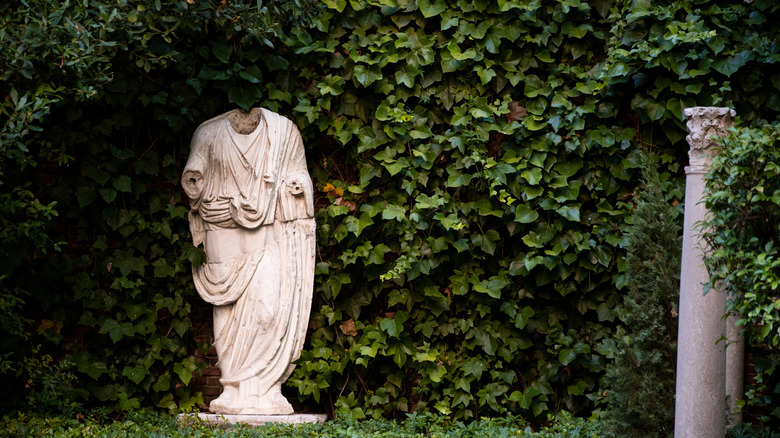
Are you looking for some inspiration on how to make your outdoor space feel like a secluded retreat? While you could watch HGTV or visit your local garden center, let's instead look back in time — specifically, to ancient Rome. The gardens of the Roman Empire were thoughtfully designed, and there are plenty of ways you can use these elements to turn your own backyard into a garden oasis.
A key aspect of ancient Roman gardens was the intention of using outdoor space as an extension of indoor space. Homes were often built around columned courtyards, and designed with the idea of creating a seamless transition from the indoor area to the garden. Covered walkways, fountains, and dining alcoves made the environment feel more inviting and gave it year-round accessibility.
Works of art and multiple levels were typical in ancient Roman gardens
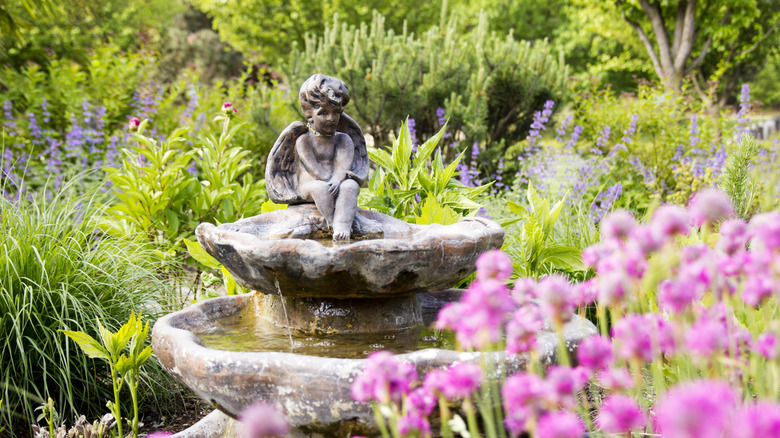
Multi-level gardens were another key design element used by the Romans. At a site in Pompeii, researchers working on the Gardens of the Roman Empire project discovered that the outdoor space was once surrounded by terraces used as roof gardens. To create your own version, you could consider adding raised paved areas in different parts of your outdoor space, or incorporate multi-level planter boxes on your patio. Just like the Romans did in warmer climates, make sure to include plenty of greenery to add shade and keep temperatures down in hot weather.
Ancient Romans also recognized that art was a handy way to keep a garden colorful, even when plants weren't blooming. To incorporate art in your yard like they did, consider adding statues or colorful mosaics — both were key elements of many Roman gardens. Some Roman garden designers even added moldings to the structures in their outdoor spaces, decorating edges and trim to give it a more luxurious, detailed feel.
At the end of the day, creating a picture-perfect Roman-inspired design doesn't necessarily have to come at the expense of practicality: just as they did in ancient Rome, you too can incorporate decorative drainage to prevent flooding, grow vegetables for adding greenery and a new food source, or add fountains for cooling summer mists and a relaxing soundscape.