

Skip The Rake And Use A Tool You Already Own To Clean Stray Gravel Quickly

Gravel driveways and gardens can add a charming aesthetic to your home — but with one accidental drag of your foot or car tire skid, you've got tiny pebbles scattered throughout your lawn (or other places they don't belong). Not only do these little rocks hurt to step on, but they can also make your yard look unkempt and damage your lawn mower. While you could try to clean up the gravel with a rake, that can be a frustrating and time-consuming process. A better alternative? Using a shop vacuum.
If you own a shop vacuum (also known as a wet/dry vacuum), you might be surprised to learn that you can use it to suck up gravel. But it's actually an excellent tool for collecting these small rocks for a few different reasons. First, it's faster and easier than using a rake, so it's easier on your back and arms. Plus, after vacuuming, you can empty the tank and put the pebbles back where they belong — so you don't have to spend money on replacement gravel.
Before you head outside and start sucking up stray gravel, there are a couple of things to do first. For starters, be sure to put on a face mask and eye protection to protect yourself from dust and other debris. In addition, it's important to check that your vacuum has a filter. For this type of job, a standard household filter should do the trick. Lastly, if possible, use a hose that is 2 to 2½ inches wide and on the shorter side, which will suck up gravel more quickly.
How to use a shop vacuum to clean stray gravel
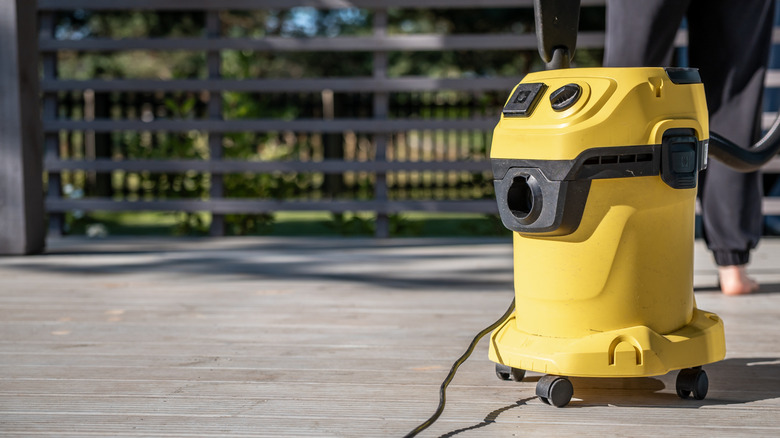
Ready to start tidying up your yard? All you have to do is run the vacuum hose over your grass, just like you'd use it on other surfaces. Keep in mind, though: As you work, the filter will fill up with dirt quickly. To prevent it from clogging, turn off the vacuum every so often, remove the filter, and shake it out to get rid of the accumulated debris.
Also, rocks and gravel can weigh more than you'd think, so you'll need to dump out the contents of your vacuum regularly (and before it gets too heavy to lift). You can opt to throw it all in the trash or save the gravel and put it back where it belongs. To reuse the rocks, pour the contents of the tank over a screen to separate the rocks from any dirt and soil. Then, add them back into your driveway (or wherever else you use gravel in your yard).
Going forward, if you want to keep your gravel driveway secure and locked in place, there are a few things you can try — starting with regularly compacting the gravel. It's a fairly simple process: Begin by raking the driveway to even it out, then use a heavy tool (like a tamper or a plate compactor) to push down the gravel and create a denser surface. Beyond that, you can use mulch glue or install edging or pavers to prevent the rocks from shifting.