

Do You Need To Worry About Cyclosporiasis With Homegrown Produce?
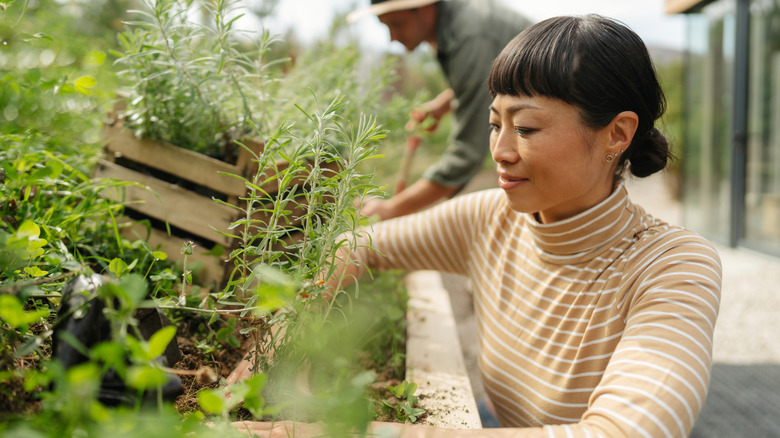
With thousands of cyclosporiasis cases reported across the country since May 1, 2026, health officials continue to investigate the origin of the outbreaks. And while they haven't pinpointed an exact source just yet, authorities in Michigan — where almost 3,800 cases have been reported — say that lettuce or salad greens may be the culprit. If you're concerned about getting sick with this gastrointestinal illness, you might be tempted to start your own self-sufficient garden instead of buying produce from your local supermarket. But is that actually a safer option? According to experts, it can be — but homegrown produce still carries some risk of contamination.
Before we explain whether you should worry about getting cyclosporiasis from your backyard veggie patch, let's take a step back and talk about how it spreads. The disease comes from the Cyclospora cayetanensis parasite and is spread through human waste. When contaminated fecal matter comes into contact with food or water, it can sicken others who consume those things. Often, cyclosporiasis is linked to foods like bagged salad greens, berries, snow peas, and certain herbs (including basil and parsley).
You might be wondering: If I don't have cyclosporiasis, how could the parasites contaminate food I've grown myself? There are a couple of ways it can happen. One possibility is if you use contaminated water to wash or water your produce. Alternatively, tainted soil can also introduce the parasites to your homegrown fruits and vegetables. For those reasons, eating your own produce can limit risk, but it isn't a foolproof way to avoid cyclosporiasis.
Tips for avoiding cyclosporiasis when eating homegrown produce
Speaking to Newsweek, Texas State University professor Rodney Rohde explained, "Home-grown produce and farmers' market produce can be lower risk if produced using safe water, good sanitation, and sound agricultural practices, but they are not inherently safer than commercially grown produce." And there is no way for home growers to test their soil or water for cyclosporiasis.
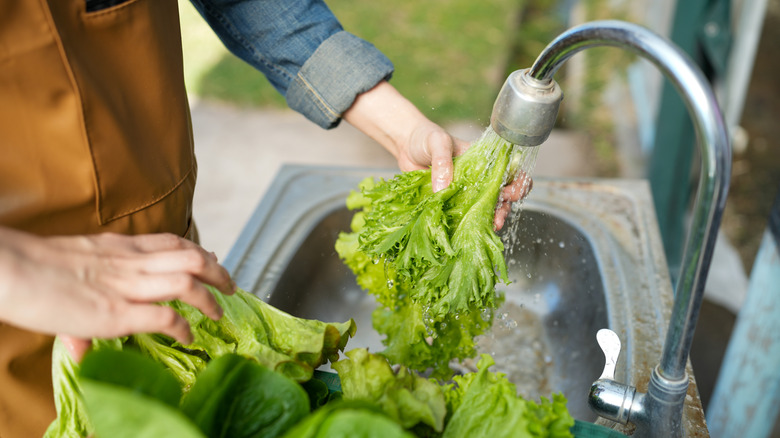
With all of that in mind, there are some basic food safety tips to lower your risk of getting cyclosporiasis from produce grown yourself. For starters, the Centers for Disease Control and Prevention says the most efficient way to clean your garden veggies before bringing them inside is with fresh running water. The Michigan Department of Health & Human Services suggests throwing out the first two or three layers of leaves for produce, like lettuce or cabbage, before washing the remaining ones with clean running water. Also discard the outer layer of any produce you'll eat raw. Be sure to wash your hands for at least 20 seconds with warm water and soap before and after handling raw fruits and vegetables, too. You can even DIY an outdoor sink to reduce the risk of contaminating indoor surfaces.
However, even though washing can reduce the chance of contamination, it isn't always effective. The safest bet is to cook your produce before consuming it. "Getting the food to being cooked to at least 70 degrees Celsius or 158 degrees Fahrenheit is the best way to kill off this organism," Dr. Nuwan Gunawardhana, an epidemiologist and infectious disease physician at Columbia University Irving Medical Center, told CNN. Then you can safely enjoy the fruits of your labor.