

What Is A Manufactured Home?
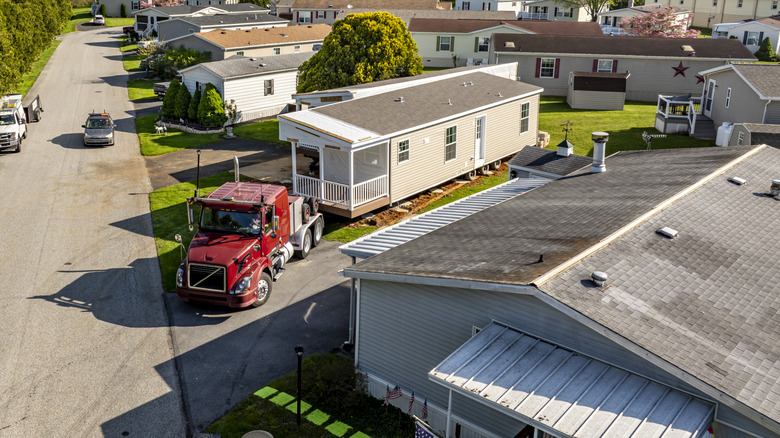
According to data from the Federal Reserve Bank of St. Louis, the average price of houses in the U.S. has almost doubled in the last ten years. So it's no surprise that many people wonder if finding a starter home is a lost cause. Those who have been looking for the maximum bang for their buck may find that a manufactured home is the answer. If you're thinking these are some kind of mobile unit or upmarket trailer, think again. While manufactured homes share some similarities, in that they are prefabricated and delivered on a semi, they are designed to be permanent residences. They must meet a raft of federal safety standards set out by the U.S. Department of Housing and Urban Development (HUD). In fact, much like any site-built home.
Manufactured homes are usually constructed on a rigid steel frame to provide the necessary strength and support. While often seen as an entry-level option, these homes are not restricted to a single-wide format. Different units can be bolted together to create homes of 2,000 square feet and more. They come with many of the benefits of buying any new construction. They are energy efficient with modern air conditioning, heating, and plumbing pre-installed for rapid connection to mains services on site. They also meet fire safety standards.
Key considerations when buying a manufactured home
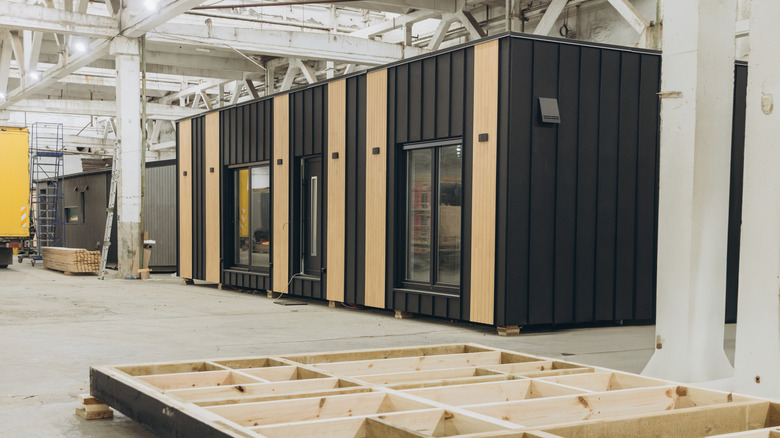
There are lots of factors to consider when purchasing a home, but, for many, the price is arguably the most important. Currently, building a traditional home averages around $170 per square foot. Manufactured homes are around $85 per square foot. Designs range from traditional to contemporary, and specifications can vary considerably, so you'll want to check those carefully. There are dozens of manufactured home builders in the U.S., giving you plenty of choice.
The best way to buy a manufactured home is to have it installed on land you own. Although much will depend on individual circumstances, this can give you access to the same lenders who offer traditional mortgages and loans supported by the federal government. If you don't already own land, it's vital to check zoning regulations before you buy to ensure you can get the proper permit for a manufactured home. There is an alternative if you're not fixed to a particular area. You may be able to take advantage of deals offered by some manufactured home builders who sell both the land and the home together.
It is also possible to buy a manufactured home on leased or park land. However, you don't get the same legal protection as being the landowner. Additionally, if you need a loan, the interest rates are likely to be much higher.