

Smart Vs Programmable Thermostat: What's The Difference For Energy Savings?
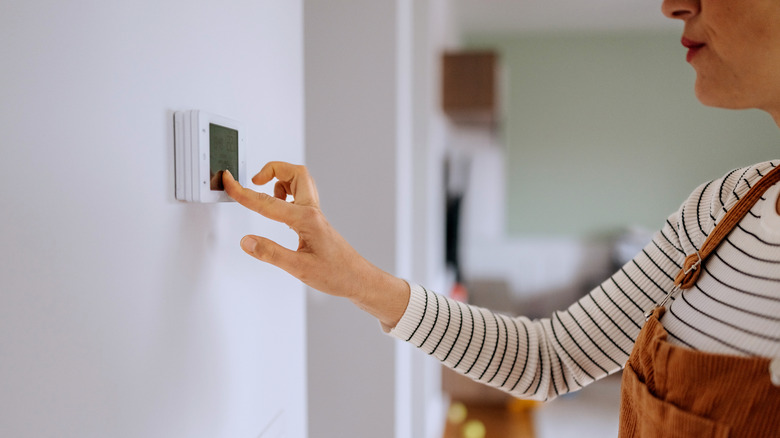
Even during the coldest winter storms, a high energy bill is enough to make anyone sweat. If you're trying to reduce your energy costs, switching to a smart or programmable thermostat can help you achieve those goals. Both types let you avoid the hassle of manually adjusting your home's temperature, but with a programmable thermostat, you'll have to set its schedule yourself — for example, it can keep your home cooler while you're away at work, then warm back up when you get home. A smart thermostat, on the other hand, can monitor indoor conditions to learn your routines and automatically adjust temperature settings, no scheduling needed. Because of this, smart thermostats are often the better bet for energy savings.
While programmable thermostats can save homeowners up to 10% on annual utility costs according to the U.S. Department of Energy, many people aren't making the most of these thermostats' namesake feature — a Consumer Reports survey revealed that 17% of programmable thermostat owners don't program theirs at all. Meanwhile, smart thermostats can regulate temperature themselves andconnect to smartphone apps that track usage, helping you find even more opportunities to save energy. This amounts to savings anywhere between 12 to 20%; Google found that its Nest smart thermostats save customers an average of 12% on heating and 15% on cooling, while Duke Energy says that these savings can be as high as 20%.
Exact dollar amounts for savings will depend on variables like the size of your home and your local energy costs and climate, but generally, smart thermostats come out on top. However, how much you can save — and which type of thermostat is right for you — can also depend on other living situation factors.
How to decide which thermostat will save the most energy
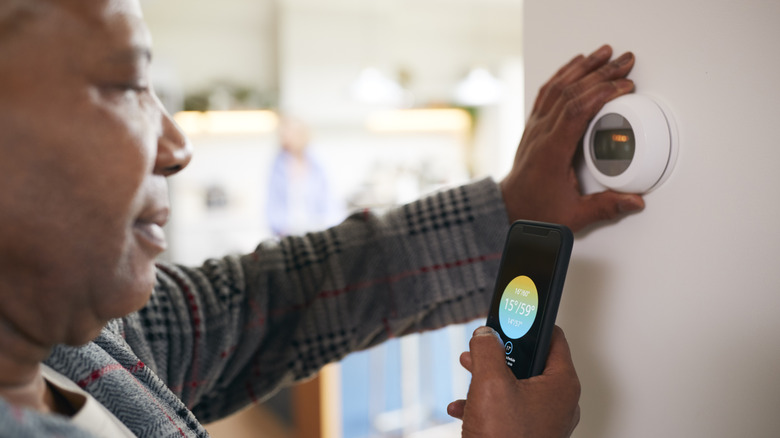
Which thermostat will save you more in practice can vary. Since programmable thermostats require someone to program them, there's more room for human error. For example, if you forget to update the schedule while you're out of town or you override the settings and forget to change them back, your savings could go out the window. Smart thermostats' apps can help avoid this, allowing you to adjust the temperature remotely.
That said, if your goal is to save the most money possible, consider the upfront costs of installing a smart thermostat. Even though smart thermostats are touted as one of the best inexpensive products to lower utility bills, it may take you longer to break even after the initial investment. According to Home Advisor, smart thermostats range from $130 to $300 for the device alone. That's far more than programmable thermostats, which cost $20 to $150. For either type of thermostat, professional installation adds another $65 to $100 per hour of labor.
Something else to consider: smart thermostats generally go into energy-saving mode when you're out of the house. So, if you work from home or have residents who stay inside most of the time, there won't be as many opportunities to conserve electricity. This is also the case if you live in a temperate climate where you'd naturally need to use your HVAC system less. In that case, a smart thermostat might not provide much better savings than a programmable one.