

Not Egg Shells: The Overlooked Scrap From Your Fish Tank You Can Compost
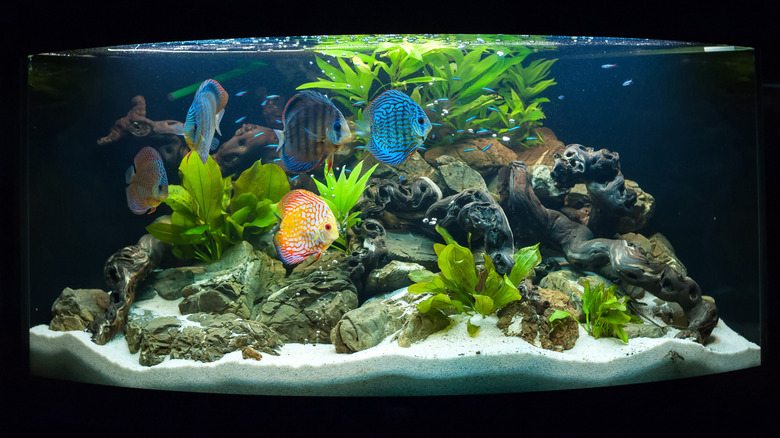
Composting is an excellent way to restore nutrients to your garden. Almost any organic material that accumulates in your home or yard can go in the compost bin, like banana peels, coffee grounds, and fall leaves. Another popular composting ingredient is egg shells, which add calcium carbonate to your pile. This compound aids in plant growth, and it can even help worms with digestion. But egg shells are lacking in one key ingredient that every compost pile needs: nitrogen. An absence of nitrogen can prevent organic material from breaking down, preventing the creation of nutrient-rich soil. Fortunately, finding a solid source of nitrogen to add to your own DIY compost simply means turning to your fish tank.
There are millions upon millions of small organisms — bacteria — in your compost pile that are responsible for breaking down food scraps. Nitrogen acts as a food for them, helping these single-celled organisms grow and reproduce. The algae, plant matter, and fish waste that collects in a tank before a cleaning is rich in nitrogen (aka bacteria food), and the dirty fish water also contains minerals like phosphorus, calcium, and magnesium that can feed plants; in other words, old tank water is like liquid gold for a compost pile. Make sure to save it instead of tossing it down the drain.
How best to compost fish tank water
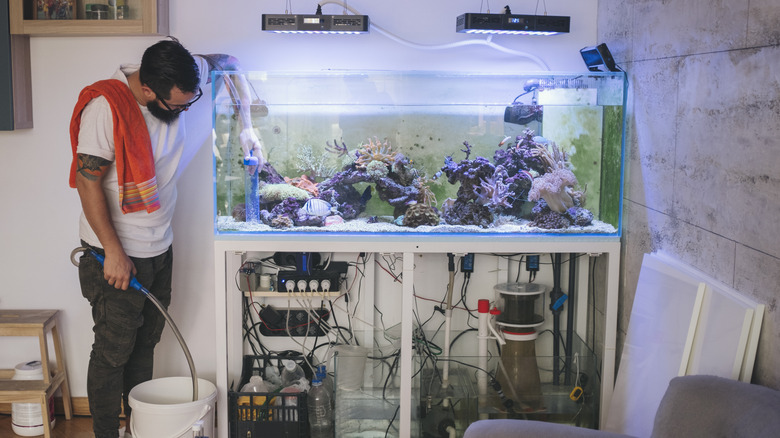
Fish tanks are an ideal breeding ground for algae, which thrives on the nutrients found in fish food and feces as well as the light passing through the glass. This algae is known as "green" material in the composting world, because it is nitrogen-rich. When the plants in your fish tank die, you can dispose of them in your compost pile. This process is relatively simple, but you should make sure to follow certain protocols to avoid throwing off the sensitive balance between carbon and nitrogen.
If you already own a fish tank, it should be relatively simple to pair composting with your regular cleaning process. Start by scraping or sponging the algae off the sides of the glass, and then siphon out about a third of the water into a bucket. Then, carefully remove the filter and scrub it over the same bucket; this will ensure that any algae that comes off ends up in the water, too. Avoid using soap, because even biodegradable products can harm your fish and synthetic soaps can harm your compost. You can either pour the siphoned fish tank water on your compost pile or recycle it in your garden, using it to directly water your plants. If you choose to water the pile, make sure to mix it after watering, so the algae and nutrients can actually reach the bacteria in order to feed it.
Mix fish tank water with dry material

As you add fish tank water and other detritus to your compost pile, make sure to pair it with other ingredients. Specifically, it's best to place wet, green material alongside dry material like leaves and cardboard. Afterward, the pile should either maintain a steady temperature or increase in temperature as the bacteria is activated. Bacteria can be finicky, and so it's also important to know when to hold back entirely on composting things like algae. For instance, you should avoid adding nitrogen-rich liquid or physical material from your fish tank if the pile seems to be going anaerobic. That means it's breaking down without the presence of oxygen, a process that produces methane. If your compost is slimy or it's developing a foul smell, make sure to add more dry, brown material (carbon-rich waste) and mix it well.
Ultimately, there are probably several downsides to an outdoor compost pile you haven't thought about. It never feels good to have neighbors complain about a sour smell. However, as long as you look beyond egg shells and consider adding additional, creative ingredients like fish tank detritus to your pile, you'll be well on your way to creating nutrient-rich soil.