

Concrete Block Vs. Poured: The Better Retaining Wall Material
Retaining walls are more than just stylized design features that make your backyard look like something out of a storybook. They also hold back soil and prevent erosion on slopes in your yard. Because they are designed to hold back a significant amount of weight, the walls need to be able to withstand consistent pressure and moisture that builds up within the soil. That means that the material you choose should be ready to hold up to the elements over time. A great option for protecting your outdoor landscape is a concrete retaining wall. But even with concrete, there are two options that stand out for many homeowners: concrete blocks and poured concrete. These two options are made from similar materials and come with similar price tags, but that doesn't mean they perform the same. Understanding the difference between these materials could be the difference between a one-time long-term investment and an expensive reinstall.
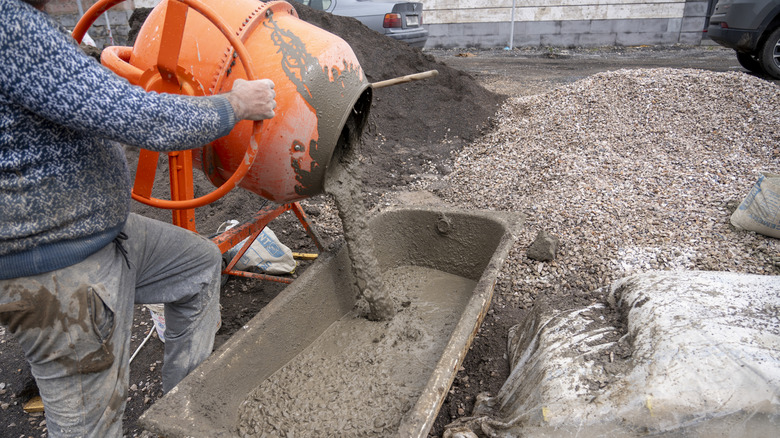
Concrete blocks are individual blocks that are usually manually assembled with mortar and reinforced with rebar. Poured blocks, on the other hand, are sections of retaining wall that are made from mixed concrete that is poured into a frame. Concrete blocks are known for creating a strong base for structures that need a high load-bearing capacity, while poured blocks are generally considered more water-resistant and can withstand more pressure from the sides. While that may sound like poured blocks would make better retaining walls than concrete blocks, it's actually the opposite. Poured walls work better for basements than they do for retaining walls.
Why concrete block is a superior retaining wall material
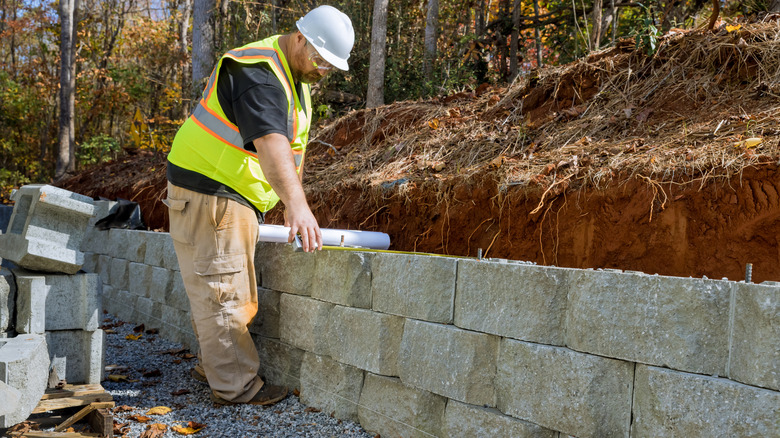
So what gives? Why are concrete blocks the clear winner when it comes to retaining walls? Choosing the right materials is one of the biggest "dos" when it comes to the dos and don'ts of installing a retaining wall. But in this case, it comes down to the install. With poured concrete, the wall is poured into a temporary frame from a ready-mix truck that needs ample space to operate. Since retaining walls are usually being added to lots that already have built structures on them, the space alone may create an issue. If the install is more difficult, it also has a higher chance of being done incorrectly. The biggest problem is that any damage from the elements or improper installation results in a complete replacement.
Concrete blocks are much more customizable in compact spaces that can't accommodate a concrete mixing truck. Plus, even though the mortar can break down slightly faster than poured blocks (about 75 years compared to 100 years), if something is damaged, you can replace a single section instead of the entire wall. That being said, with proper drainage and maintenance, concrete block walls can last even longer. You are also afforded much more design flexibility than with poured concrete, so you can build a stackable retaining wall in your garden without compromising on style. Concrete blocks come in many different styles and textures, and they can be crafted into a variety of curves and angles.