

Don't Kill The Slugs You Trap — There's A Way To Use Them In The Garden
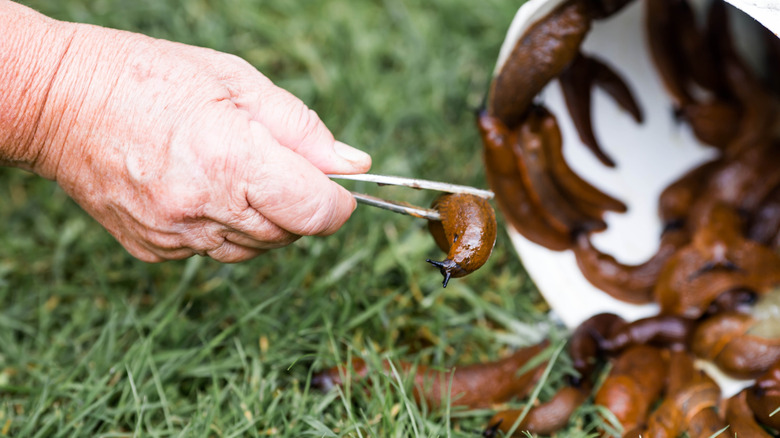
While slugs in your garden may cause you grief because they're demolishing your lovely young seedlings and salad greens, they do have a purpose, and one you can use to your advantage. They have voracious appetites and can consume double their body weight every day. Now, you already know that they love to munch their way through your tender, young plants. But they also won't snub any organic material that you've just added to the compost bin. So, once you've trapped them, you can just toss them in the compost and let them help break down your waste and turn it into lovely soil for your garden.
To trap live slugs in your garden so that you can relocate them away from your vegetable patch or your leafy green ornamentals, lay some broken pieces of terracotta or bits of wooden boards in the garden, making sure there's enough space for the slugs to crawl under them. The slugs will tend to congregate under these ideal hiding places, and you can just lift them up and knock the mollusks off into your compost. You could even use inverted grapefruit, orange, or melon rinds to trap the slugs. Coconut shells are another kitchen scrap you can use to trap slugs in the garden.
Plus, you can go out early in the evening with a flashlight and handpick any slugs you find off your most vulnerable plants. This is also one of the best ways to identify and eliminate slugs from your prized plants.
Benefits of adding trapped slugs to your compost
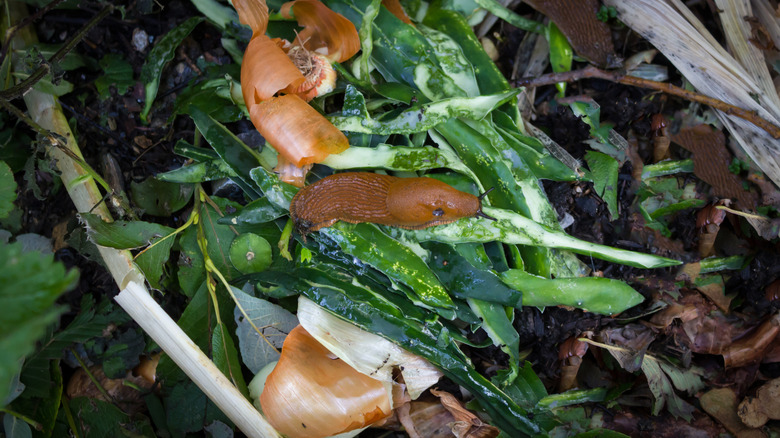
Once you relocate all those trapped slugs to your compost, they're likely to stay there, as there will be plenty of food for them to chew their way through. They'll even help to decompose carbon materials such as paper and cardboard, which will help to make the compost structure better. You can also put dead slugs in the compost, as long as you haven't used chemical controls in the garden, as the live ones will eat these too. Many slugs are omnivores, which means they'll eat almost anything.
Slugs in your compost heap are known as primary consumers because they tend to eat all the organic material that you deposit there. On top of that, they are also a food source for other common compost bugs, such as springtails, mites, and beetles. All of these help to break down all the waste and turn it into nutrient-rich soil that you can then distribute throughout your garden beds to help grow your next crop of vegetables and flowers.
Just check your compost every now and then to make sure you don't have an explosion of slugs, which is usually the result of a heap that's too wet. If that's the case, add lots of brown material, such as paper, torn-up cardboard, and dried leaves, to help balance it out again. You should also find that by the time you get to harvest the compost, the slugs you threw in will have died of old age, and any eggs they may have laid will have been devoured by the other bugs. Finally, once you've removed the slugs from your veggie patch, consider surrounding it with a landscaping staple to help keep the mollusks away: crushed stone or gravel.