

Ditch Your Traditional Sponge: Martha Stewart Has A Better Way To Get Dishes Clean

We may receive a commission on purchases made from links.
Cleaning the dishes is often deemed the most hated household chore. If you're yet to invest in a dishwasher and are still washing your dishes by hand, or you're of the old-school mindset that a dishwasher can't really achieve a sparkling finish, then you should know the method that's sure to yield the cleanest results. We're always looking for ways to make washing the dishes easier, and it's no secret that a traditional dish sponge is the go-to for many households. But is a sponge the most hygienic tool to use? According to Martha Stewart, no. She says to ditch the sponge and use a terry dishrag instead.
The tip comes from "Martha Stewart's Homekeeping Handbook," an over-700-page book published in 2006 with advice on everything from polishing silver to fixing a leaky faucet. In it, Stewart points out that sponges are so germ-prone that the Food and Drug Administration bans restaurant kitchens from using them on clean food-contact surfaces. She strongly recommends using terry dishrags, also known as bar mops, instead.
Can a sponge really be that bad? Well, in the grand scheme of things, it's still an acceptable way to wash dishes. If you must use one, Stewart says to designate one sponge for each type of cleaning, wash and sterilize them regularly, and replace them promptly. However, sponges do harbor a lot more bacteria than a fresh cotton dishrag. It's even been found that a used kitchen sponge can have as much bacteria as the inside of a toilet — gross!
Why using a terry dishrag is a good way to clean dishes
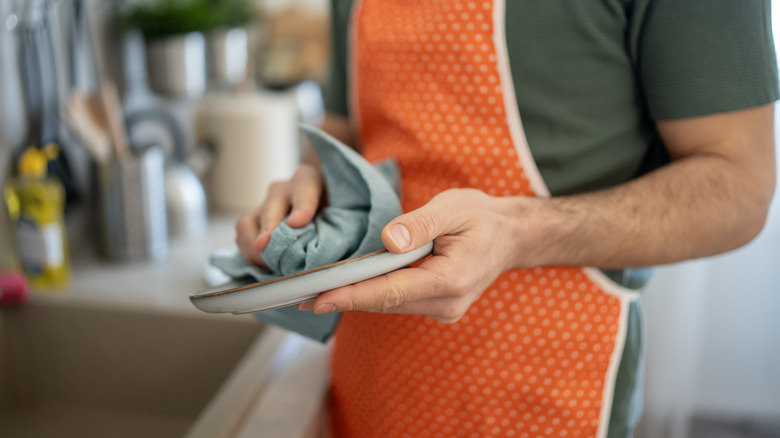
The best way to properly hand wash dishes has always been up for debate, but a good way to keep them looking as good as new is by washing them with a terry dishrag. A terry dishrag is made from terrycloth, which can also be referred to as terry towelling. It is typically made from cotton and features small loops of woven yarn, maximizing the cloth's surface area and therefore making it a super absorbent material, ideal for washing dishes. Not only do traditional sponges hold on to lots of nasty bacteria, but they are also guilty of releasing microplastics after frequent use, which is harming the environment. There's no doubt about it that terry dishrags are a more eco-friendly option, due to their more natural composition.
Terry dishrags aren't immune to accumulating germs, but they're easier to keep sanitary than sponges. Since they typically come in cheap multipacks, you can use a fresh rag every day, and this is what Martha Stewart advises in her book. Also, you can wash them in the washing machine — Stewart recommends putting them in with your regular white loads. When it comes to ensuring the longevity of your rags, we've got a few tips. Make sure to fully wash and dry new terry dishrags before you use them for the first time, as this makes them more absorbent. To keep your cloths looking good as new, soak them in a mixture of cold water, 1 cup of white vinegar, and ½ cup of detergent now and again. Leave them to soak for half an hour and dry them outside on a washing line.