

The Common Mistake To Avoid When Using Liquid Fertilizer On Your Leafy Greens
In theory, gardening is quite simple. With healthy soil and an eye for watering needs, you'll likely enjoy the fruits, vegetables, or blooms of your labor. However, for a garden to fully thrive, you can go above and beyond, like adding soil amendments, layering mulch, and applying fertilizer. The more care you give to your plants, the more positive results you'll likely see.
With gardening, however, there are no one-size-fits-all solutions — especially when it comes to fertilizing, which boosts plant health and replenishes specific nutrients. The options are numerous, as seen in the many TikTok fertilizer hacks. As humans, we choose the appropriate vitamins to treat our body's needs, whether a daily multivitamin for upkeep or selected vitamins for specific health concerns. Plant fertilizers work the same way. They come in various forms (such as liquid or dry/granulated) and also offer different nutrient makeups (including organic, synthetic, complete, or incomplete) to meet specific needs.
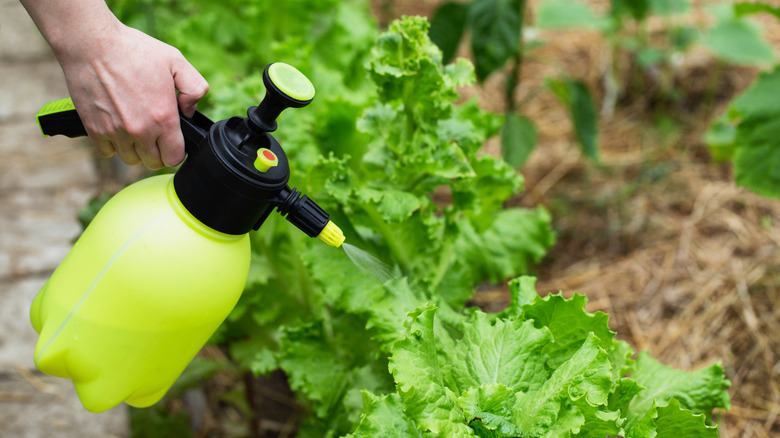
In addition, how you deliver fertilizer matters, especially for the tender leaves of leafy greens like lettuce. It's tempting to spray liquid fertilizer on leaves; if you see the mist on the leaves, there's peace of mind that the fertilizer is on the plant, versus pouring liquid into the ground and hoping that it reaches the roots. However, a bit of faith is needed here, since foliar application — if done inappropriately — can lead to burnt leaves, a reaction from showering your plants with nutrients.
The disadvantages of spraying fertilizer on your leafy greens
If foliar application has been your go-to technique, don't panic. Your leafy greens are likely still benefiting, but possibly not to the extent that you'd like. First, let's talk about plant biology. Just like the pores we have on our skin, leaves have microscopic openings called stomata and minuscule micropores, which create a waxy layer on the surface of the leaf. Combined, these openings absorb only about 15% to 20% of any substances applied foliarly, due to the placement of the stomata on the undersides of the leaves and the waterproof nature of the micropores.
For this reason, liquid fertilizer can be less effective when applied to the leaves and, from a financial standpoint, is largely wasted. More importantly, leafy greens are at risk of leaf burn if they're fed on the leaves, especially in intense sunlight, on a hot day, or if the fertilizer is given too heavily. Applying fertilizer during the warmest times of the day also will cause the liquid to evaporate before the leaves have any chance to benefit.
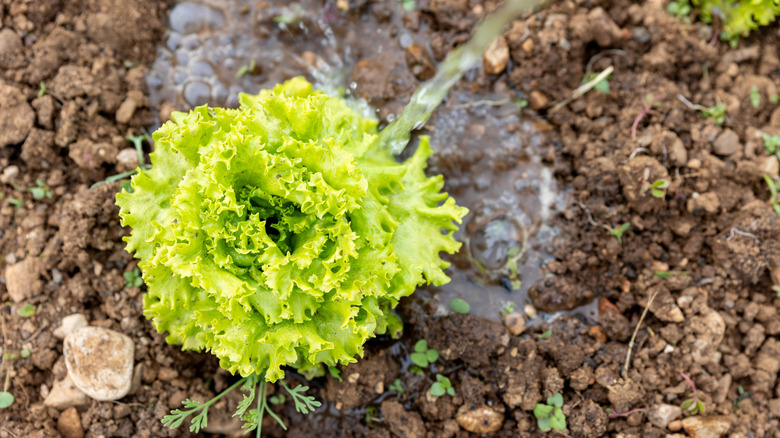
Foliar application, however, can be effective for delivering nutrients quickly to plants that are showing signs of deficiency and need immediate TLC. Otherwise, for most leafy greens, applying liquid fertilizer to the soil (including this DIY fertilizer for leafy greens) around the base of the plants will more effectively deliver what the plant needs and reduce the risk of leaf burn.