

Why It May Be Harder To Sell A Home With Solar Panels
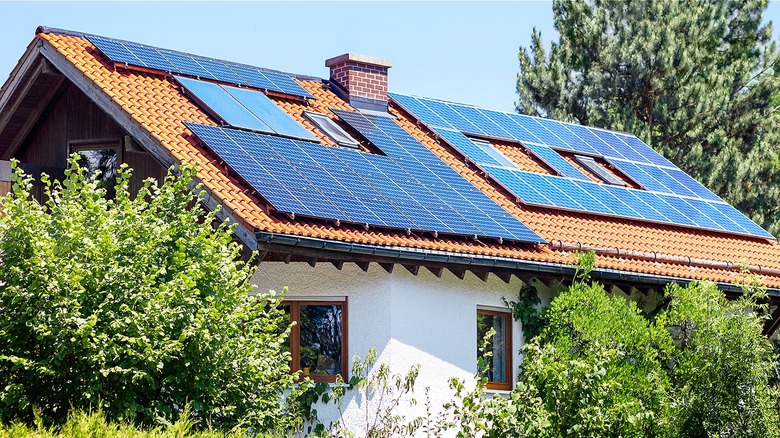
While a solar-ready roof is certainly one of the top eco-friendly home renovations on the market today, marketing the tech is only the beginning of getting through a real estate transaction with solar panels. It also requires transparency around ownership. In fact, selling your home might actually be harder if it's solar-powered. That's because if the system is leased or financed, rather than outright owned, the equipment comes with legal and financial obligations — such as binding lease agreements or property liens — that can turn off potential buyers and create unforeseen issues during escrow.
Ultimately, when solar panels complicate a final home sale, it's almost always due to the legal and financial strings attached to the equipment, rather than the technology itself. Understanding these hidden contractual traps early is the first step toward transforming a potential deal-breaker into a winning selling point.
That said, while it's true that third-party ownership is often the root cause of deal-flow issues, a more nuanced issue when it comes to selling a solar-powered home at all is that in regions with low solar adoption or high skepticism some buyers will perceive panels as "maintenance-heavy" or even an eyesore, regardless of the energy savings. These buyers simply aren't interested in the learning curve of solar ownership, making the sale of your home significantly more difficult.
How solar panels can impact your sale

While installing solar panels may earn you an exciting credit on your energy bill, the upfront cost or ongoing contract obligations can create unexpected friction when it's time to transfer the property title. If you have a lease or power purchase agreement (PPA), you do not own the panels — a solar company does. The buyer must qualify for and agree to take over your long-term solar contract. Many buyers simply do not want to inherit a contract they did not negotiate, leading them to walk away.
If you financed your panels, the lender likely filed a UCC-1 financing statement on the equipment. It's not a traditional mortgage lien, but it does create a lien-like security interest that clouds the title. This means the debt usually must be satisfied or assumed before the title can be transferred to the buyer, adding an administrative burden for the buyer and potentially slowing down the closing process, or in some cases even causing them to rethink their offer.
Beyond the immediate headache of leases and liens, buyers also contend with valuation gaps and long-term roof maintenance worries. Many appraisers lack specific training on how to value solar systems. Consequently, they may fail to include the system's value in the home appraisal, or they may struggle to justify a higher sales price to lenders.
Not only that, but buyers may simply view panels as a liability if the roof underneath is nearing the end of its life. Because removing and reinstalling panels to replace a roof is expensive (often $2,000 to $5,000 or more for labor alone), buyers may demand a price concession to cover this future risk.
How to smooth over the solar panel problem
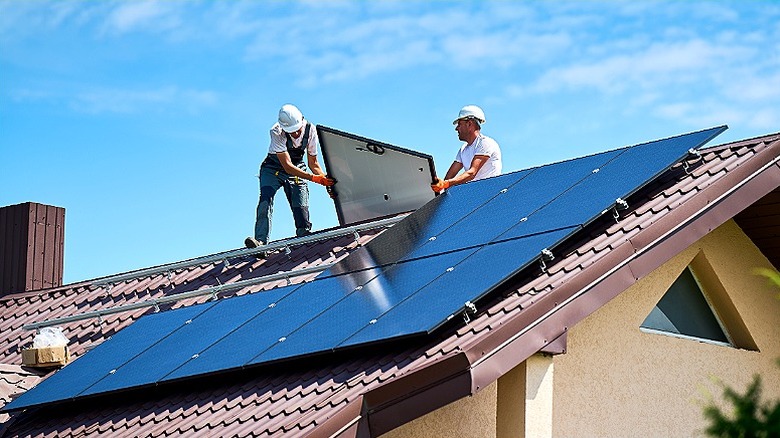
If you're preparing to sell your home, you can neutralize these solar panel obstacles with proactive documentation and strategy. First, it's essential to determine your ownership status. Do you own your system (i.e., the easiest path to closing), finance it (will require payoff), or have a lease/PPA (will require contract transfer). Check your original contract for early termination or transfer fees.
Next, you'll need to gather your "solar portfolio." This should be a folder for potential buyers containing proof of ownership or the lease agreement, warranty information, 12 months of electricity bills (highlighting the savings), and the system specs and installation date.
During this time, you'll want to contact your solar panel provider early if you lease or finance your system. Ask for the "transfer packet" or payoff quote so you aren't scrambling during escrow when you have a buyer waiting on the dotted line.
Beyond your own preparation, it is highly recommended to select a real estate agent who has experience selling "green" homes. They will know how to highlight the financial benefits to buyers and properly nudge appraisers to consider the system's value.