

2 Shade-Loving Balm Plants That'll Help Deter Mosquitoes

Itchy arms. Red swollen bites. An obnoxious buzz right next to your ear. Does any of that sound relatable? If yes, chances are you too have a mosquito problem in your home and are looking for ways to keep the insects away. Sure, bug sprays and mosquito repellents can help; however, who wants to coat themselves in chemicals every time they step outside? Luckily, there's a more natural way, as certain plants and herbs can also help deter mosquitoes, with two good examples being bee balm (Monarda didyma) and lemon balm (Melissa officinalis).
Both of these perennials prefer full sun but tolerate part shade, making them worth planting in sheltered shady places of the home where mosquitoes often hide and rest. Just keep in mind, while these are among the clever ways to keep mosquitoes away from your home, these plants aren't going to do much just sitting in your garden. To be effective, the herb leaves need to be crushed so their essential oils – which contain mosquito-repelling compounds like carvacrol and citronellal – can be released into the air.
Growing bee balm and lemon balm as part of your overall mosquito defense
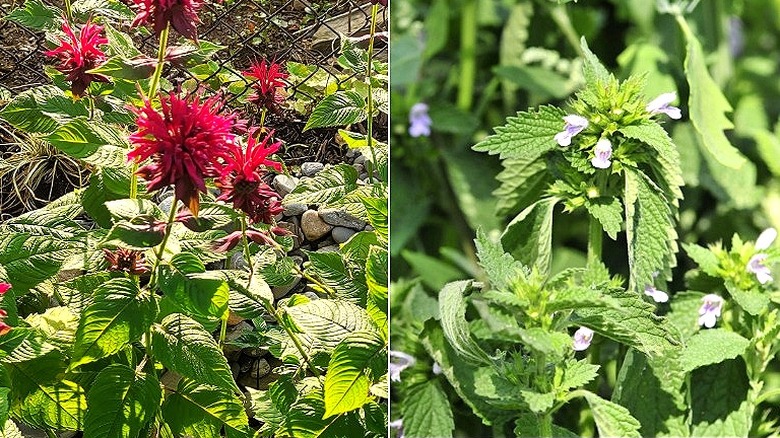
Both bee balm (above left) and lemon balm (right) are easy-to-grow herbs that can help keep mosquitoes out of a yard (again, with their essential oils). Along with being easy-to-grow, these plants also have low to medium maintenance needs. Still, it's important to provide the right growing conditions.
For starters, lemon balm only grows in USDA plant hardiness zones 3 to 7, whereas bee balm can grow in zones 8 and 9 as well. Don't worry, though, if you live outside these hardiness ranges; you can still grow both bee balm and lemon balm as annuals, or grow them in containers and take them inside for winter. Growing them in containers is actually recommended, too, as these herbs have a tendency to spread via their roots. Just be mindful that mosquitoes can sometimes also take shelter in plant pots and containers. So make sure you take some measures to keep your potted plants from turning into a mosquito nightmare.
Also, about shade, while both of these plants tolerate partial shade, don't grow them in full shade — that is, anywhere they'll receive little to no direct sun — as they're both flowering plants, and such plants often flower less when grown without adequate sunlight. As for soil, bee balm and lemon balm both prefer moist, well-drained conditions.
Lastly, when crushing leaves to release the essential oils, make sure you aren't crushing so many leaves that it compromises the plant's health and vigor. Instead, use other reliable ways to deter mosquitoes and treat these balm plants as pleasant backups.