

Ditch Landscape Fabric: This Kitchen Scrap Is A Great Alternative For Your Flower Bed
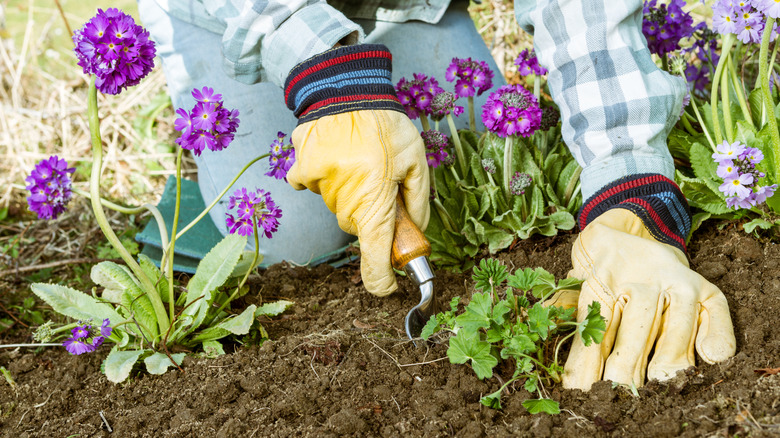
When you've spent lots of time planting your flower bed and lovingly tending to the little plants, it can be quite disheartening to witness all those pesky weeds coming up and threatening to make a mess of your lovely floral patch. While you might have tried common weed-suppressing things before, like landscape fabric, there's actually a kitchen scrap that you might want to use if you have plenty of it: Peanut shells. These are among a few unexpected nut shells that you can use as a mulch alternative to keep those weeds away.
Using landscape fabric can be a bit hit-and-miss, as it tends to deteriorate over time and doesn't really do much for the soil. You'll also find that with some fabrics, water doesn't flow through freely, and the soil underneath is usually dry and almost looks lifeless. Peanut shells will have the opposite effect, as they'll add valuable nutrients to the soil once they break down, making them an eco-friendly mulch option. As long as you use shells from peanuts that haven't been salted, your flower patch should benefit from using this kitchen scrap as a mulch to help keep those annoying weeds away. If you use enough to fully cover the soil around your flowers, weed seeds that might be hiding won't get any sunlight, so they won't germinate or grow.
How to use peanut shells in your flower bed to prevent weeds from growing
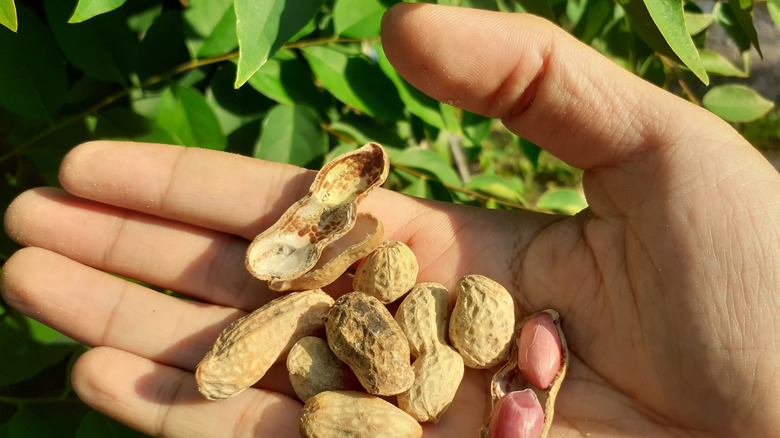
To use peanut shells as a mulch on your flower bed, you first have to collect as many shells as you can. Make sure that the shells are from unsalted or unflavored peanuts. Ideally, you'll want to crush them up a little so that they create a good barrier over the soil. When putting the shells on the garden bed around your flowers, make sure you keep them a few inches from the main stems of the plants, as this should prevent any fungal problems. For the best weed suppression, you'll want the layer of peanut shells to be around two to four inches deep. Remember that they should cover the soil completely so that no sunlight can get through.
As they slowly break down, the shells should add a good amount of nitrogen to the soil, as well as small amounts of phosphorus and potassium. Plus, as these are carbon-rich, they help keep the soil healthy, improve its structure, and increase microbial activity. Carbon-rich soils are also able to store water better and make it easily available to flowering plants. So, apart from suppressing weed growth, the peanut shells you use on your flower bed will help your plants thrive, as well. That makes them the perfect natural DIY weed barrier alternative to landscaping fabric.