

Why Do Dishwashers Take So Long — And Can You Speed Them Up?
We may receive a commission on purchases made from links.
Have you ever sat back and watched the minutes (or hours) tick by as your dishwasher runs, wondering when it will finally finish? You aren't the only one. Over the years, these appliances have become more efficient, using less water and energy to wash and dry your dishes. While that's definitely good for your wallet and the environment, it also means that modern dishwashers need more time to complete a cycle. How long, exactly? The run time on a normal wash cycle ranges from 1.5 to 2.5 hours. If that's slower than you'd like, there are ways to speed up the process — but there are some drawbacks to doing so.
Before we get into that, let's talk about what makes today's dishwashers more efficient than their predecessors. Advancements in the technology behind dishwashers has led to reduced energy and water consumption on a normal wash. With soil sensors, updated designs, and other innovative features, these appliances now run more efficiently than ever before — but you'll need to wait longer for each cycle to finish.
Something else to consider: If you've had your dishwasher for a while but it's recently started taking more time to finish a cycle, there could be other factors at play. For example, a clogged filter can lead to slower drainage and extended run times. To fix this, be sure to clean your dishwasher filter as often as your manufacturer recommends. Another reason your dishwasher could be moving slower than it used to? Low water pressure. If the water is trickling into your dishwasher (rather than flowing in at a steady pace), it will take longer to fill up — and extend the wash cycle.
How to speed up your dishwasher (and what to know before you do)
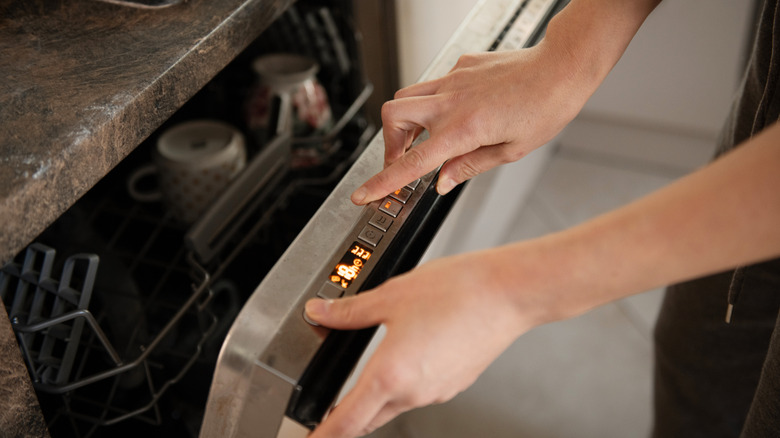
The easiest way to reduce your dishwasher's operating time is by running a quick wash cycle — which tends to take anywhere from 30 to 60 minutes depending on your model — instead of a normal, eco, or heavy cycle. (Not familiar with the differences between these cycles? Check out our explanation of all dishwasher settings.) Keep in mind, though, that a faster cycle is best if you have a smaller load or dishes that aren't overly dirty, but it might not be as effective for larger, dirtier loads. Also, express washes often use more water and energy than normal cycles, which is important to consider if you're trying to save on your utility costs. These differences vary by product, but here's an example from GE Appliances: While a normal wash might use 5.2 gallons of water, a light wash could use 7.5 gallons. Avoiding extra features (like the pre-wash and sanitization cycles) can make the process move along quicker as well.
To speed up a full load without using that much extra water, consider switching up your drying settings. Again, this will vary depending on your appliance's model and manufacturer, but we can use Whirlpool dishwashers as an example. When you use the heated dry setting on one of this brand's dishwashers, it adds about 30 minutes to the cycle. If you're in a hurry, you can turn this off and dry your dishes by hand, which won't use up any extra water. There's another dishwasher hack you can use to cut down on drying time, too. If you realize that your dishes are still wet after a cycle, hang a microfiber towel at the top of the door (so it's half inside and half outside), then close it. After five minutes or so, they should be dry.