

3 Types Of Hidden Murphy Doors (And How To DIY Each One)
We may receive a commission on purchases made from links.
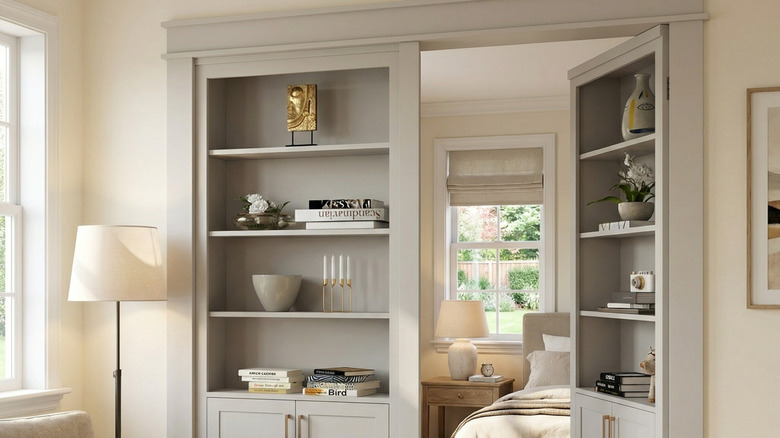
Murphy doors bring a sense of whimsy and mystery to a home. With the right design, you can make entire rooms in your house disappear from view. However, building a Murphy door may feel intimidating or like too ambitious a DIY project for a single person. Thankfully, there are quite a few easy techniques you can try your hand at. All you need is a little bit of woodworking experience and the right tools and supplies. You can choose from at least three designs: a rotating bookshelf door, a sliding bookshelf door, or a flat-paneled door.
With these three options, you'll finally have that magical hidden door you dreamed about as a child. Bookshelves are a great way to add storage to an entryway, though items need to be secured because the shelves will move. Use something like QuakeHold! Museum Wax to secure your home decor. It's also a genius trick that prevents wobbly candlesticks. Panels take a little extra planning, but they are typically less obvious.
While Murphy doors are without a doubt eccentric, they have some practical benefits. You can use a Murphy door to make unattractive yet practical spaces like laundry rooms and linen closets almost invisible. You could also create secret areas in your home, like safe rooms or concealed storage areas, that you don't want home invaders finding. The first step in installing a Murphy door is deciding what style you want. Then, you can assess your skill set, tools, and budget.
The original design: a rotating bookshelf set into a doorframe
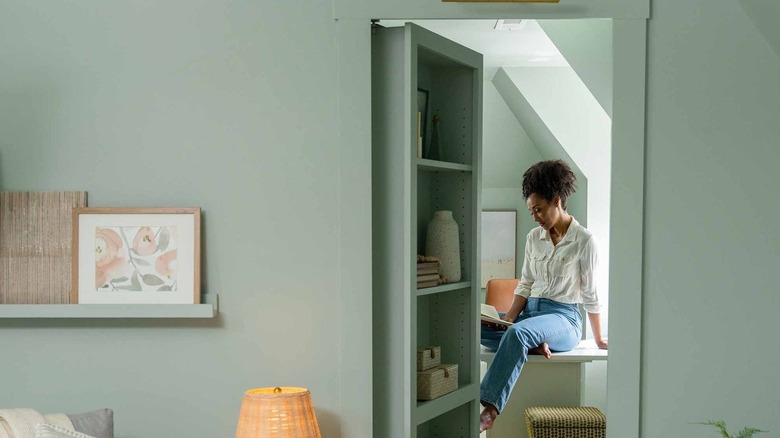
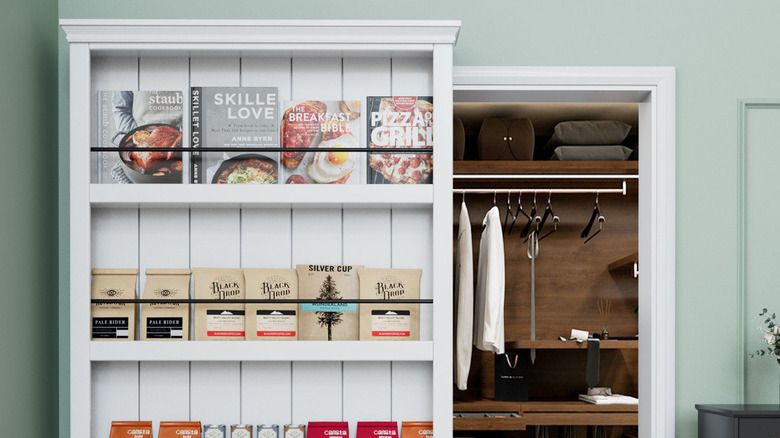
To make a bookshelf Murphy door, you need the right bookshelf. Unless you want to crouch every time you walk into the room, you need a bookshelf that's a little taller than the tallest person in your family. For easy reference, the standard door height in the U.S. is 80 inches. If you're comfortable working with wood, it's probably easiest to make your own bookcase. All you need to do is create a large wooden box that fits the space, add a sheet of plywood to the back, and insert your chosen number of shelves. Though turning a secret door into a bookshelf is probably the most common choice, you can fill your Murphy door shelving with whatever you wish. You could, for example, add style and function to a pantry door with this genius storage hack — and get a hidden doorway into a nearby room right off your kitchen.
Once you've made your shelving, you need to mount it in the frame. Attach 360-degree hinges to the top and bottom of the shelf on the side that will act as the pivot point. You need to attach the corresponding door lock to the door frame and floor. If you're happy with the operation of the bookshelf-turned-door, you can attach some trim to the bookshelf and the wall. This is a quick decorative trick that disguises the gaps between the bookshelf and wall or door frame, ensuring it looks like a regular built-in bookcase. You can buy hinge and lock sets online — this Weigreat Hidden Door Hinge, which costs about $32, will do the trick. Be sure to check the weight limit of the hinge and compare that with the weight of your bookshelf before you click that buy button.
The simpler alternative: a sliding bookshelf in front of a doorway
This secretive Murphy door trend is the perfect way to hide a room in your home simply because it's easy to construct. You simply install a premade bookshelf that's bigger than your doorway in front of the opening. The bookshelf slides across tracks like a regular sliding door. It's a versatile method that's easy to DIY and will work in almost any space. People approach the construction of this style of Murphy door in various ways. You can, for example, mount the bookshelf to a set of tracks and wheels. The bookshelf slides back and forth along the tracks, opening and closing the door to the space behind it. As with pivoting bookshelf Murphy doors, you need to check the weight limits of whatever sliding door track kit you buy. If you're going for a secretive aesthetic, you also need to make sure the tracks are completely hidden when the door is closed.
You can also install this framed bookshelf Murphy door similarly to the pivoting bookshelf Murphy door. Instead of attaching the hinges directly to the wall, you first build an outer frame. Premade kits include a footplate and decorative trim at the top, along with the hardware for installing the 360-degree hinges. Some homeowners disguise the door further by creating an entire bookshelf wall and attaching the hidden door frame between the surrounding shelves. For an extra secret-door effect, you can add a wire mechanism that connects a book to the latch, allowing you to open the door by pulling on the book. Alternatively, you can skip the hidden trigger and simply pull the shelf to open it.
The unique option: a doorway hidden in a paneled wall
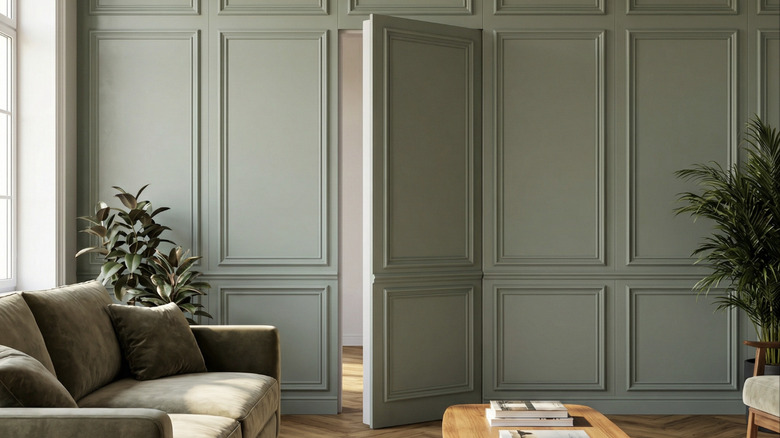
Installing a hidden panel Murphy door in your home goes beyond creating a sense of mystery — it's also a great excuse to add texture to a plain wall. If you're converting an existing doorway, remove all the trim and make sure the frame sits flush with the wall. Then install a new door jamb designed to work with hidden hinges. (For a truly seamless look, use concealed hinges.) To make the installation process easier, choose hinges that only require routing a recess into the door rather than both the door and jam.
When creating the wall pattern, plan the placement of the panels around the door first. This allows you to disguise the gaps between the door and the surrounding wall while ensuring nothing prevents the door from opening. Because the goal is for the door to blend seamlessly with the rest of the wall, a push-to-open mechanism, like those used in handleless kitchen cabinets, lets you access the room behind it without a visible handle.
As you can now see, this Murphy door option is pretty easy to DIY, just like the other two options. However, if you're nervous about tackling any of these projects, you can buy DIY kits from specialty manufacturers like Murphy Door. They're likely more expensive than a DIY job, coming in at well over $1,500 for a kit, but you get everything you need to install a bookshelf-style door in a single package shipped to your home.